Winter Turkey Trapping in New Hampshire
The hustle to get everything set up in the predawn hour seemed oddly familiar. However, instead of setting out decoys, we were positioning a large, trapezoid-shaped box that contained a large net. On this winter morning, I didn’t hear trill of songbirds or peepers; it was the thud of insulated boots hitting the frozen field under our feet. Instead of spring turkey hunting, we were winter turkey trapping, but I was every bit as excited!
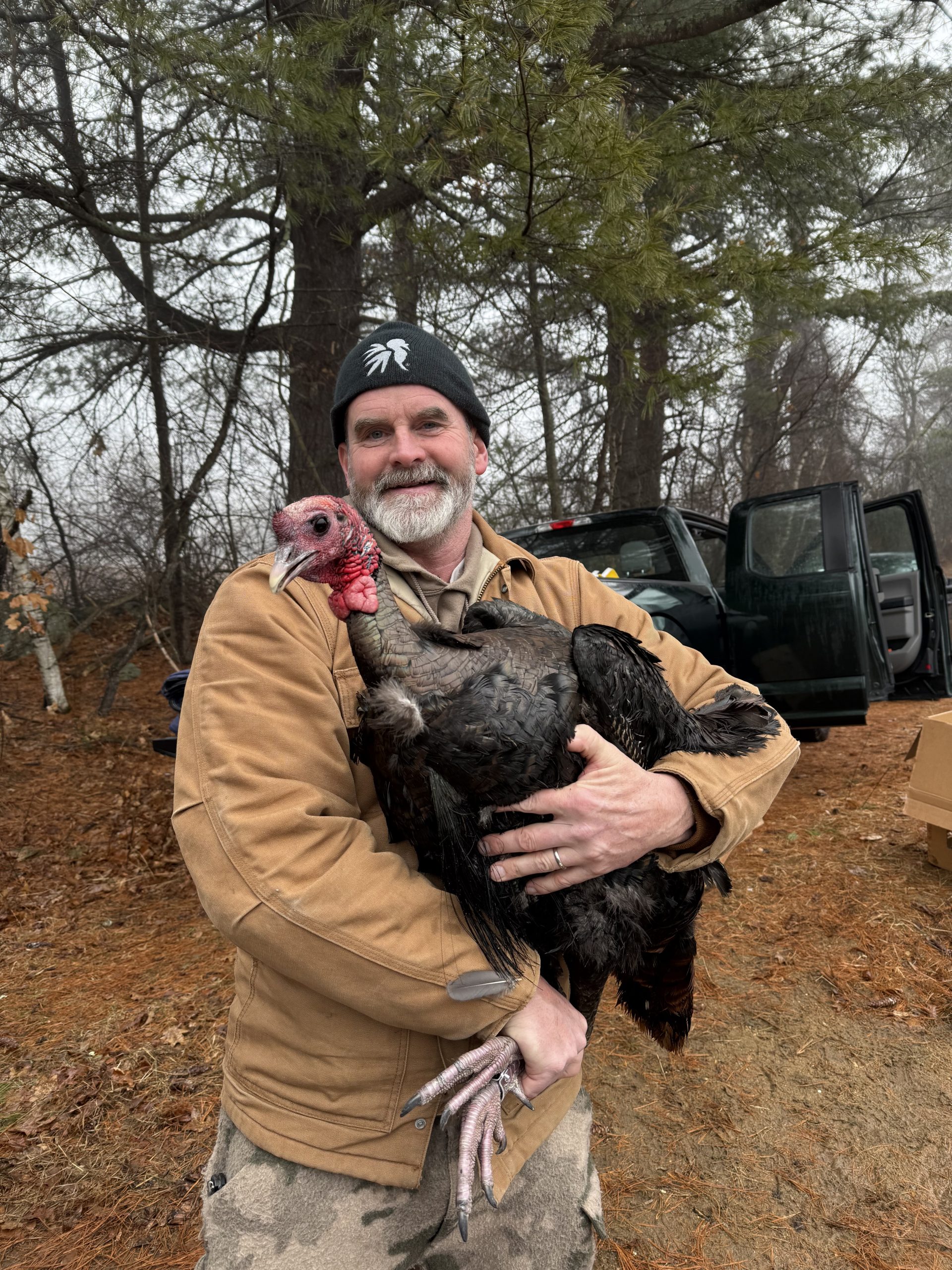
I found myself fortunate enough to participate in this first-ever seasonal turkey banding initiative. It was made possible due to combined funding from the New Hampshire Fish and Game Department and the National Wild Turkey Federation. The majority of NHFG’s funding was provided via Federal Aid under the Wildlife Restoration Act, administered by the U.S. Fish and Wildlife Service. The NWTF provided funding through its Research Grants Program, an annual effort to fund critical wild turkey research projects nationwide. In addition to financial resources, the NWTF also provided volunteers to help locate flocks, connect with landowners, bait turkey trapping sites and assist with the trapping process. This collaboration and pooling of resources significantly strengthened the scope of this winter project and allowed a broader reach across the state.
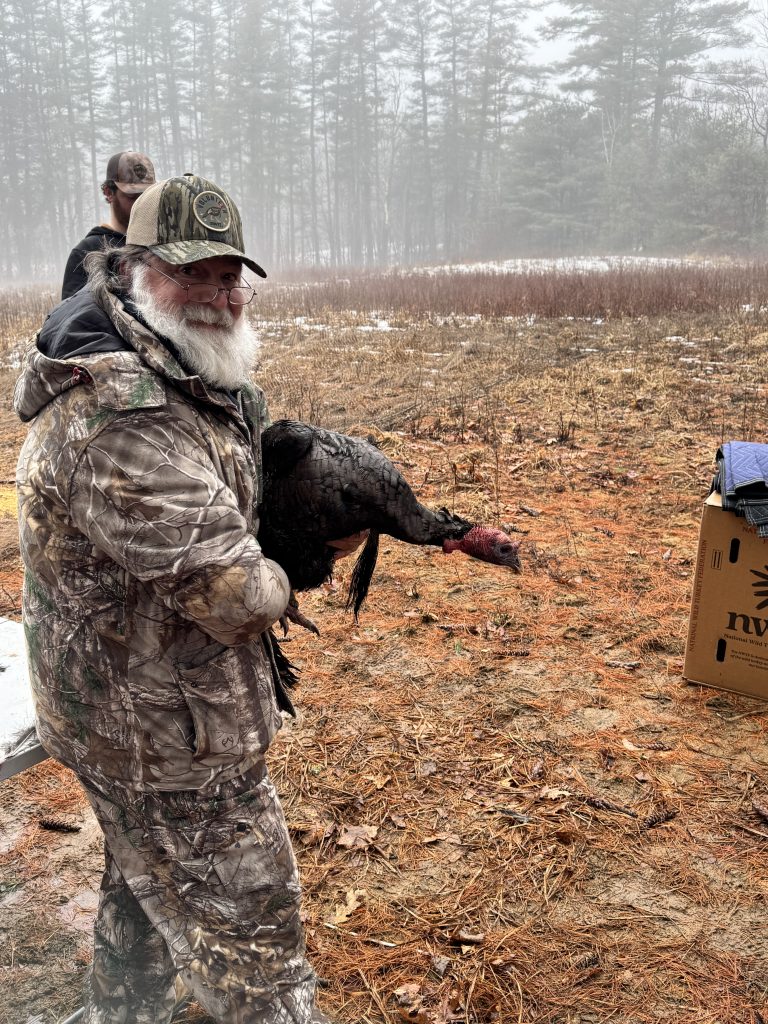
NHFG administers two turkey flock surveys each year, with the summer survey focused on nesting success and poult survival rates. Winter surveys are concerned with flock abundance and population health, and during the winter of 2025–2026, turkey trapping became an important addition to this study. The objective of this project is to trap and band 300 male birds each winter season for the next three years to better quantify regional spring harvest rates, annual gobbler survival, disease prevalence and population estimates.
Early responders to the winter survey, combined with field knowledge from NHFG and NWTF staff, provided areas for us to focus our attention on and to prepare to “recruit” our subjects. Corn was provided to property owners throughout New Hampshire to entice their local flocks to visit specific “routine” places to feed. In order to effectively trap the birds for banding, they must concentrate in a location near where the rocket-fired net is set up. The rocket net itself doesn’t look like much — until it is deployed!
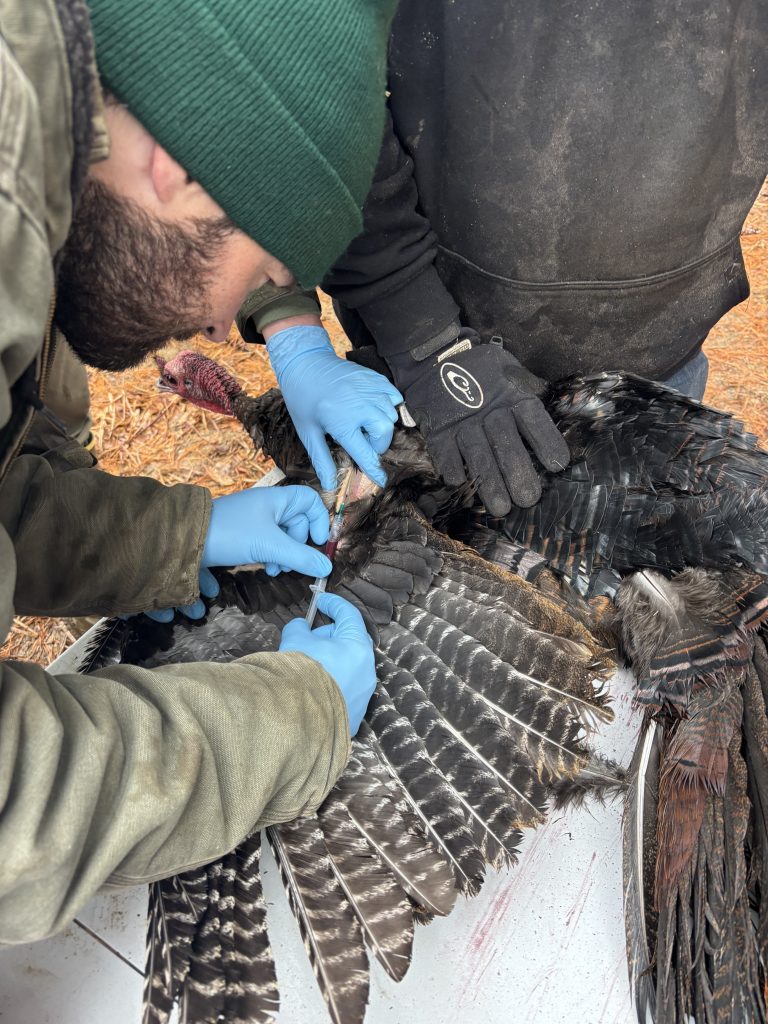
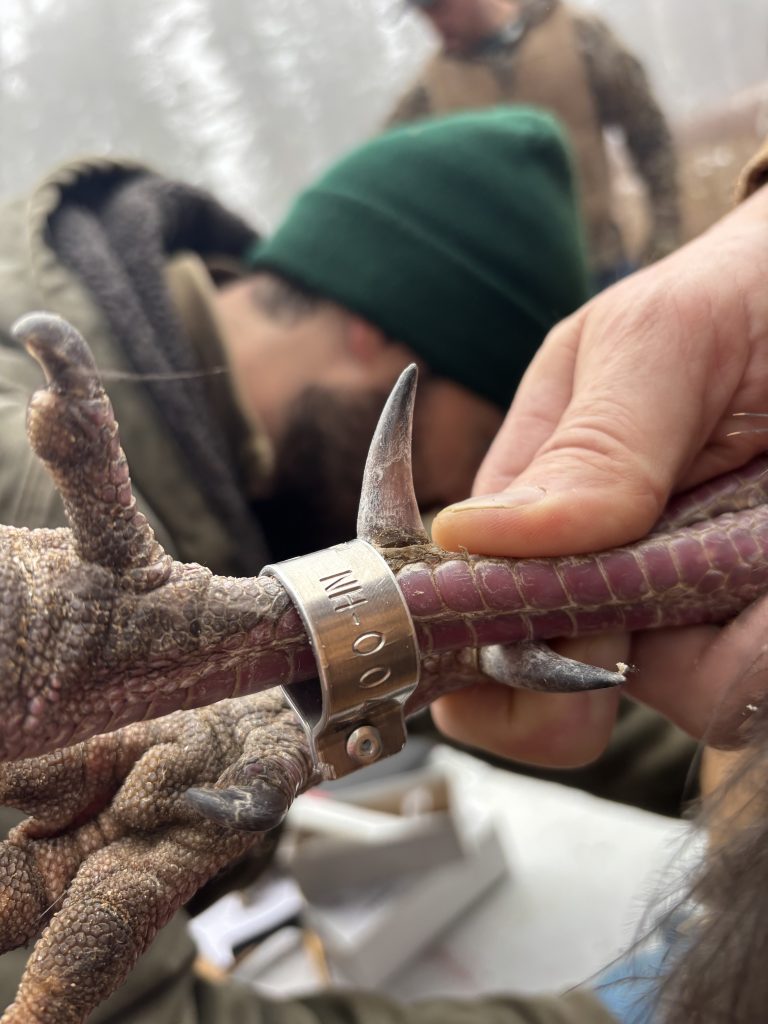
The 40- by 50-foot net is released from the wooden box by firing three rockets that are tethered to the leading edge of the net and that propel it over the targeted flock of turkeys, safely restraining the group. Each turkey is then fitted with a uniquely numbered leg band for future reference, and biological data is gathered from the flock to quantify age structure and assess the population’s health before release.
As the cold winter wind stung our cheeks in the brightening morning air, we finished the last of the set-up details. The detonation connections were double checked against the 550 feet of cable that is used to electronically ignite the three charges which propel the “rockets.” Feeling prepared, we made it back to the relative comfort of our truck, which in this case served as our “blind.” This was the part of the morning that could go one of two ways: either the turkeys show up, or they don’t.
As we watched the sun rise over the patches of crunchy snow and freezing fog, the moment of truth had finally arrived. The flock we had been targeting for this morning’s attempt began to fly down from their roosts to start their day. My heart was racing, just as if I was sitting in the May woods amongst the black flies and songbirds. As the flock assembled on the ground, Dan Ellingwood, NHFG's turkey biologist; Allison Brehm, NHFG’s biometrician; and Becky Fuda, NHFG’s deer biologist; and I all grinned in anticipation of these birds having read the script, coming to congregate at the free breakfast buffet placed just in front of the trapping box.
As the sun made its way into the dull winter sky, we were not disappointed as the birds flew over the only fence that was in their way, coming in at a fast trot through the field to the trapping site. After the last few stragglers joined the group, we needed to make some quick decisions about when to “pull the trigger.” It reminded me of the moments during a spring hunt when that mature strutter that had been gobbling out of range all morning decides to come in fast, and you need to make sure to take your first and best shot — you only get one opportunity and no do-overs.
We almost pressed the detonator’s button several times, but at each potential opportunity, a turkey would lift its wary head, always on the lookout. We needed to be sure that they all had their heads facing the ground and that they were busy feeding to be sure the net could do its job effectively and safely. Finally, once they settled onto the corn, the moment of truth was upon us. A loud boom rolled across the landscape. The net flew over the flock, and our quarry was successfully captured.
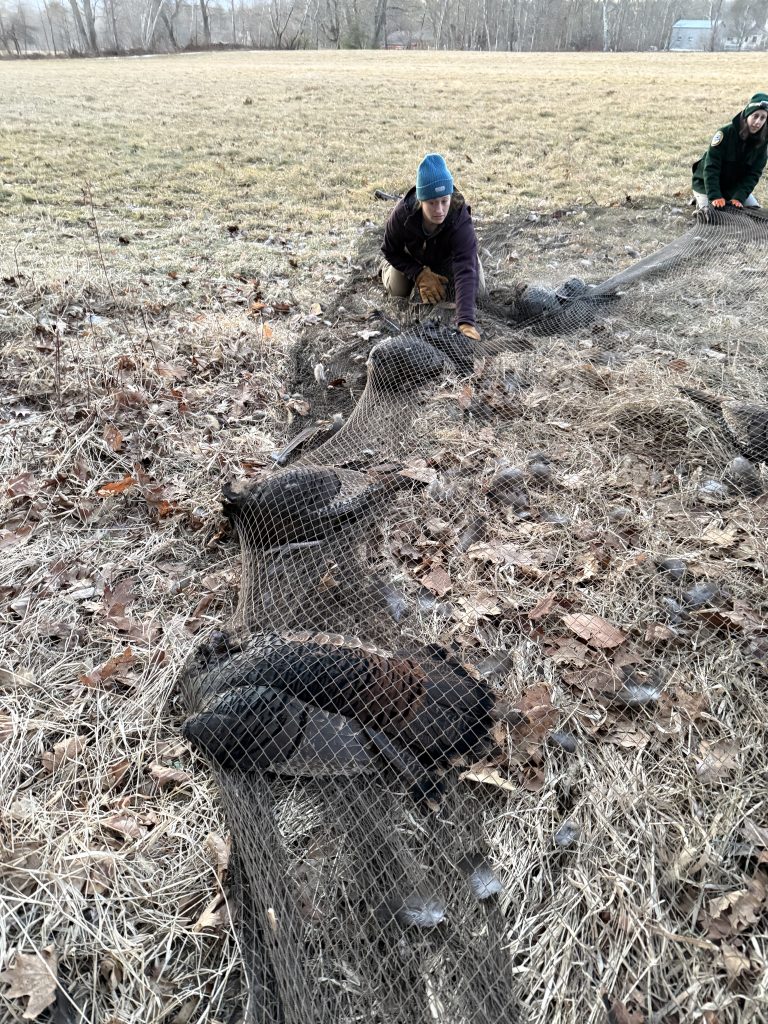
We all covered the distance to the turkeys in short order and began to place large blankets over the birds to keep them calm and quiet. As turkeys were removed from the net, we moved swiftly to fit them with leg bands and take measurements and blood samples before carefully letting them go. A little shaken, but none the worse for wear, the birds would fly off to regroup as a flock.
The data from this project will go a long way toward better understanding the resource on a local level while ensuring that wild turkeys will be conserved to be enjoyed for future generations. The morning concluded with 18 birds successfully trapped, banded and sampled to provide valuable data that will inform the responsible management of New Hampshire’s turkey population. While it was not a balmy spring morning filled with gobbles, it was a very successful “hunt” in my book.