The Rematch
Fall mentored youth hunt culminates months of anticipation.
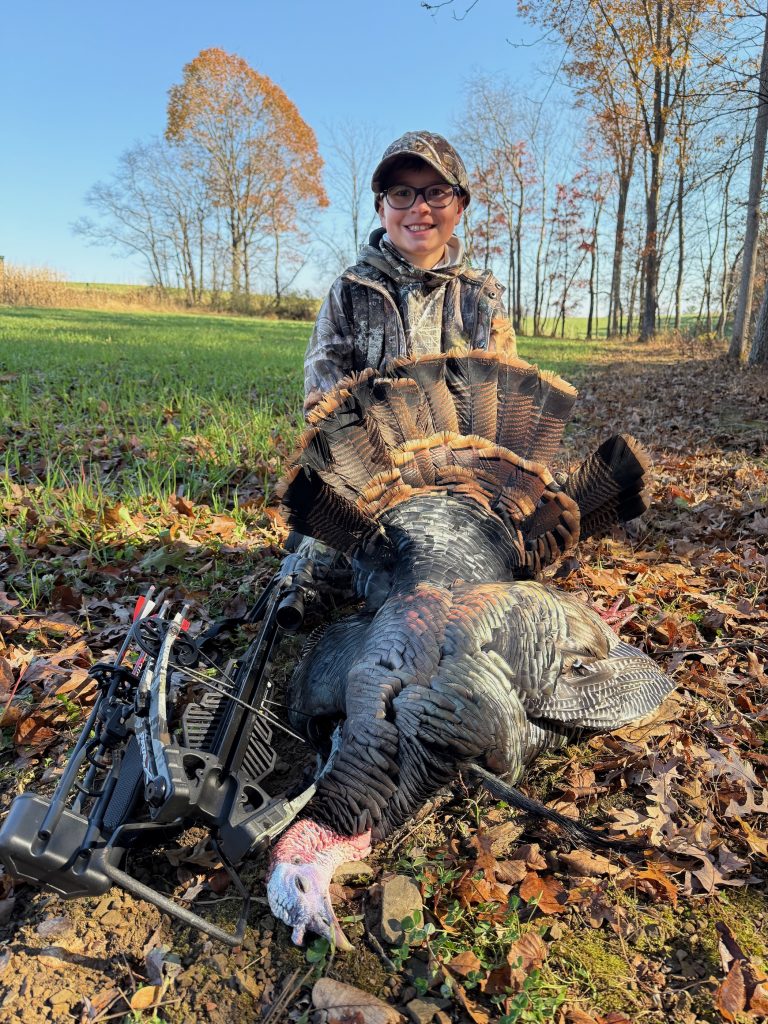
Six months is a long time to wait for a second chance, especially for a 10-year-old looking to fill his first turkey tag. However, when two toms flew down from the roost during a Pennsylvania spring mentored youth hunt and gobbled their heads off within range but never presented a clear shot opportunity, the experience still proved exhilarating enough to make the wait worth it. For my son Foster, the pure thrill of this tantalizing spring hunt bred eager anticipation for a fall rematch once turkey season reopened again later in the year.
The challenge would be keeping the turkeys, which have diverse seasonal needs and a fluctuating home range, satisfied so they’d stick around our family farm until then. We knew we’d need to make the property as desirable as possible to support both a thriving flock and sustainable hunting opportunities into the future. The good news was the birds were already there, and with a little help, they’d likely continue to stay.
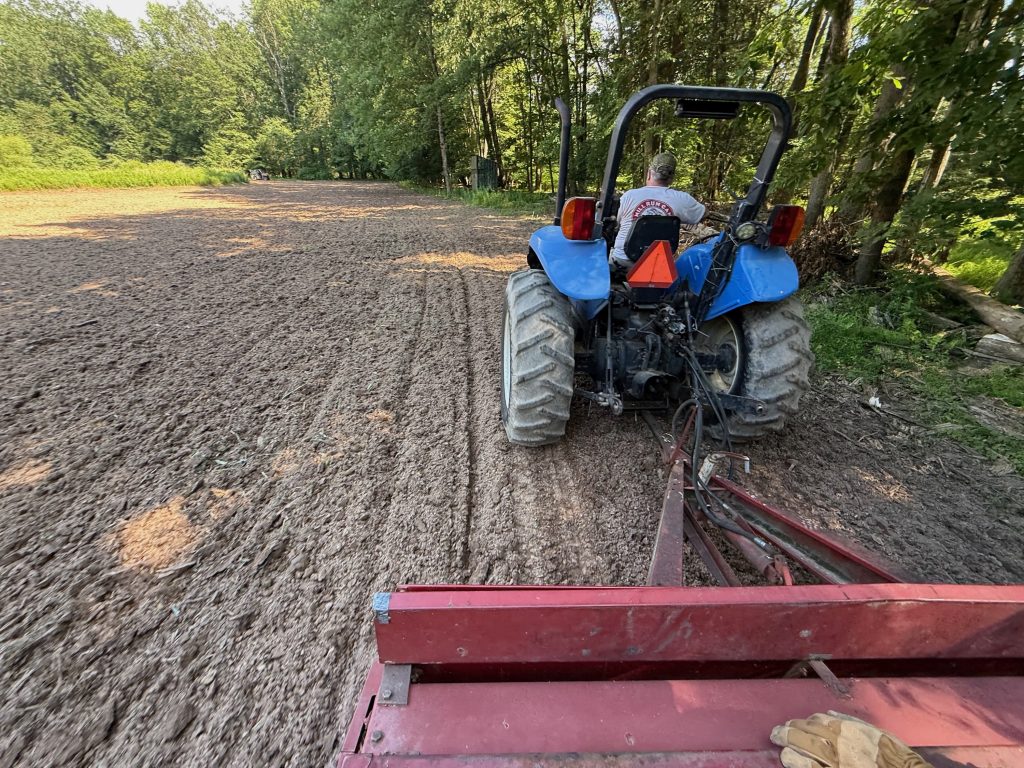
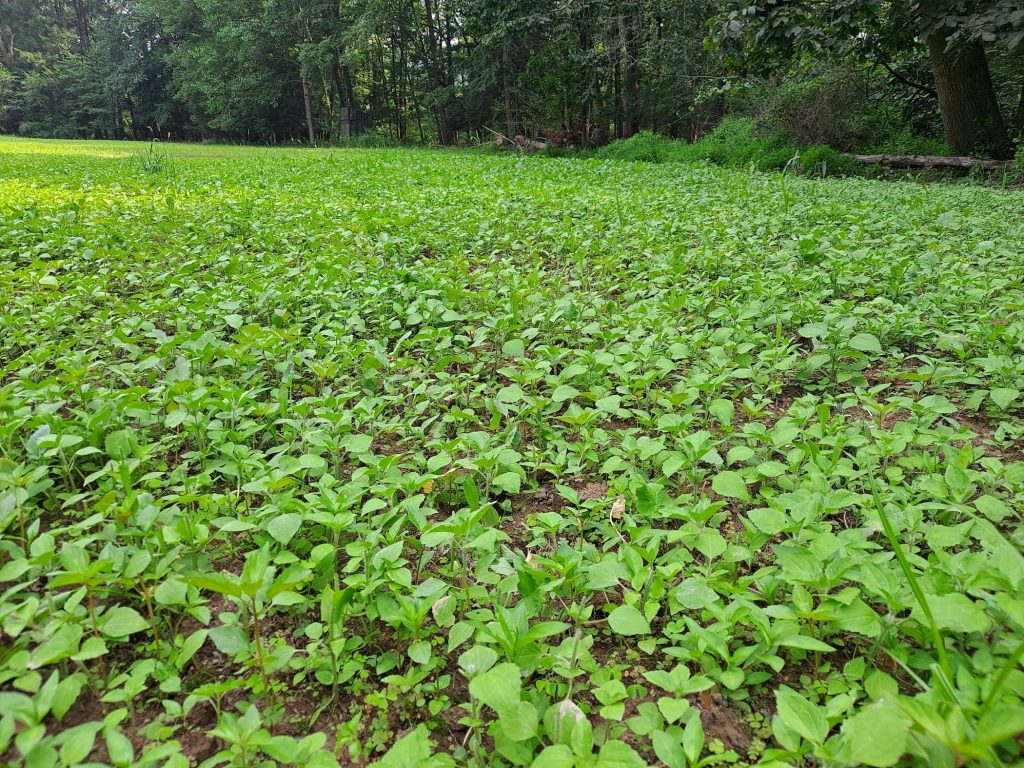
During the summer months, food plots were planted with NWTF conservation seeds, establishing a healthy balance of crops, forage, and cover. Roosting areas were designated as sanctuaries with minimal human intrusion, allowing the turkeys to feel safe. Lastly, transition zones from field edges to woodlots were thinned of poor-quality growth to help daylight plots and simultaneously boost hard-mast production.
The resident flock responded positively to these simple habitat enhancements and appeared to remain in good numbers when autumn arrived. All through September and October, we monitored the property with trail cameras. One field edge drew extra attention, as it offered lush green forage and plenty of acorns that both turkeys and deer seemed to favor.
A group of longbeards began frequenting this woods-line smorgasbord in a cyclical pattern every four to five days over the course of several weeks. On Nov. 8, when a clear Saturday morning finally lined up with our busy sports schedule, Foster and I jumped at the opportunity to slip in quietly and pop up a blind before daylight – especially since the trail camera intel showed the gobblers were due any day now.
As the eastern sky glimmered dawn’s first sleepy light, the silhouette of a deer on the far corner of the field lured Foster to his crossbow tripod, since both archery deer and turkey seasons overlapped. However, the action quickly died down and remained quiet for most of the morning.
Just after 9:30 a.m., we spotted a group of seven turkeys working in our direction on the hillside behind us. A few soft yelps on the diaphragm call captured their attention, and they crossed the hollow to approach our blind within minutes. Initially, they kept to the woods and walked single file past us. They were all longbeards, and Foster worried he might not get a clear shot once again.
Luckily, they appeared on the far side of the open field a short time later, and one more cluck brought the gobblers running. At 30 yards, Foster picked out a big one, waited for it to turn broadside, and sent a bolt perfectly through the vitals. It fell within sight, and we hurried to admire the mature tom, which weighed 20 pounds with 1-inch spurs and a 10.5-inch beard.
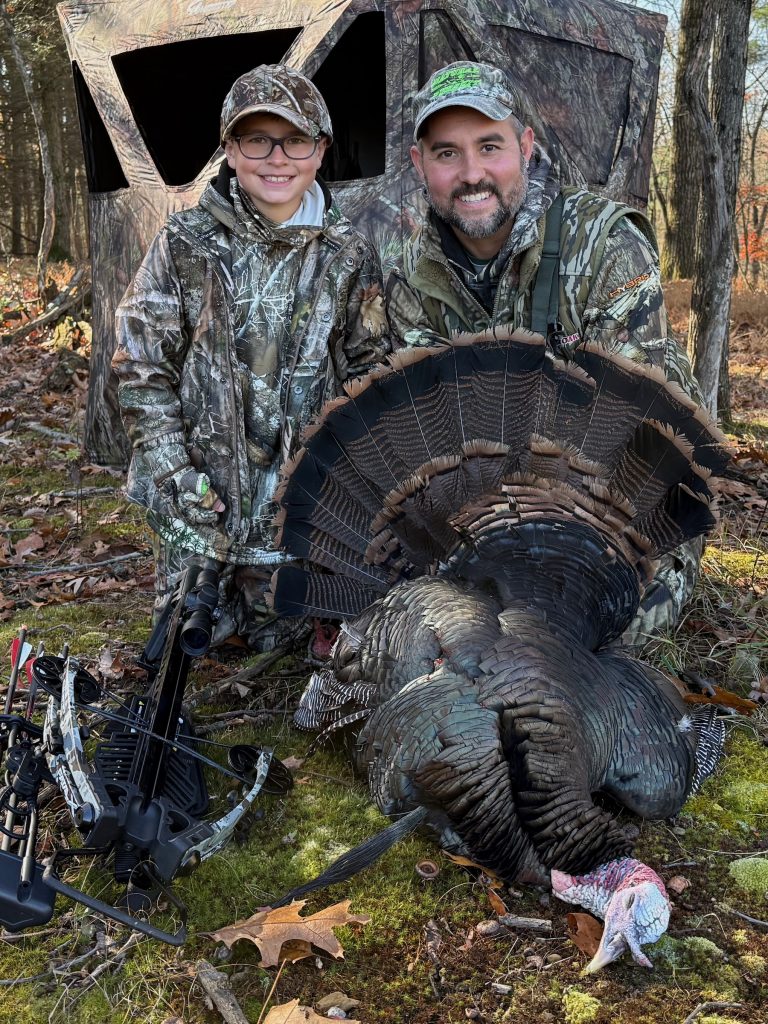
This fulfilling hunt on the final day of fall season was a fitting climax to months of hopeful anticipation for both of us. As my son proudly ran his hands over the shimmering bronze feathers, vibrant remnants of fall foliage framed the scene. His smile was almost as broad as the turkey’s fan. The rematch was worth the wait.