Success
It’s in the eye of the beholder – and most wise turkey hunters know this is a win-win proposition.
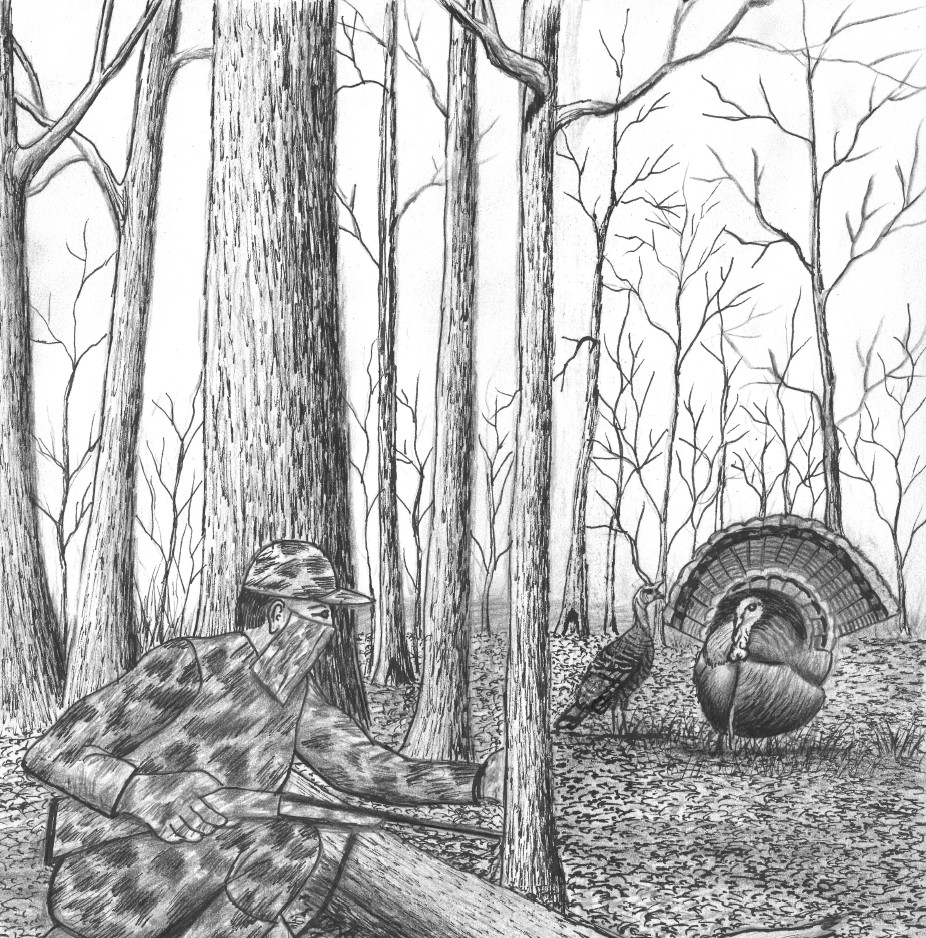
The boy. Could not believe. A bird could be. So big.
But there it was, sure enough, caught in a window of daylight, surrounded by fly-down shadows, strutting as he’d seen gobblers do in the sporting magazines he studied as soon as the latest issues hit the mailbox.
But those were drawings. Paintings. Photos. This was the real thing, right in front of him.
The old-timers at the roadside diner after their fall rabbit hunts together often said spring gobbler hunting was too easy. That it was cheating. That it took nothing to call in a tom during the breeding season. That killing a longbeard in the fall was the real test. They were defiant in this belief. And he admired the men who said it.
Looking over the damp leaves, down through the Pennsylvania hardwoods standing tall on the ridge, his gaze locked hard on the silhouette of the giant turkey, it looked like anything but easy, getting this bird close enough to shoot.
In fact, in some ways he feared the moment he would be tested. Just having the strutter in front of him felt like he’d accomplished something special.
Rising early, he’d crossed the ditch and climbed the steep trail alone that morning, with permission of his mother and father, which wasn’t at all unusual in the 1970s. Mentoring then involved some trust: a hunter’s safety course, plenty of small-game hunting on your own, and never wanting to shame the older hunters with whom you spent occasional time, watching, learning by example.
You wanted to belong. And never ever make a boneheaded mistake.
And so here he was alone with the bird, amazed the palm-sized slate attached to a corncob striker and small wedge of sandpaper for dressing the call’s surface had managed to make yelps sweet enough to put this turkey in front of him.
An otherworldly vision in the morning light.
His body gently shook from the daybreak chill. And from the excitement of watching the spring gobbler.
His fall turkey hunts, in the several years since he started at the legal age of 12, included a lot of easing through the woods. Ridge-running, as they called it. Squirrel season was open at the same time as the autumn hunt for turkeys, and pure pleasure, mixed with the excitement of finding flocks scratching in the leaves, the glimpse of distant birds, or the simple mystery of their movements, ghostlike in those Allegheny foothills.
What would his dad do right now? Probably be sitting in a better position, the boy thought. And clearly the turkey in front of him, strutting, now gobbling, rattled him as if his soul were a wind chime in a coming storm.
Easy? Man, it sure didn’t feel like it.
Calm down, he thought. He dared not even take a deep breath to do that. Even at his age, a teenager with some experience, one who had read as much about the wild turkey as he could, and seen his dad speak of the tradition with calm, even tones, the boy knew a turkey could see better than anything in those northcentral PA woods.
The gobbler silently turned, looking, head erect, and started easing his way, no longer stuck in place. At first, he thought surely the bird was coming toward him as if by some miracle. His dad had always said, “If the turkey shuts up after gobbling at your calling for a while, wait. Be patient. It might be coming in.”
Now the bird was closer, larger than ever, his head cardinal red, blue jay blue, snowball white. The boy’s heart was almost like an animal trying to escape his chest. He had never felt anything like this.
His shotgun was on his knee. He was ready, still as a stump. He didn’t know if he’d get the chance to raise the gun for the kill, or if the gobbler would see him in doing so.
Suddenly, shot full of an electric surge right then, he heard footsteps in the leaves to his left, expecting to see a gray squirrel hopping by, just as a shadow figure passed in his side vision, almost close enough to touch, moving steadily in the gobbler’s direction: a hen.
Her colors were muted but also beautiful: blue-gray head, dusty feathers with a sunlit back, smaller, mincing steps deliberately toward the giant black tom. He popped into strut again. She walked toward the gobbler, then away, and the tom followed the hen down the hill.
The feeling inside him was like bathtub water draining. He felt light-headed. The two turkeys slowly moved up the far hill.
It took a long time for him to stand. And when he did, his legs now tingled. He checked his gun’s safety. He relived the hunt in his mind. The hen and the gobbler, gone. He wasn’t sure he could remember how to walk. The world, a different place now.
Sitting on a log, he kept thinking of what he had done wrong, and what he would tell his dad, his brothers, his mother, his friends. He felt the power of it all. He had called one in. Surely this meant something.
He could hardly believe it. He had called a turkey gobbler in.
“How’d you do?” his father had asked, later that night at supper. And as he told him the story, the boy could see his dad’s face wanted more, a dead turkey, but he also knew how hard it was to do that.
“I’d go up there tomorrow,” his dad said, almost smiling, his blue eyes steady with memories of his own turkey hunts, “and just see what happens. Old gobblers are tough birds to kill.”
The boy took his dad’s words as a blessing. No true disappointment in his voice. An acknowledgment of doing something well. As if he were now finally becoming a turkey hunter. His mother’s supper plate never tasted better.
He hunted the next morning, and more sunrises that season. He may or may not have heard the turkey gobble on the same ridge. Maybe it was another tom. No matter.
Calling the longbeard in, and seeing the hen coaxing the tom away, was enough.
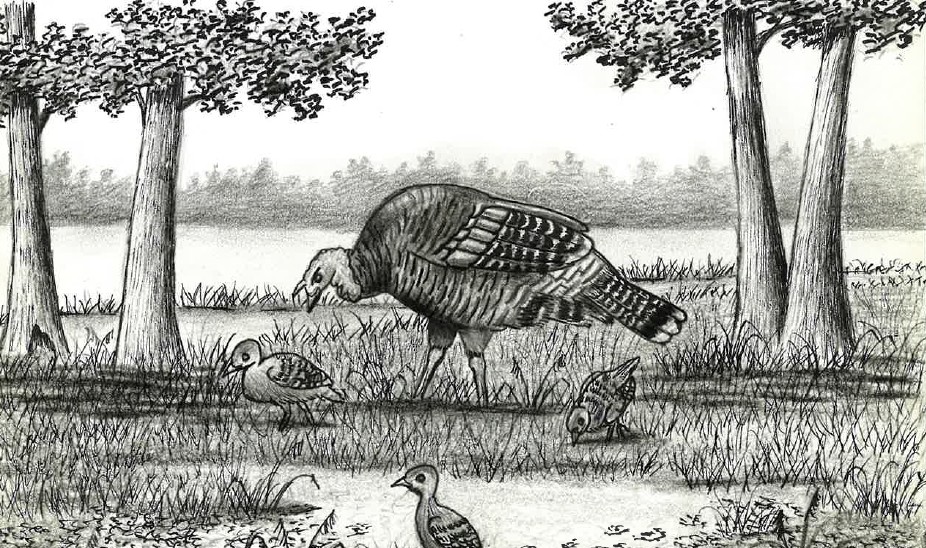
And, months later while fishing for native brookies, he caught movement in a little green field just off the plunge-pool creek bed. The hen — he was sure it was the same hen somehow — stood statue still.
Then he saw her turkey brood, bugging along in the summer grass.
Full circle, he was in deep possession of the moment, a rush of feelings, a gift, full of gratitude for everything in the world, knowing he would forever be a turkey hunter, as he watched the flock move up the hill, and out of sight.