So, You Want to Hunt Birds With a Dog?
There comes a point after bringing home a bird dog when the excitement gives way to a much less exciting question: What am I supposed to do with this thing? I asked myself that question a lot when I started training my first hunting dog, Otto.
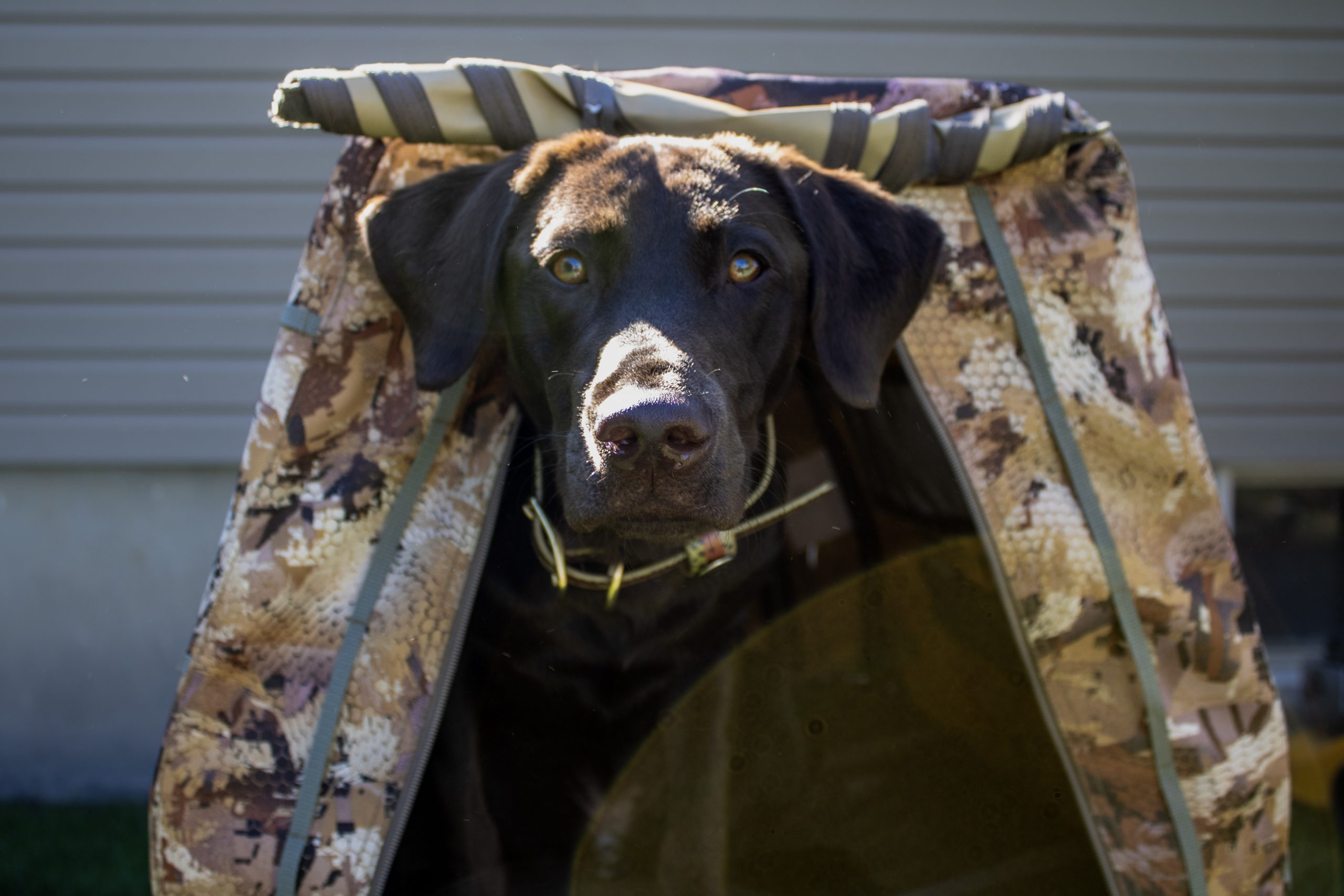
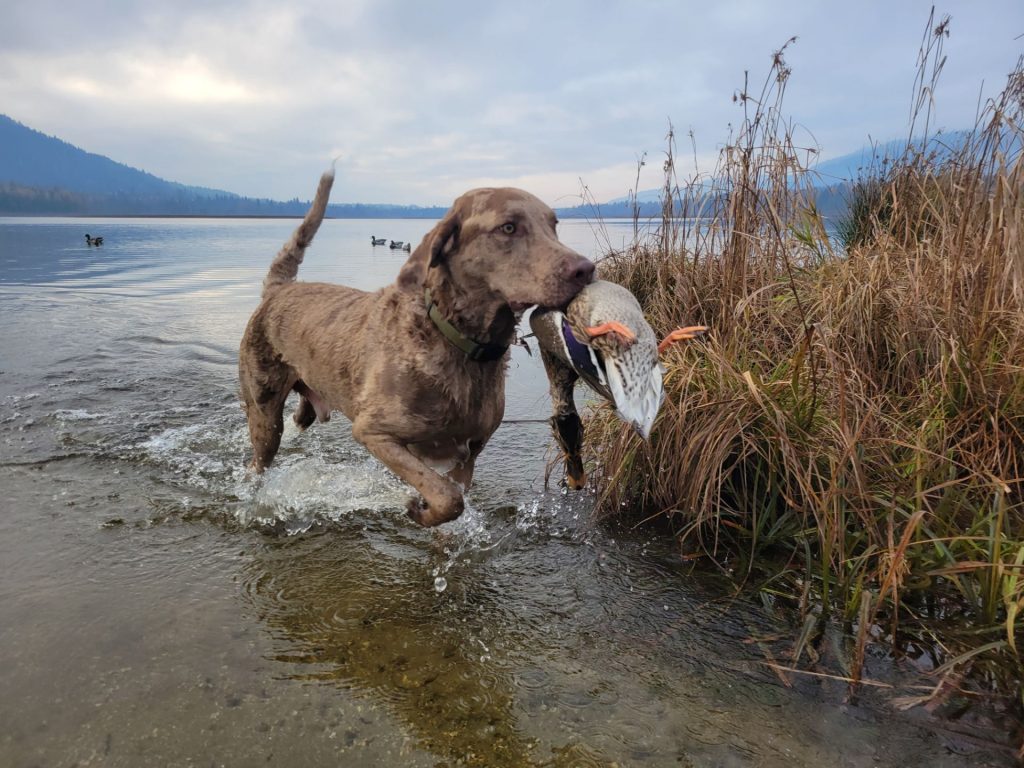
On his first duck hunt, I remember feeling an immense sense of pride watching him retrieve bird after bird. But even while I was proud of him, I was already thinking about everything that wasn't perfect and what we needed to work on next.
That has probably been one of the biggest lessons of training a bird dog for me. It is easy to focus so much on the finished product that you forget you're supposed to enjoy getting there. Training Otto taught me a lot. It also taught me how much I didn't know.
Last year, we added a chocolate Labrador to the family, Maple. With duck and pheasant seasons approaching in Utah, I’ve found myself looking back on her first year of training, and on all the things I was learning right alongside her. For anyone who may be in the same position I was a year ago, there’s one question that seems to loom largest when you’ve never trained a hunting dog before: How do I know what I’m doing?
I’m still figuring that one out.
When I first started training Otto, I spent a lot of time wondering if I was doing things the right way. There is certainly no shortage of information. Books, videos, training programs, social media and experienced dog owners can all tell you how they think a bird dog should be trained. The problem is that once you start looking, you can find five different answers to the same question.
NWTF R3 Coordinator Jesse Warner has been training hunting dogs for years, including his Labrador, Boone, and Brittany, Monte. When he got Boone in 2016, he started with a Tom Dokken training book and DVDs, using the two together to fill in the gaps.
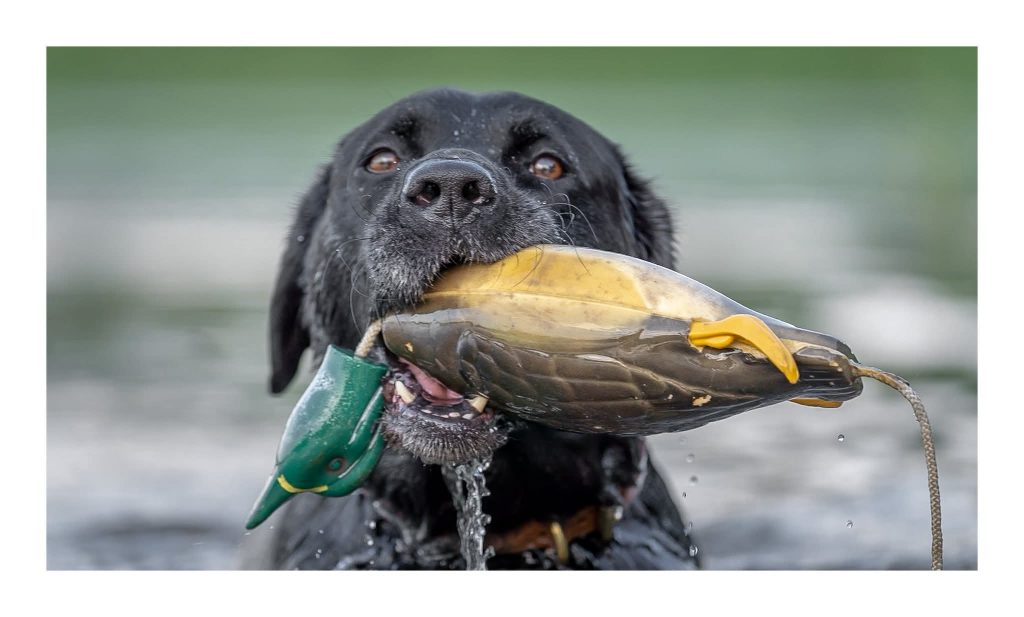
"Nowadays we have so many resources to choose from, with YouTube University being a go-to place to learn," Warner said. "But I've found that choosing a physical book on the specific type of dog you want to train is a great place to start."
I've found the same thing. The internet is incredibly helpful when I have a specific question. It is considerably less helpful when I start scrolling without one, falling into rabbit holes and overwhelming myself with information.
One of the easiest things to do with a young hunting dog is think too far ahead. You see a finished retriever sitting quietly in a blind, marking a bird and making a perfect retrieve, and you want your puppy to do the same thing. But getting there happens one small lesson at a time.
"Let your puppy be a puppy and play, be a little mischievous and learn to trust you with all its being," Warner said.
That can mean something as simple as playing fetch down the hallway or practicing a recall in the backyard. At that age, you're not necessarily trying to create a finished retrieve. You're teaching the dog that being with you is fun and that coming back to you is a good thing.
I've had to remind myself of that with Maple, as it can be tempting to keep training because you think one more repetition will finally make something click. Sometimes it does, but other times, you just end up with a frustrated dog and a frustrated handler.
Five good minutes can be more valuable than 30 bad ones. The goal isn't for Maple to master everything right now, rather to build the foundation she'll need later.
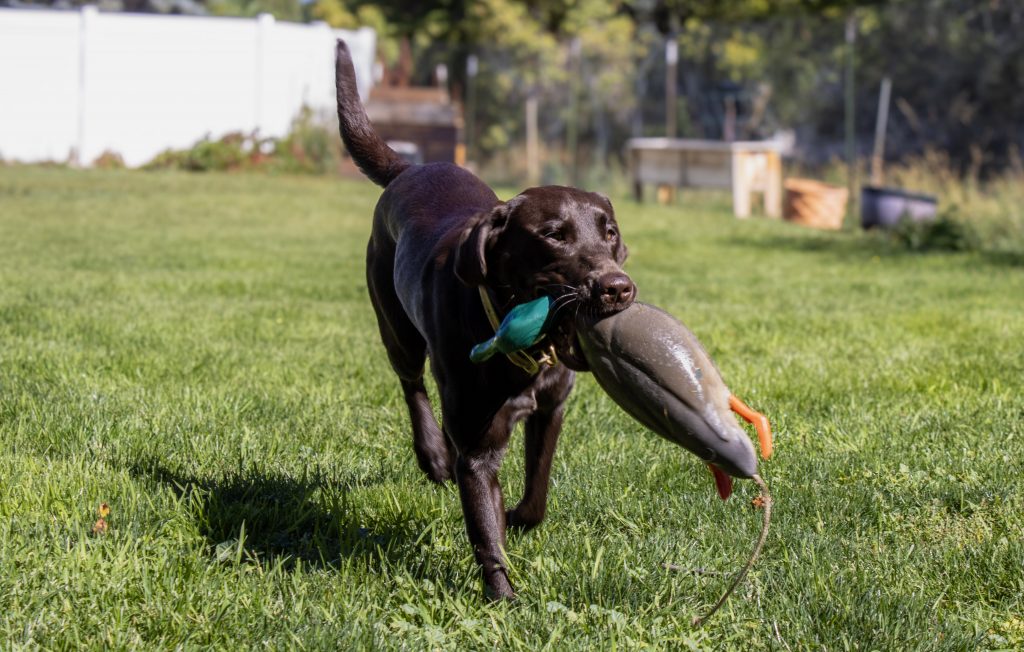
And some lessons don't become obvious until you're standing in the field. I learned one of mine with Otto. Before his first duck hunt, I thought I had prepared him for the important things. We had worked on retrieving, had introduced water and worked around gunfire. I was confident he knew he needed to sit in the blind.
What I hadn't thought much about was the decoys. The first time Otto saw a spread of moving decoys, he was fascinated. To him, they were something new floating around in the water, and apparently something that looked like it might be worth retrieving.
It wasn't a disaster, but it was a lesson. I knew the decoys weren't birds, however Otto had no reason to know that unless I taught him. But that experience changed how we're approaching Maple.
Rather than waiting until hunting season and expecting her to understand what a duck blind is supposed to mean, we're introducing her to it now. She gets in and we practice staying there while she gets comfortable with the space, and eventually, we add distractions.
The idea is simple: I want the blind to be familiar before I ask her to sit there while birds are flying, decoys are moving, hunters are talking and shotguns are going off. With Otto, one of the things we struggled with was sitting still when everything around him was happening.
There is a lot happening in a duck blind, so with Maple, we're trying to teach her from the beginning that when she gets into that blind, that's her spot. That's her job.
I don't know yet if it will work exactly the way I hope, and that's kind of the point. We're taking what Otto taught us and trying something different with Maple. Maybe we'll get it right, but most likely we'll discover something else we forgot to teach. Either way, we'll learn something.
When talking withWarner, he describes dog training as a series of layers.
"Dog training is a series of layers — lessons — stacked on top of each other until you've got a bird dog," he said.
I've found that to be a pretty good way of thinking about it. A dog doesn't go from puppy to finished hunting partner overnight. You teach one thing, build on it, and eventually, those individual lessons start to look like hunting.
The same goes for introducing a dog to the harder parts of the job. Gunfire, for example, shouldn't be something a young dog simply encounters one morning in the field. Warner's approach is to gradually introduce the sound from a distance while the dog is doing something it already enjoys, slowly decreasing the distance as the dog becomes comfortable.
The same principle applies to water, retrieves, cover and eventually the chaos of a hunt. Give the dog a chance to succeed, then make it a little harder. Then a little harder again.
If Otto taught me anything, it's that there is no perfect training plan. There is no magic sequence that guarantees you'll end up with a finished hunting dog. Sometimes you teach something wrong. Sometimes you realize you skipped a step. Sometimes your dog surprises you in a way you never expected.
"There is no magic sauce or silver bullet," Warner said. "You and your dog will fail time and again and that's OK. Chalk it up as a mistake and learn from it, keeping in mind not replicating it in the future."
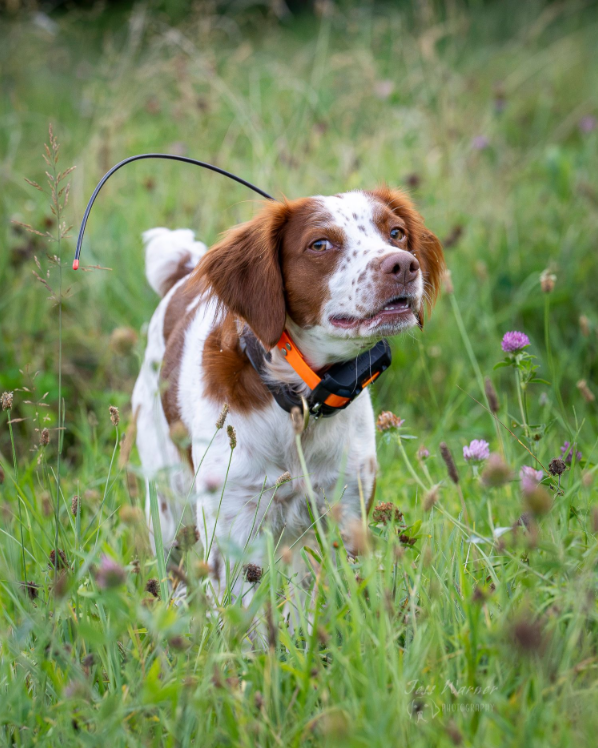
That's probably the hardest part for me. It's difficult not to get frustrated when something you've been working on suddenly falls apart. It's easy to watch someone else's dog work and wonder why yours isn't doing the same thing. But Otto taught me that the mistakes are part of the process, too. The first hunt showed me something I hadn't prepared for, and instead of seeing that as a failure, I can use it to prepare Maple differently.
Jesse and I aren't finished-dog trainers sitting down to tell everyone else how to do it. We're hunters who decided we wanted to learn how to train our own dogs.
We're still figuring it out. Some days the dog teaches us. Some days we teach the dog. And some days we both go home wondering what we're going to try differently tomorrow.
But somewhere along the way, the dog stops being just a puppy you’re training and starts becoming something else: a partner you’re learning to hunt with.
And that’s probably a good enough reason to start.