Seeing the Wild Turkey Cost-Share Program Firsthand
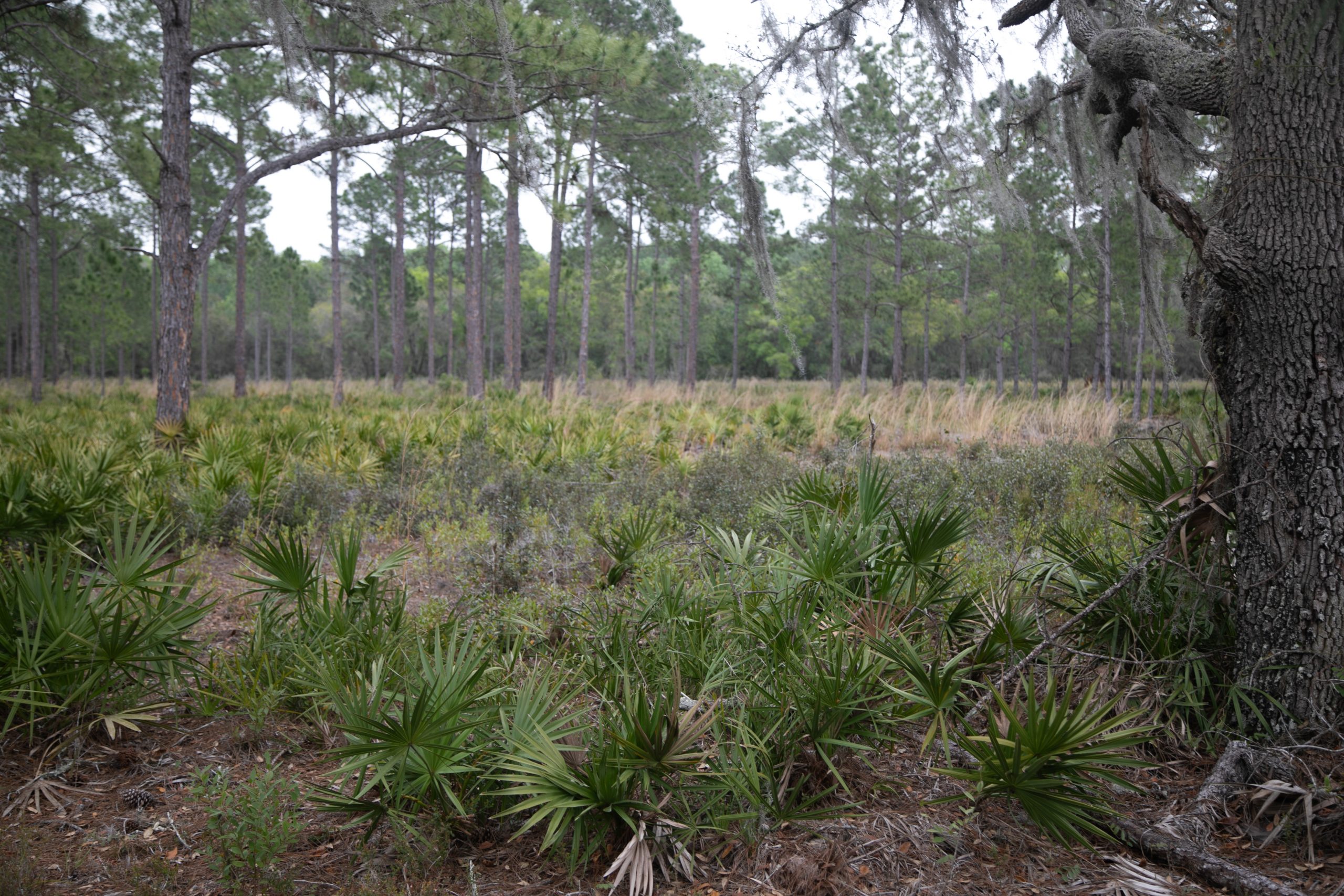
After a 5-mile trek into Florida's Lake Panasoffkee Wildlife Management Area, we found exactly what the Wild Turkey Cost-Share Program was designed to create.
We stopped to visit the site on our drive north after a fun trip of chasing Osceolas in southern Florida. The Wild Turkey Cost-Share Program is a targeted effort between the Florida State Chapter of the National Wild Turkey Federation, the Florida Fish and Wildlife Commission and the Florida Forest Service.
I was joined by Kyle Lybarger and Luke Chaffee of The Native Habitat Project.
Since the Wild Turkey Cost-Share Program began in 1994, it has contributed over $9 million to wild turkey habitat management projects across Florida, with $2 million being spent among 26 projects just this year with in-kind match.
But what does that actually mean for wild turkeys?
Sometimes projects you hear or read about seem vague. I think that is just a result of not experiencing something in person. As someone who has never hunted Florida until this year, I’ve only known about the Wild Turkey Cost-Share Program from what I’ve read online: millions of dollars, thousands of acres, hundreds of projects.
Actually going to a project site, however, puts all in perspective. Big numbers are traded for qualitative experience — seeing turkeys, spotting tracks and strut marks, and seeing the regeneration of plant species turkeys rely upon.
The 9,000-acre Lake Panasoffkee Wildlife Management Area is administered by the Southwest Florida Water Management District and is open to public access year-round, except during special-opportunity archery and spring turkey seasons.
We arrived just ahead of the WMA opening to scouting for the lucky winners drawn for the special-opportunity turkey hunt. Seeing SWFWMD staff cutting firebreaks as soon as we made our way onto the trail was a positive sign of the management activities happening within the WMA too.
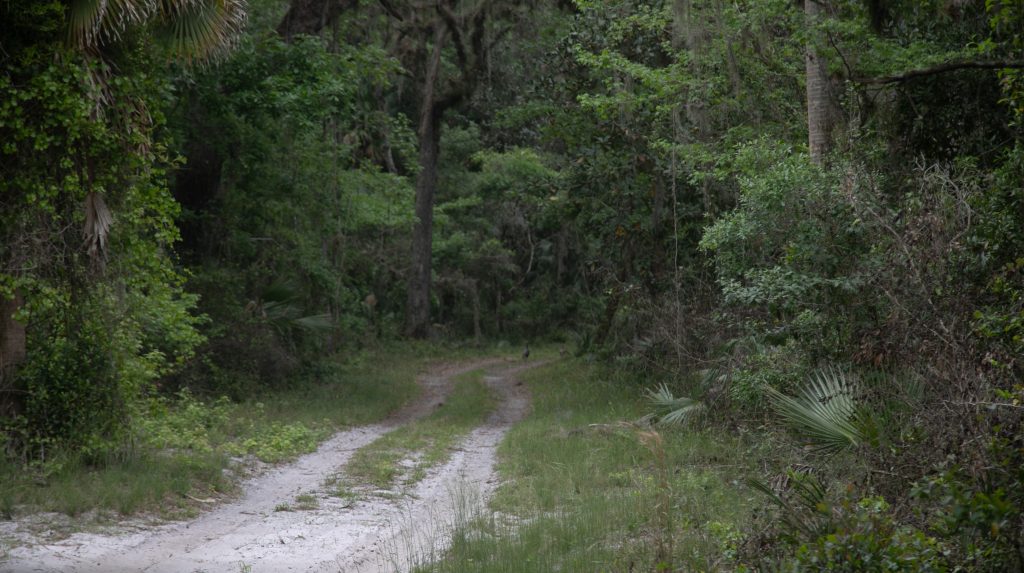
From the entrance gate to the Wild Turkey Cost-Share project site was a trek to say the least, about 5 miles, but the effort was worth it. And along the way, we got to experience how beautiful the WMA is and see some of the various critters that inhabit it.
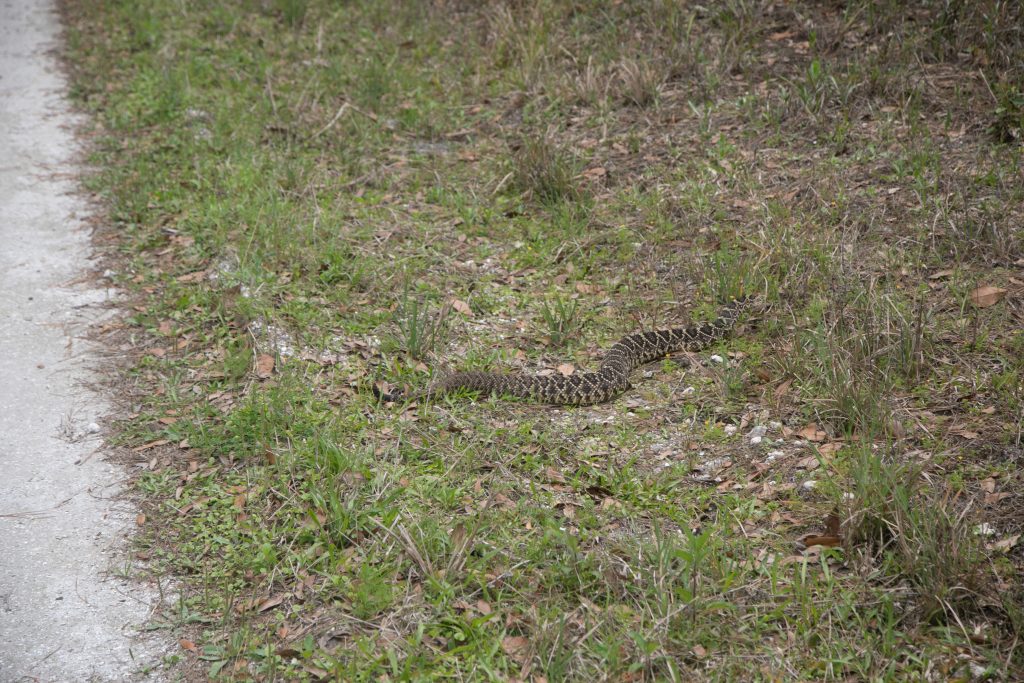
We saw an Eastern diamondback rattlesnake, an alligator, tons of birds, majestic old trees, and Lybarger even pointed out a “toothache tree,” also known as Hercules Club, which the bark of is said to aid in toothaches.
As we got closer to the project site, we saw some wary turkeys that, in proper fashion, ran away as soon as they saw us, toward the area managed for wild turkeys.
As we finally arrived at the project site, the dense forest opened up to an early successional paradise.
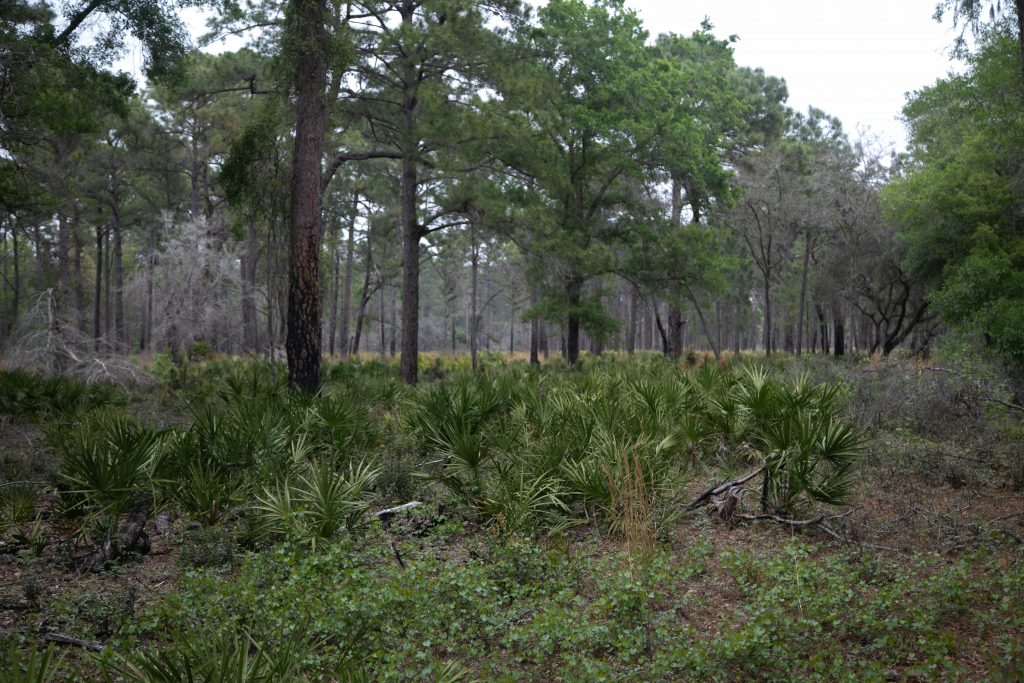
For as far as we could see, flowering, mast-producing and native shrubs saturated a savanna of slash and longleaf pine. Thanks to the Wild Turkey Cost-Share Program, about 168 acres were mechanically treated within this area, grinding up vegetation and setting plant species back in succession.
Targeted vegetation included wax myrtle, sweetgum and other overgrown brush. This work allowed the SWFWMD to safely reintroduce fire and encourage a more diverse understory of grasses and forbs. We saw the results following mechanical treatment and prescribed fire.
By creating nesting and brood-rearing habitat for hens and poults, this project is also a part of the NWTF’s Habitat for the Hatch Initiative, a 10-year effort launched in 2023 to positively impact 1 million acres of critical nesting and brood-rearing habitat across the Southeast. With almost three years under its belt, the initiative has already impacted over 150,000 acres through over 300 projects similar to the one we saw at Lake Panasoffkee WMA.
Strut marks, tracks and turkeys — it was a positive sign to see how this project benefited wild turkeys as designed.
And this is just one project among a slate of work the Wild Turkey Cost-Share Program funds each year. Here, you can see all of the projects the program has funded over the years.
But sometimes reading a whole list of projects about wild turkey conservation doesn't translate; you’ve got to see it for yourself.