Seeds of Success: NWTF New Jersey Bolsters Habitat on Public Land
During his first year as a crew supervisor with New Jersey Department of Environmental Protection’s Fish and Wildlife Bureau of Land Management, Joe Burke has dedicated his time to planning out habitat plantings for wild turkey, deer, pheasant and other wildlife species on wildlife management areas across the northern region of the state.
On his way to and from the office, he drives past fields that the NJDEP team have planted with seed mixes that were purchased by the New Jersey State Chapter of the National Wild Turkey Federation. Just a few weeks after the plots were seeded, Burke can already see progress, and he keeps an eye out for wildlife that might be using the property.
“I think there is a pretty good story to tell with these plantings,” Burke said. “And it was super beneficial to work with the NWTF because planning and coordinating habitat plantings of this scale across multiple WMAs was a learning curve for me in this new position. A big part of that is procurement. We have to determine acreage and seed needs well in advance and often purchase seed in preparation for the following planting season. The NWTF funding helped streamline that process and allowed us to get these plantings established across more than 40 acres.”
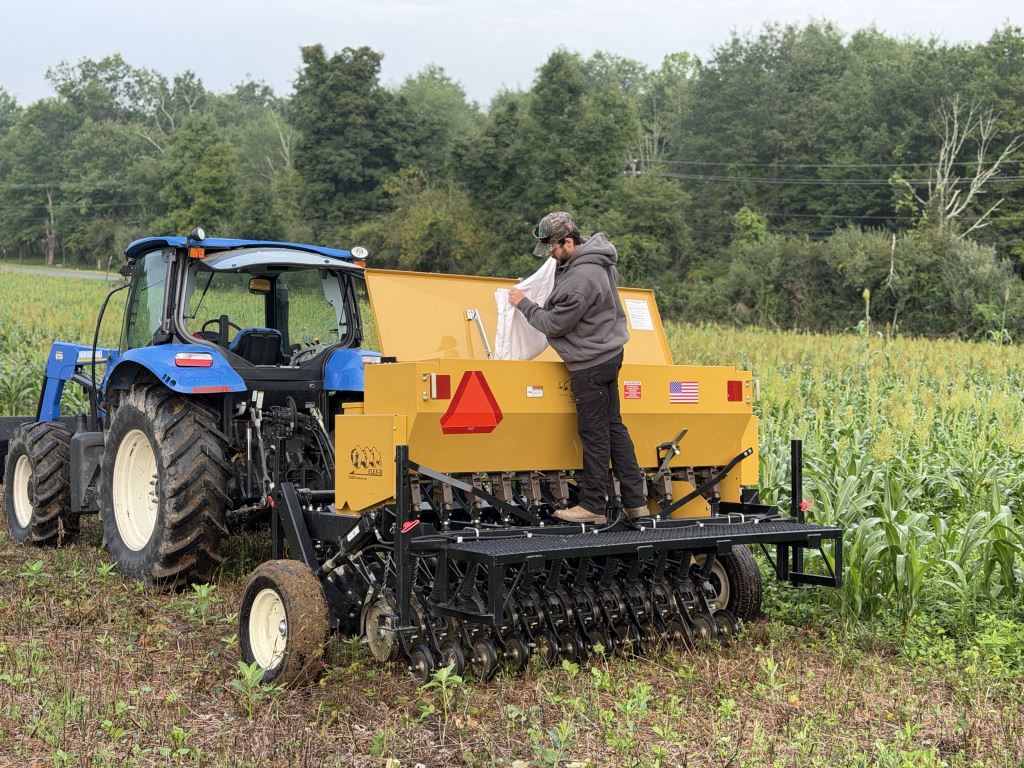
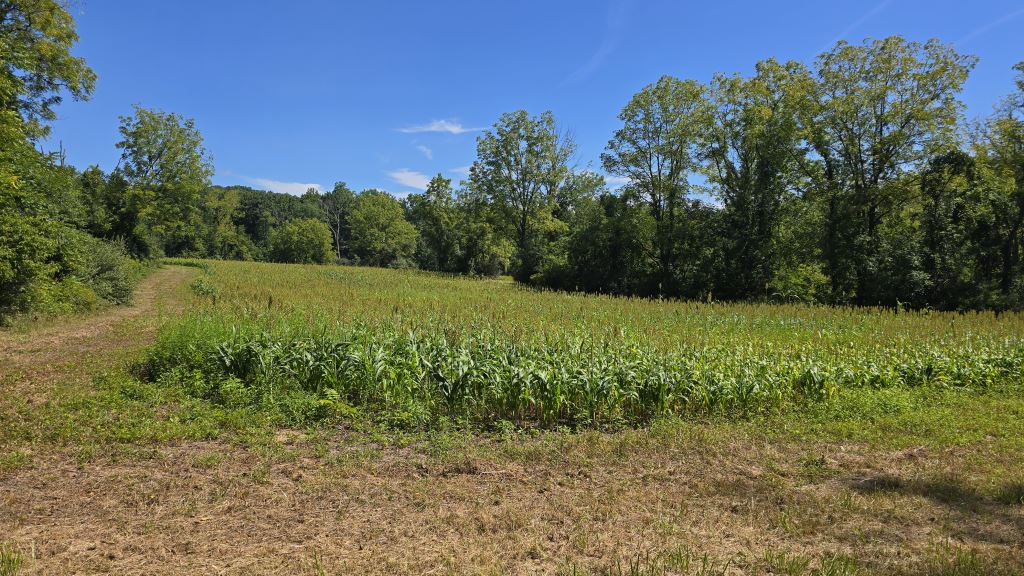
The NWTF purchased a fall seed mix comprised of winter rye, wheat, oats, winter peas and crimson clover that is currently being planted across five different WMAs, as well as corn that was planted across two WMAs in June. Plantings included 10.5 acres of NWTF purchased grain mix at Clinton WMA, 4.5 acres of NWTF purchased grain mix at Whittingham WMA, 5 acres of NWTF purchased grain mix at Flatbrook WMA, 7 acres of NWTF purchased grain mix and 6 acres of corn purchased by NWTF at Paulinskill River WMA and 3 acres of NWTF purchased grain mix and 6 acres of corn purchased by NWTF at Bearswamp WMA.
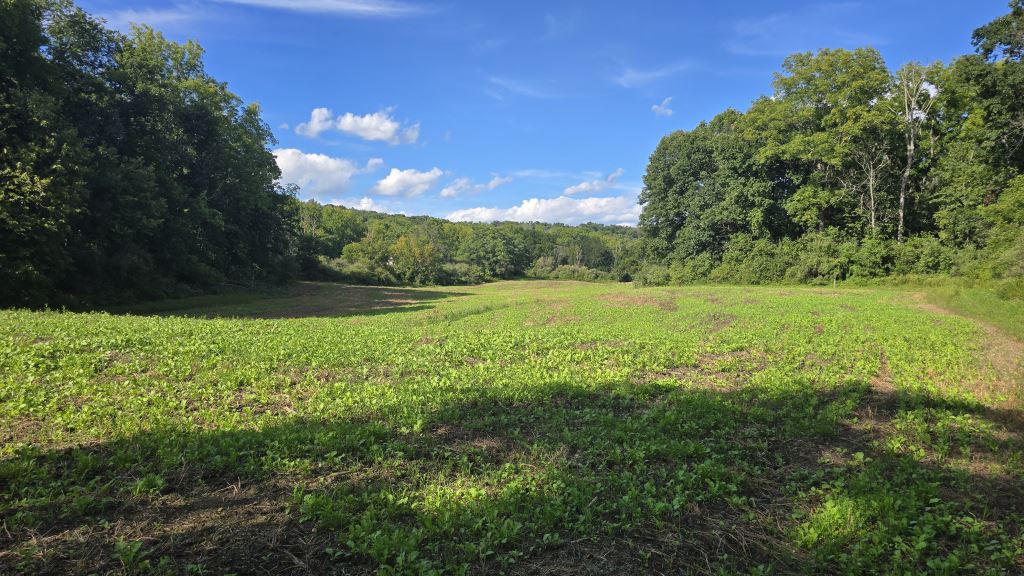
Food plots such as these are a reliable fall and winter food source for wild turkey, deer and other wildlife as the seasons change. Corn provides food and cover for wildlife and increases bear activity during the October hunting season. As black bears move through and feed in the area, they knock down stalks, leaving the remaining grain more accessible at ground level to wild turkeys.
“Overall, I think the combination of the fall grain, clover mix and the corn gives us some really good seasonal diversity,” Burke said. “It allows us to provide benefits over a much longer period rather than just having a short-term food source.”
Early next spring, after the crops overwinter and green up, wild turkeys will experience major benefits from these plots, which will act as a reliable food source that is otherwise limited during the early northern spring season. In the summer, plots will support brood-rearing areas for hens and increased insect activity that provides nutrition for poults. In line with the Forests and Flocks Initiative, these food plots are addressing each stage of the wild turkey life cycle all across northern New Jersey.
“The seed purchased for the Northern New Jersey WMA wildlife openings will provide a great diversity of species available for wild turkeys throughout the year,” said Mitch Blake, NWTF district biologist. “These projects are a great example of how the Forests and Flocks Initiative is targeting all stages of wild turkeys’ needs in the Northeast.”
This work goes beyond just creating food plots for wildlife. These properties were previously non-productive, fallow fields with relatively poor soil health. Burke and Tony McBride, NJDEP Fish and Wildlife regional superintendent, coordinated with the New Jersey DEP Forest Fire Service to conduct prescribed burns on several of these fields last winter. In fields scheduled for planting, the burns removed accumulated thatch and helped prepare the seedbed for planting by Burke’s team. Other fields were burned and left fallow to help set back undesirable and invasive vegetation, while some were also disked by his crew following the burns. These treatments prepared the seedbed and improved early successional habitat that will sustain rich insect biodiversity and habitat for wild turkey brooding.