Secrets from a Turkey’s Crop
Evidence you can use exists in a wild turkey’s craw.
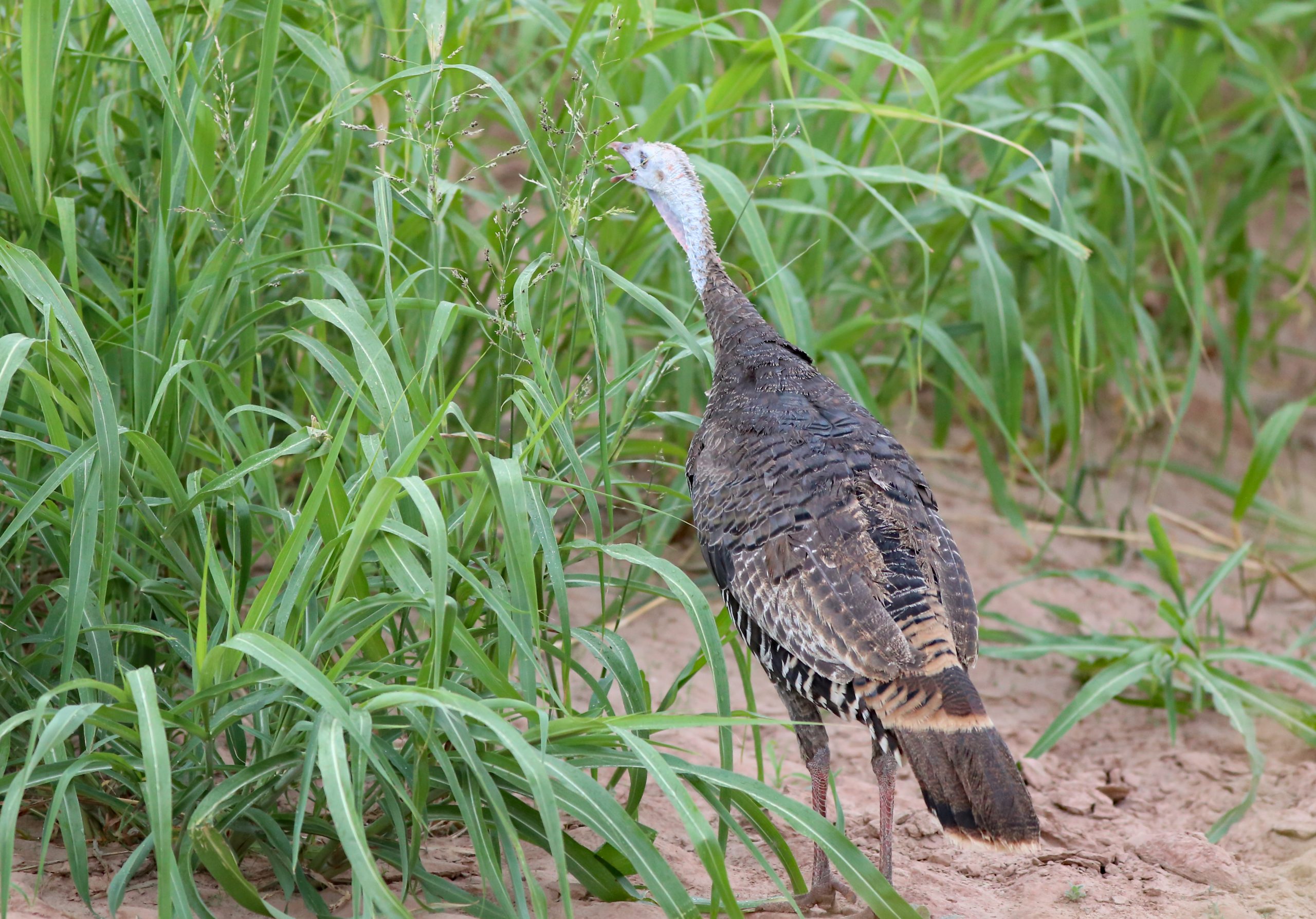
Wild turkeys forage with purpose, scratching through leaf litter to uncover hidden morsels and stripping seed heads as they wander through a grassy glade. As opportunistic omnivores, wild turkeys consume anything they can procure. Their diets are highly diverse and vary wildly depending on the season and location.
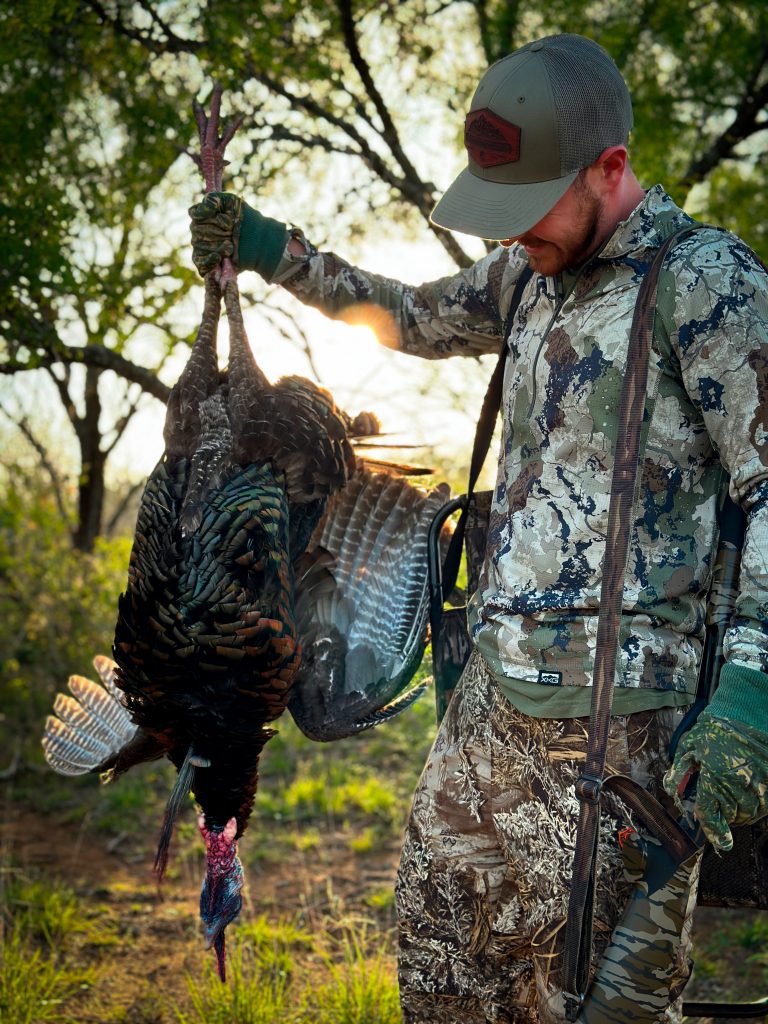
Hunters are in a unique position to analyze a turkey’s crop contents following a successful harvest. Examining the crop can provide valuable insights into how the turkey moves and feeds, which can help guide scouting and management decisions.
Wild turkeys have an efficient digestive system where food passes through a series of specialized organs. Because birds lack teeth, food is swallowed whole and stored in the crop before digestion. The crop is an expandable, muscular pouch that holds the food before it moves to the proventriculus, the glandular portion of the bird’s stomach that precedes the gizzard.
The crop allows for the rapid gathering of food, and wild turkeys will gorge themselves when food is available (think about a large hatch of cicadas or hard mast). Ornithologist Arlie W. Schorger wrote that, in times of abundance, a gobbler’s crop can hold more than one pound of food. In many cases, though, the crop of a spring gobbler actively pursuing hens may contain little or no food at all.
Inspecting the Crop
As you clean your harvested bird, make an incision where the neck meets the bird’s body. You will see the esophagus and the trachea (the trachea is more rigid with rings of cartilage). The esophagus is the pipe that leads to the crop. When food is present, the crop will be noticeable, and you will likely feel or see the most recent foods eaten through the thin tissue layer.
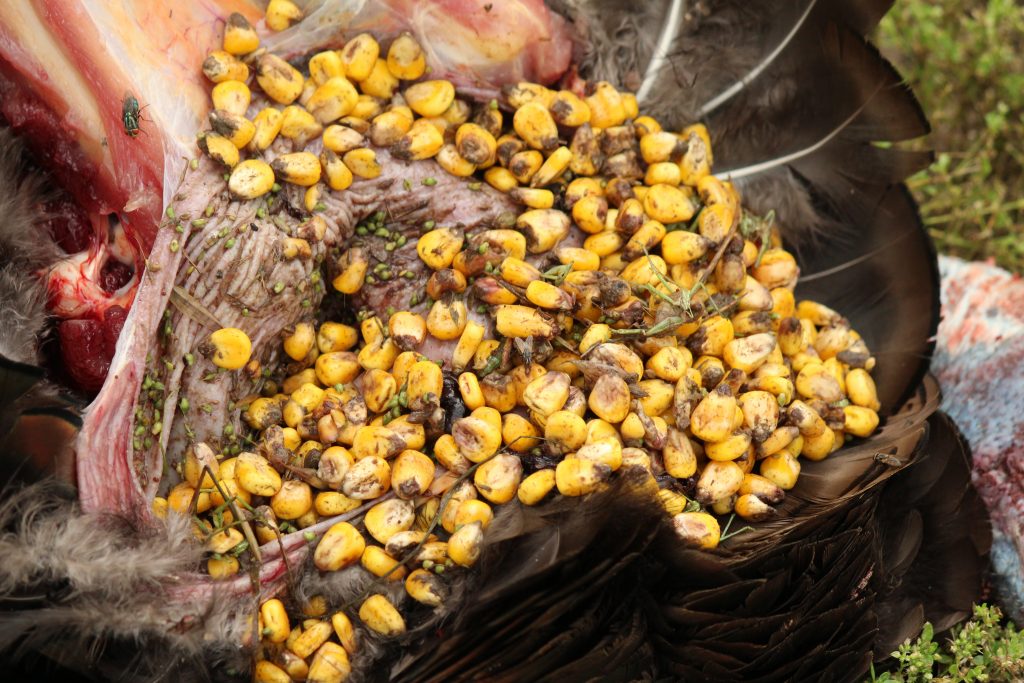
You can remove the crop by cutting above and below the surrounding tissue. Open the crop and place the contents on a white paper plate or tray to provide a clean background for clearer examination.
Items in the bird’s crop are often well-preserved and easy to identify. Crop contents can be separated into categories of interest such as insects, seeds, mast, or by classes of vegetation.
The crop may also contain small stones, grit, or pebbles which eventually accumulate in the gizzard - the muscular organ which performs the mechanical breakdown of food items. These “stomach stones” are vital – especially for digesting hard mast.
Clues to diet and habitat
Hunters and land managers can prepare for the upcoming turkey season by learning how to identify seeds, insects, and other invertebrates. Multiple online and written resources are available to help with identification.
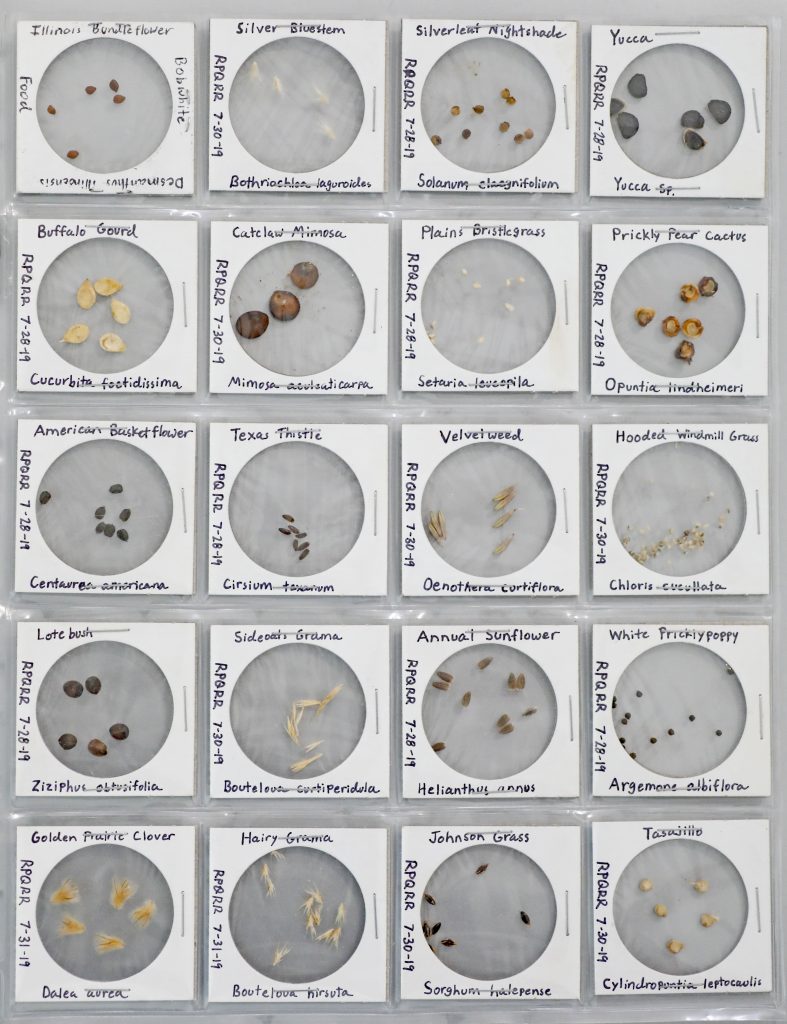
You may decide to set aside notable seeds and invertebrates for later inspection. Photographing seeds can help capture important, fine details. Take photos with something that helps identify the seed’s size, such as a dime or penny. Make sure your image is taken with ample lighting. Most mobile smartphones have built-in camera lenses or magnifier apps free to download for capturing close-up and clear images that can be shared with experts.
Did you find many seeds from a particular plant? Where does that plant grow in your area (under shady canopy, in sunny fields, near water)? Are there remains of agricultural crops or vegetation from food plots?
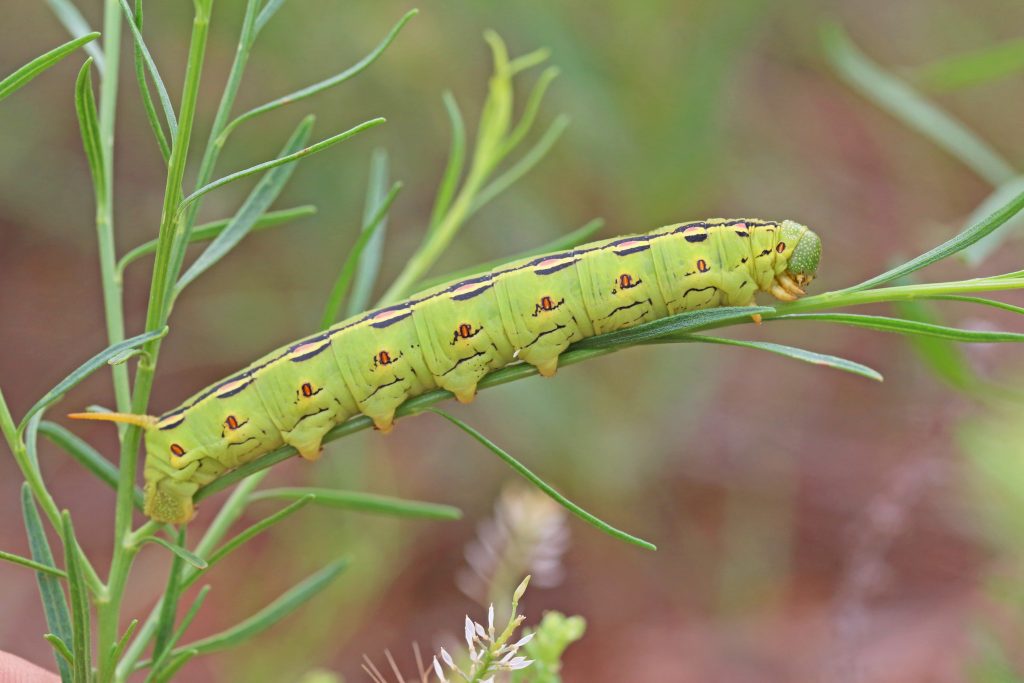
Insects found in a crop also can indicate where a turkey has been feeding. For example, grasshoppers suggest grass or herbaceous vegetation, camouflaged ground beetles may point to rocky areas, and aquatic insects like water bugs might indicate feeding near water sources.
Collecting crop contents may provide insights into how wild turkeys use local food resources. Learning to recognize plants, seeds, and invertebrates found in turkey crops might give you an idea where to scout for next year’s hunting spot.