Restoring Grasslands for Wild Turkeys at Camp Big Sky
In west-central Illinois, a small patch of land is poised to make a big difference for wild turkeys and other wildlife.
Through support from the Illinois NWTF State Chapter, NWTF volunteers and partners are restoring habitat at Camp Big Sky in Fulton County, transforming former brome grass fields into thriving native grasslands that will provide critical nesting and brooding cover for wild turkeys.
The project focuses on nine acres within a 101-acre property in the Driftless region of Illinois, an area known for its rugged terrain, wetlands and diverse wildlife. The site already supports year-round turkey use, making it an ideal place to improve habitat that will benefit local flocks.
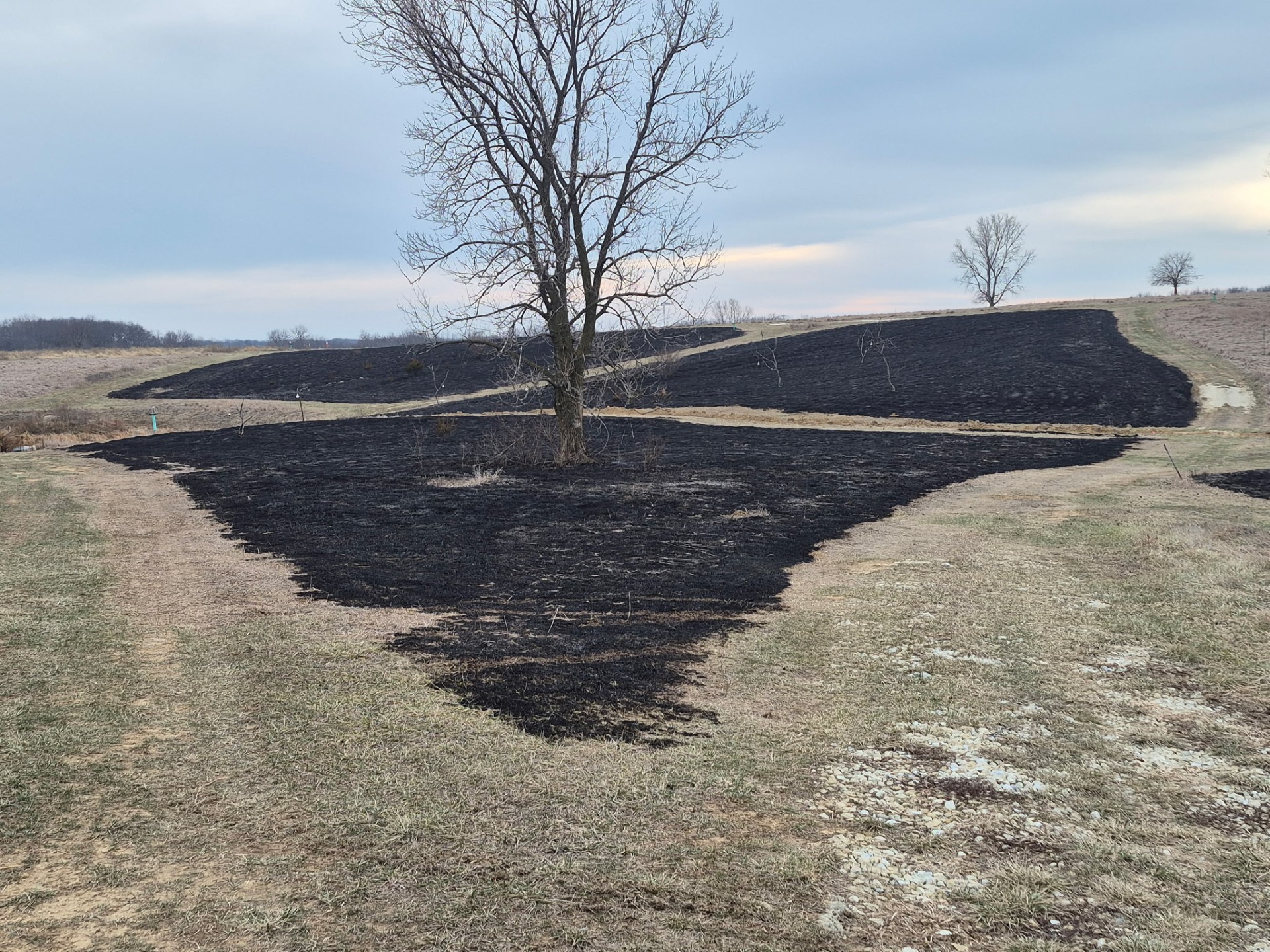
Like many former grasslands across the Midwest, the project site is currently dominated by nonnative brome grasses, which provide limited value for wildlife. Through the restoration effort, crews will first treat the existing vegetation with herbicide and follow up with prescribed fire to prepare the site for planting.
In the first year, Roundup Ready soybeans will be planted for the dual purpose of allowing chemical treatments for invasive vegetation to proceed as well as providing a food plot for mentored deer hunts. By the second year, the area will be converted to native warm-season grasses and forbs — a key habitat type that supports nesting hens and growing poults.
Native grasses create the structure wild turkeys need during the most critical stages of their life cycle. Hens require secure nesting cover in spring, and once poults hatch, they depend on open, bug-rich areas nearby where they can move easily while feeding on insects needed for rapid growth, and the restored habitat at Camp Big Sky will provide both.
The project is being led by NWTF volunteers from the Spoon River Gobblers Chapter alongside Camp Big Sky staff, with additional work completed by contractors and landowner partners.
The effort also builds on a larger conservation network already forming around the property. Nearby habitat work has been supported by several organizations, including Pheasants Forever, Delta Waterfowl, U.S. Fish and Wildlife Service, local Soil and Water Conservation Districts and the Illinois Department of Natural Resources
Together, these partners are working to expand native grasslands and wetland-associated habitat across the landscape, creating a mosaic of habitat that benefits wild turkeys, upland birds and countless other wildlife species.
Projects like the Camp Big Sky habitat restoration are exactly what NWTF members support when they attend banquets, volunteer with local chapters and invest in conservation. Every acre of restored habitat helps strengthen the future of wild turkeys and the hunting heritage that depends on them.
“Although it could be debated how much of a splash nine acres can really make, when nesting and brood-rearing habitat is in short supply, almost any amount of quality habitat can make a difference,” said John Burk, NWTF district biologist for Iowa, Illinois and Missouri. “What’s more, the thing that piqued my interest in developing this project is that it touched on both halves of our mission. Not only will there be nine more acres of limited quality nesting and brood-rearing habitat as a result, but additional hunting access will also likely be created. Camp Big Sky primarily caters to wounded veterans, providing primarily mentored fishing access on the several large ponds and strip pits throughout the property. As part of the project development process, mentored deer and turkey hunts are also seriously being considered as additional recreational opportunity that Camp Big Sky could offer.”
For wild turkeys, native grasslands mean better nesting success and healthier broods. For the general hunting public, it means stronger turkey populations and better opportunities in the seasons ahead. And for those whose only opportunity to participate in hunting may be opportunities like those provided as Camp Big Sky, how can you place a value on that? And for the broader landscape, it means improved habitat for pollinators, songbirds and other wildlife that rely on native prairie systems.
Just as importantly, projects like this demonstrate the power of NWTF’s grassroots conservation model. Local volunteers identify habitat needs, work with landowners and agencies and use Super Fund dollars to turn conservation ideas into real results on the ground.