R3 Symposium Works to Make Outdoor Spaces More Accessible
EDGEFIELD, S.C. — The National Wild Turkey Federation’s Education and Outreach team attended the Council to Advance Hunting and Shooting Sports’ (CAHSS) annual National R3 Symposium, held this year in Des Moines, Iowa. The annual gathering brings together state agencies and non-governmental organizations involved in hunting, shooting sports, fishing and other outdoor industries across the country to connect on R3 (recruitment, retention and reactivation of new hunters) strategies.
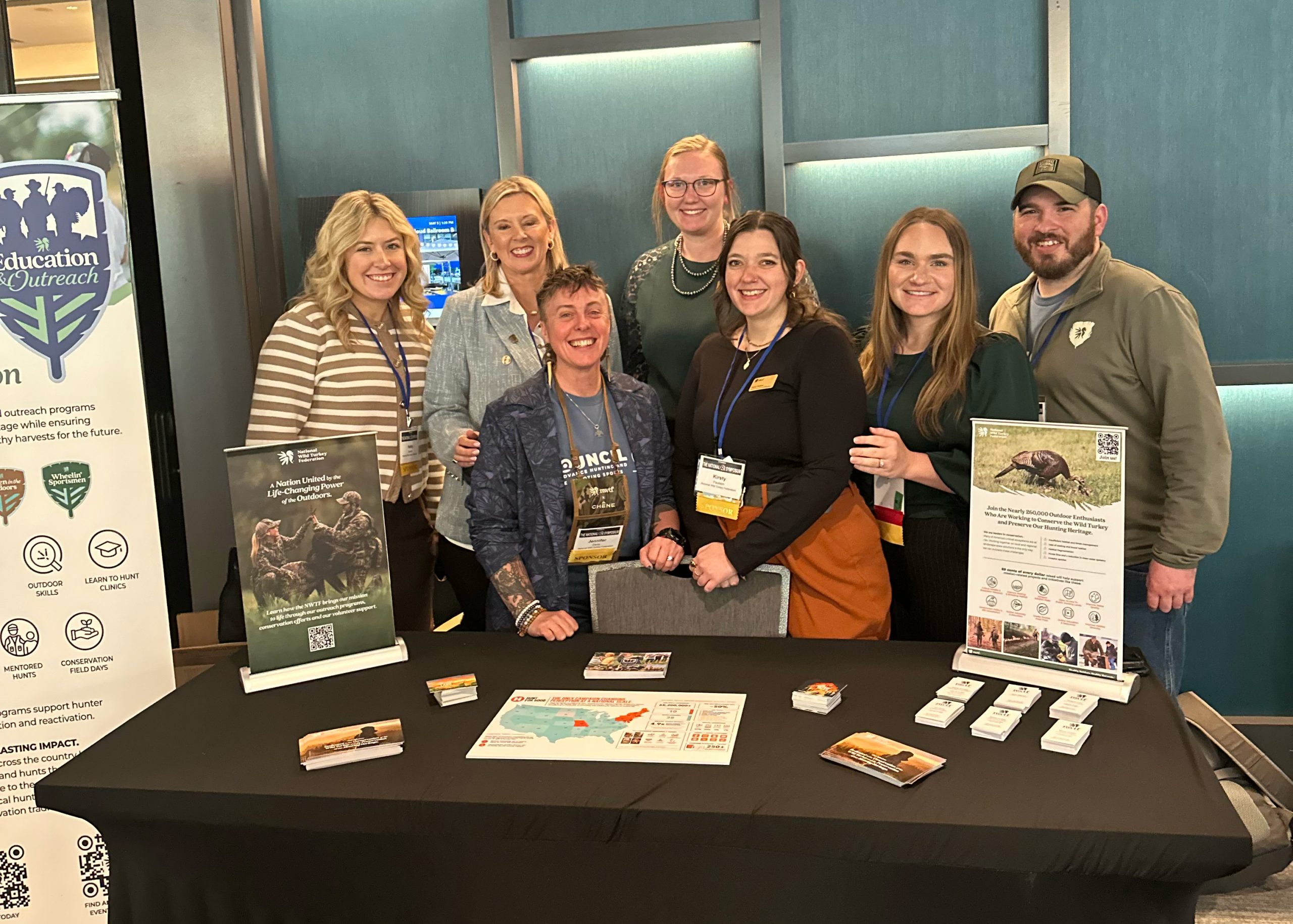
R3 is a national effort with a variety of stakeholders aimed at increasing participation in hunting and the shooting sports, which are vital for conservation and preserving America’s hunting heritage. The NWTF continues to be a symposium sponsor and had the opportunity to sponsor a lunch where education and outreach team members were able to talk about the NWTF and its footprint.
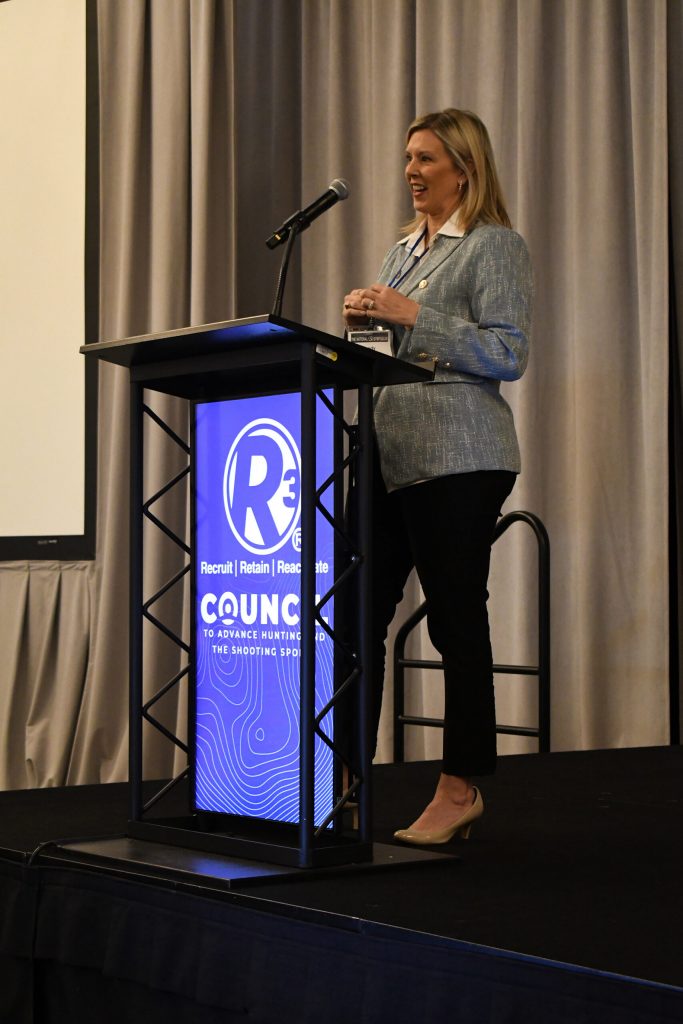
A major focus of this year’s symposium was on multifaceted access to hunting opportunities and resources. For instance, while many current accessibility efforts are focused on land access, R3 professionals are now seeking ways to increase social access, informational access, community access and more.
“One big piece to access that individuals focus on the most is recruitment,” said Morgan Evans, NWTF national R3 and relevancy coordinator. “But, when we talk about access, we also need to focus on the retention and reactivation of hunters by providing opportunity, a place to feel familiar, to be able to ask questions and to try new things.”
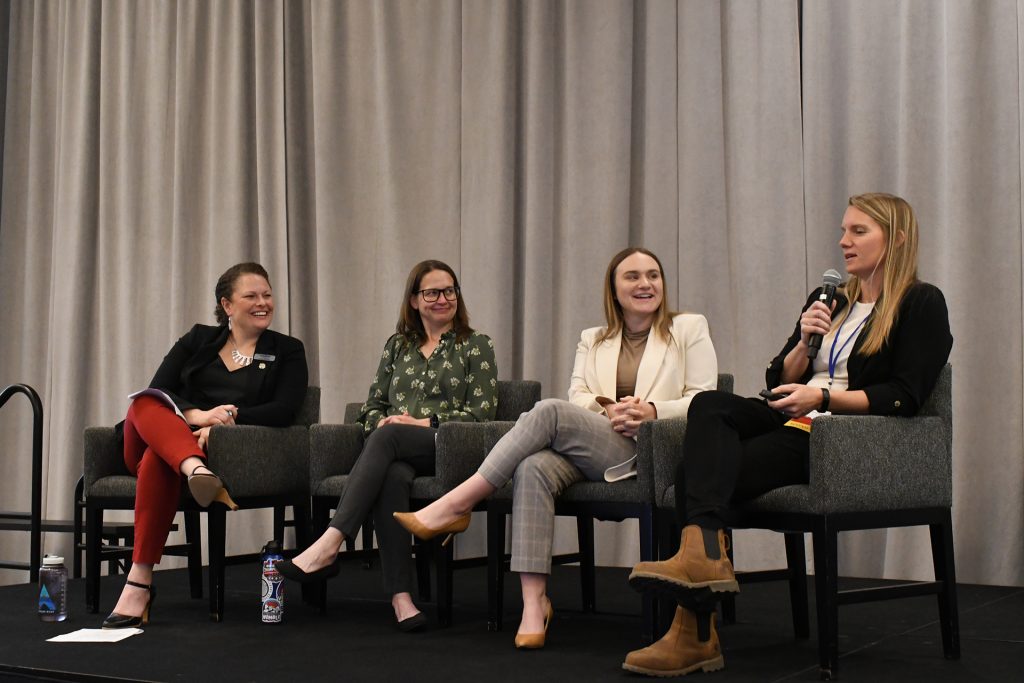
Evans had the opportunity to participate in a panel discussion alongside representatives from Pheasants and Quail Forever and the National Field Archery Association, discussing the broadening focus of access. Evans shared the work that the NWTF has done nationwide to make the outdoors more accessible.
Evans shared the NWTF’s impact on access during her presentation, highlighting that the organization impacted 767,183 acres for access from 2012 to 2025. She also noted that the NWTF hosted more than 1,000 outreach events across its 1,398 active chapters over the last decade and has nearly 250,000 adult members, illustrating the social side of access. Evans further emphasized how the NWTF is making policy more accessible, pointing to last year’s strong volunteer response opposing the sale of public lands out West.
As these different pillars of access are identified, the next step is building programming and community for individuals who are looking for ways to be involved in the hunting industry.
Jesse Warner, NWTF hunting and shooting R3 coordinator for the Northeast, sees hosting targeted events as a solution that has been working in his region.
“Sometimes, people will have an interest in an event, whether it’s shooting or turkey hunting, and they'll see it like it's on the other side of a vault at Fort Knox if they don’t have access,” he said. “But when we host specific, targeted events where those individuals see a similar demographic on the other side or a welcoming community on the other side, it replaces Fort Knox with a screen door. Then those individuals see folks on the other side waving them in. If it's a screen door, they can participate in multiple events, become a part of the community, and then they welcome in the next group. Now they're on the other side of the door waving the next generation in, saying, ‘Hey, it's your turn to come and get involved with the outdoors.’”
CAHSS and the International Hunter Association used this year’s symposium as an opportunity to launch PupAI, another solution to accessibility barriers. PupAI is a state-level AI system created for state wildlife agencies to incorporate into their websites that will allow residents to ask questions about specific in-state hunting regulations. This AI model follows in the footsteps of ScoutAI, which does the same thing on a national scale.
The NWTF, CAHSS and the Southeast Association of Fish and Wildlife Agencies announced a new multi-state conservation grant that will be used to launch the Hunt for Good campaign in the Southeast in a two-part marketing campaign. The first part will be a six-week campaign beginning in fall 2026, and the second will be during the 2027 spring turkey season.
The Hunt for Good campaign is designed to spread information about the benefits of hunting to young adults that reside in more urban areas. The Southeast campaign follows the recent Northeast multi-state conservation grant that occurred in fall 2024 and will include a pop-up survey that will ask viewers about their familiarity with hunting and what their feedback is on the campaign.
“The R3 Symposium continues to energize and inspire our team,” said Mandy Harling, NWTF national director of Education and Outreach. “By connecting with partners nationwide, the NWTF gains new ideas and proven strategies to strengthen our already robust R3 model. Driven by dedicated staff and volunteers committed to conserving the wild turkey and preserving our hunting heritage, we remain focused on recruiting, retaining and reactivating hunters across the country.”