Osceola Hunt Guide
As part of our 2026 Turkey Kickoff Week, we are breaking out our national Spring Hunt Guide by subspecies, allowing hunters to learn about specific subspecies and where to hunt them.
Identification
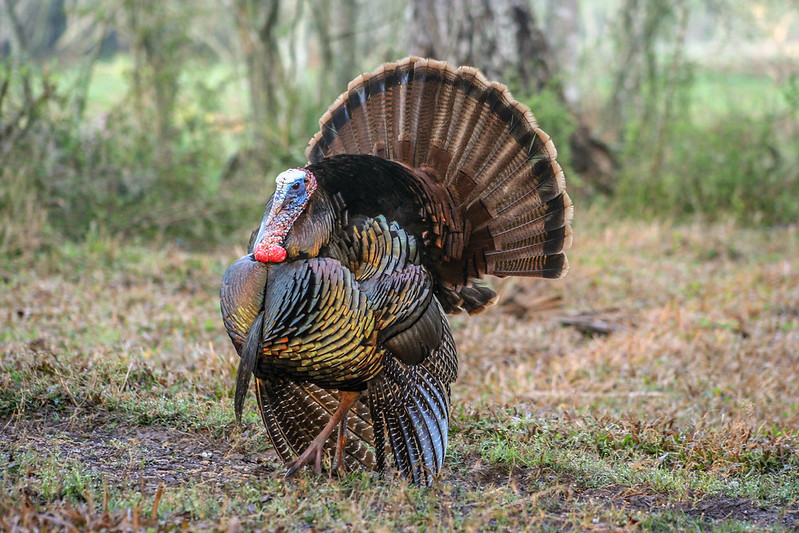
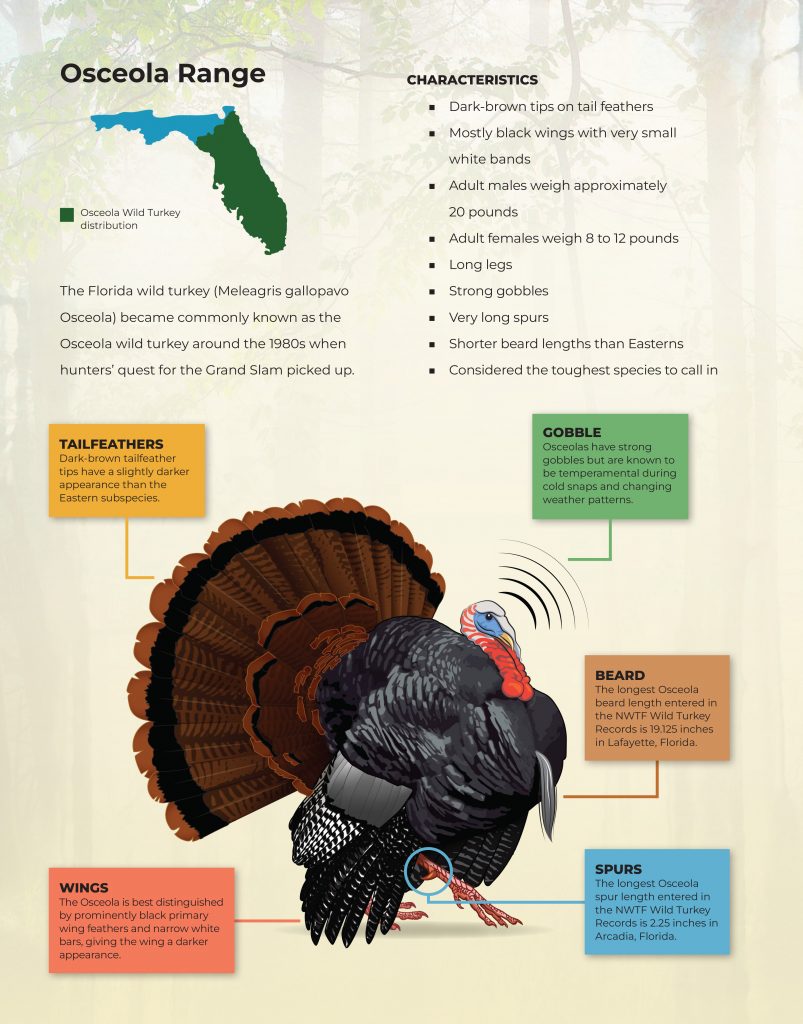
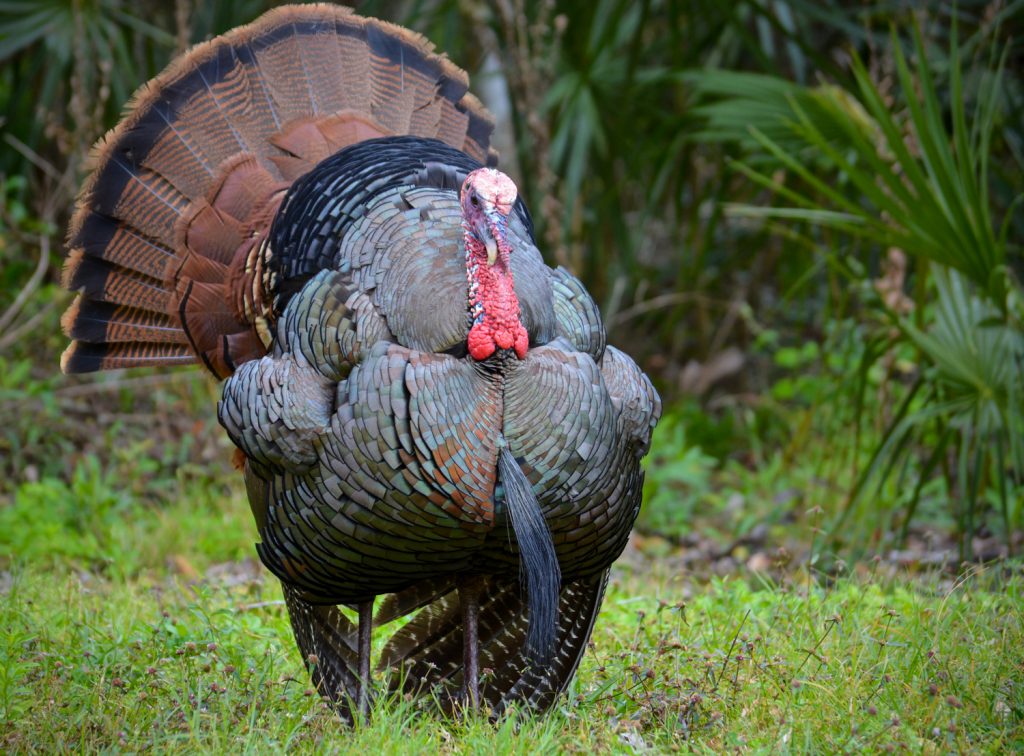
The Osceola is said to have been named after Seminole leader Osceola, in 1890. Their tail feathers tips are dark brown, which is how hunters can tell them apart from Easterns. Osceolas also have prominent black primary wing feathers and narrow white wing bars. They are known for having long legs and long spurs, but beards are typically shorter compared to Easterns. Adult males weigh approximately 20 pounds, and adult females weigh eight to 12 pounds. Osceolas have a strong gobble but are known to be temperamental during cold snaps and changing weather patterns.
Location/Distribution
Florida is the only place in the world with Osceola turkeys. The NWTF recognizes turkeys in Dixie, Gilchrist, Alachua, Union and Duval counties, and all counties south of them as Osceolas. All birds north of these counties are Easterns. Birds near the dividing line might exhibit minimal physical differences, so turkey hunters seeking an Osceola gobbler in its truest form often hunt south of Orlando.
STATE AGENCY: https://myfwc.com/hunting/turkey/ or (850) 488-4676
WILD TURKEY POPULATION: N/A
2025 HARVEST DATA: 12,066 reported harvests
Harvest notes: In the spring 2025 season in Florida, an estimated 28,162 hunters went turkey hunting. While estimated harvest per hunter declined, the majority of turkey hunters gave an excellent or good rating of their hunting experience. Harvest reports indicated 81% of harvested turkeys were taken on private lands and 19% on public lands.
SEASON DATES: South of St Rd 70 – Youth weekend Feb. 27 to March 2, 2026, Regular spring season March 7 - April 12, 2026; North of St Rd 70 – Youth weekend March 13-16, 2026, Regular spring season March 21 - April 26, 2026.
BAG LIMIT: Two gobblers or bearded turkeys; see regulations for WMA specific.
HUNTING HOURS: Half-hour before sunrise to sunset; see regulations for WMA specifics.
STATE STATUS: Ongoing Research: Fieldwork completed for Gobbling and Nesting Chronology of Wild Turkeys in South Florida, data analysis underway. Additional research assessing wild turkey vital rates and female survival; with this study we aim to estimate adult hen annual survival, establish baseline reproductive vital rates (nesting rate, nest success, brood success) and compare these parameters with other areas across Florida.
REGULATION CHANGES:
- Youth Turkey Season has expanded from a previous two-day season (Saturday-Sunday) to a four-day season (Friday to Monday) on private lands and many lands inside the WMA system.
- Nonresident hunters cannot hunt wild turkey during the first nine days of the zonal spring turkey season at Big Cypress (on the non-quota units only), Herky Huffman/Bull Creek, Jumper Creek, Three Lakes, and J.W. Corbett WMAs.
- Nonresident turkey hunters must also purchase a nonresident annual hunting license. A 10-day nonresident hunting license can no longer be used during the spring turkey season.
- Nonresidents are limited to only being issued up to 10% of spring turkey quota permits.
Threats to the Osceola
Just like all of Florida’s wildlife and wild lands, the Osceola turkey’s most significant threat is likely human development and land conversion. Strategic conservation efforts are in place to protect Florida’s wildlife like the Wild Turkey Cost-share Program, founded in 1994.