Orange Grove Rendezvous
A Sunshine State hunt illustrated the success of Florida’s wild turkey management efforts yet highlighted challenges facing the birds.
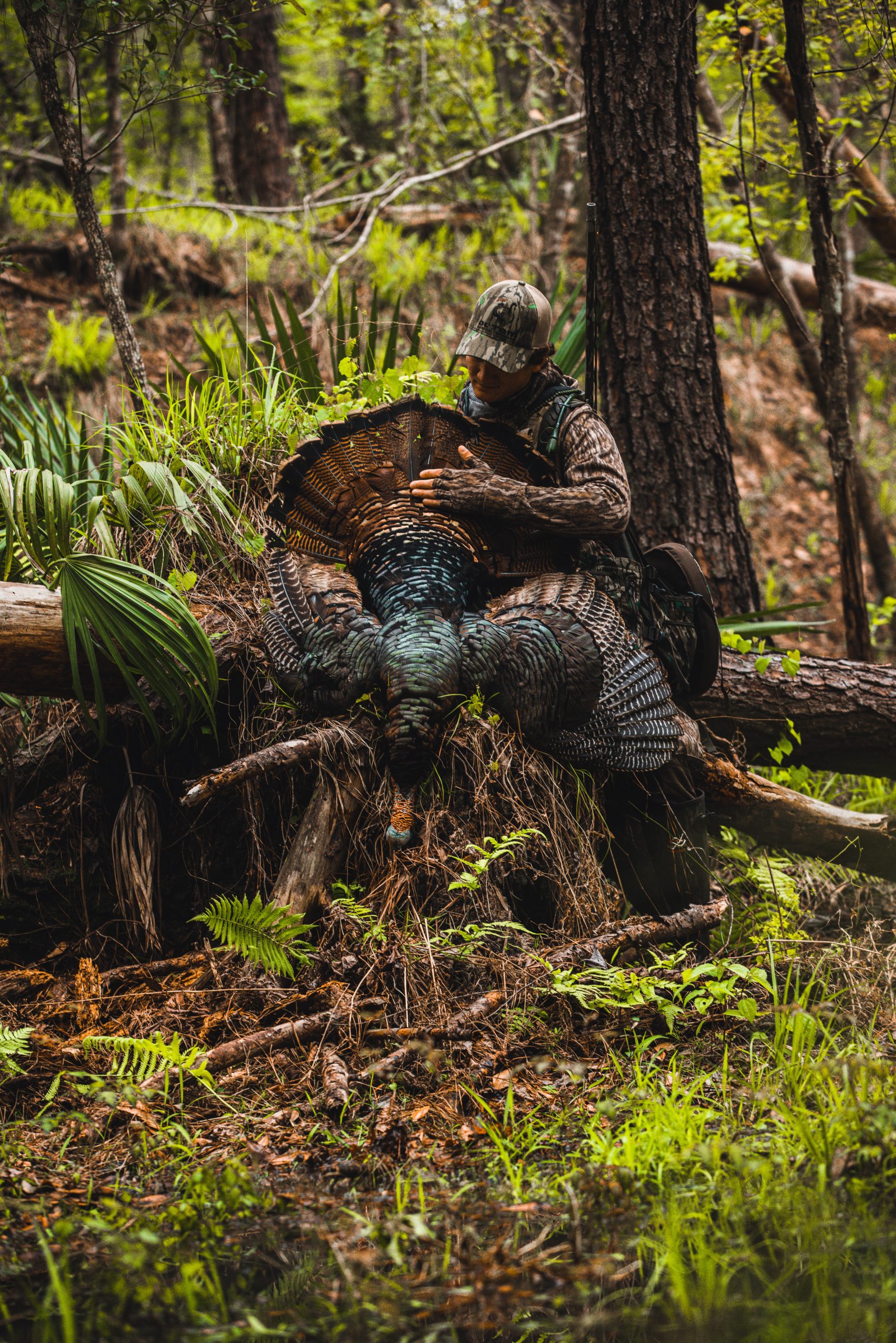
As Fort Myers faded in the rearview mirror, the countryside began to look like familiar stuff with a modern twist.
It was Florida in spring, all right. The scene had just evolved a bit since I started hunting the Sunshine State almost 30 years ago. But there was little time to ponder those changes during the drive. The sun was dipping toward the west, and I had a date with a dark-winged Osceola.
A Surprise Approach
I had joined Pete Muller, communications director of the NWTF, for a mid-March hunt with Mike Tussey, owner of Osceola Outdoors. And we didn’t waste any time. After meeting up with Tussey and Osceola Outdoors guide Mark Moore, we sped to an orange grove, changed clothes on a dirt road and then slipped into position along a ditch line for the afternoon hunt. Tussey pointed out a big chunk of roosting timber to the east and explained that turkeys would likely filter along the ditch toward the trees as evening arrived. With anticipation high, Muller and I settled in.
But we didn’t wait long. About an hour into the sit, Tussey spied several hens and a strutter a few hundred yards to the west. They didn’t pay much attention to us, but it was clear they’d probably start easing toward us soon. For much of the next hour, I tried to envision where they might appear and focus on potential shooting lanes.
Maybe that tunnel vision explained why Tussey’s next words surprised me. “To the right,” he whispered. I glanced up and saw nothing. “Two gobblers to our right,” Muller said.
Sure enough, two longbeards had slipped in quietly 90 degrees to our right and were staring at us from 15 steps. Completely out of position, I attempted to twist my body around for a shot. Meanwhile, the gobblers got nervous and started to rubber-neck away.
Muller fired, dropping his Osceola. I sent three shots into the sunset and watched the second bird slip away. I’d been in Florida for three hours and had already humiliated myself.
But it wasn’t time for panic mode yet. We had one gobbler and two more days to hunt. And knowing Tussey, I was confident we’d be into turkeys the next day.

Orange Grove Shootout
Our first morning dawned still and hazy, and we hustled to a set of blinds at the junction of several roads bordering an orange grove. Gobbles soon pierced the still air, and we called in response, hoping turkeys would soon drift our way. But after only seeing a few hens, we switched gears and went searching.
One calling foray netted nothing, but after moving to the far side of the grove, Tussey and Moore spotted a gobbler atop a dike, and we slipped into position. The longbeard responded to calls immediately, and as I struggled to curl up under an orange tree, the bird was already coming — fast.
Seconds later, the gobbler stood at 30-some steps. I’ll spare you the details of what happened next, but after three more shots — two of which found nothing but air — we had another Osceola. A tailgate celebration ensued, along with plenty of jokes about poor shooting. Maybe it hadn’t been classic, but we had two great gobblers taken amidst the backdrop of stunning southern Florida vistas.
The Future
Later that day, we passed time Florida style, going hog hunting and soaking up the unique landscape — sprawling ranches and orange groves, mixed with vast swamps and seemingly endless exurban development. I hoped that such scenes would never fade, as Florida’s spring turkey woods are special places. Considering the work of concerned habitat managers and groups such as NWTF, I felt confident those stunning dark-winged gobblers and the hunters who cherish them would always have a home.
Osceola Genetics: First Steps
During our Florida hunt, the NWTF’s Pete Muller and I took tissue samples from our gobblers to send to wildturkeyDNA, a collaborative genetic research project. Of course, there was no doubt that our birds were 100% wild, but our submissions served as part of the reference set of samples for the project.
WildturkeyDNA — which is spearheaded by the Wild Turkey Lab, NWTF, Ducks Unlimited, the University of Texas El Paso and the Low Country Game Bird Foundation — is still in its first year of sample collecting, testing and analysis. The project seeks assistance from hunters to study wild turkey genetics on a broad scale, hoping to gain a better understanding of population genetics across the species’ range, and uncover scientific data that can inform hunters, wildlife managers, and state and federal agencies. In 2025, the study focused on the genetic makeup of harvested turkeys with odd or interesting plumage. As the program expands, the effort will begin teasing out the distribution of turkey subspecies. Find out more at https://wildturkeydna.com/.
Changing Florida
Any turkey hunter who’s traveled to Florida for several years knows about changes to the Sunshine State. Urban sprawl and other land-use changes have led to habitat fragmentation and degradation. And there’s a human factor to consider, too.
“The demand for the Grand Slam and chasing 49 has added a lot of hunters to the Florida landscape,” said Mike Tussey, who started Osceola Outdoors in 2000 and guides dozens of turkey hunters every spring. “With this pressure and loss of habitat, along with outfitters from out of state coming into Florida, the cost of hunts has increased dramatically.”
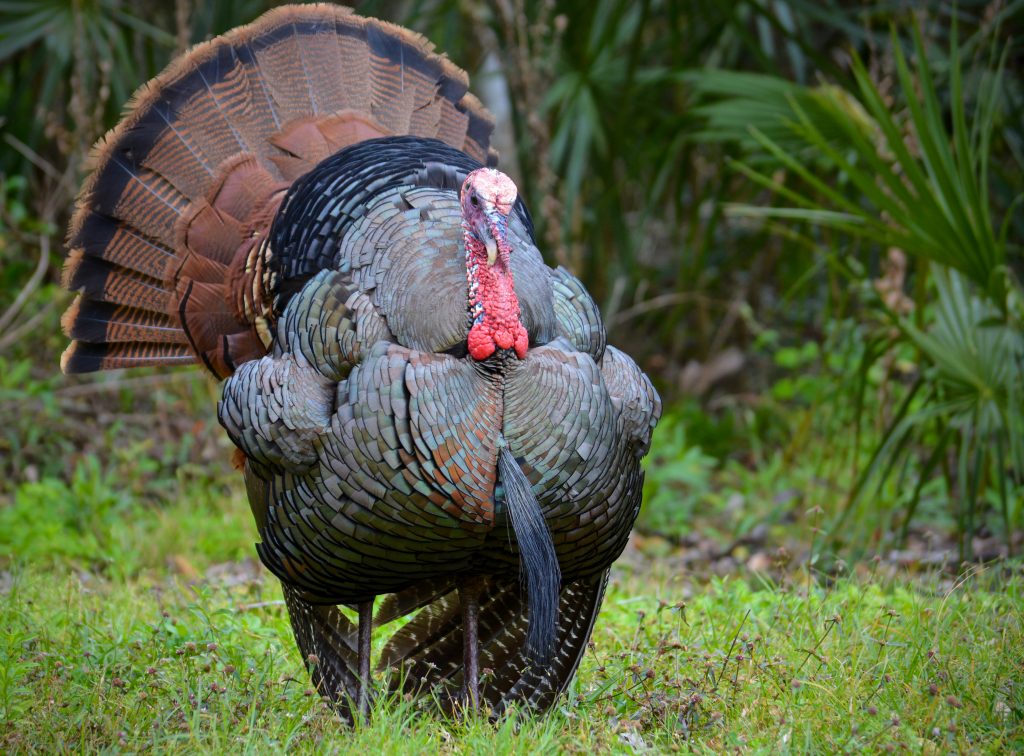
Still, Florida turkeys seem to endure it all. Juliana Ofalt, wild turkey and furbearer management program coordinator, said the statewide brood survey indicated sustainable hatches in 2022 and 2023, indicating good odds for a successful Spring 2025 hunt. In 2024, Florida’s brood survey showed improved success, with a statewide average of 2.03 poults per hen and 3.47 poults per brood, a rebound from the previous year. Further, about 65% of hens had a brood, all of which indicated better reproductive success compared to 2023. 2025 results weren’t available at press time.
Florida does not generate an annual turkey population estimate. However, biologists monitor turkey population trends through various techniques and use data to estimate populations.