NWTF Helps Give Kentucky Grasslands Room to Grow
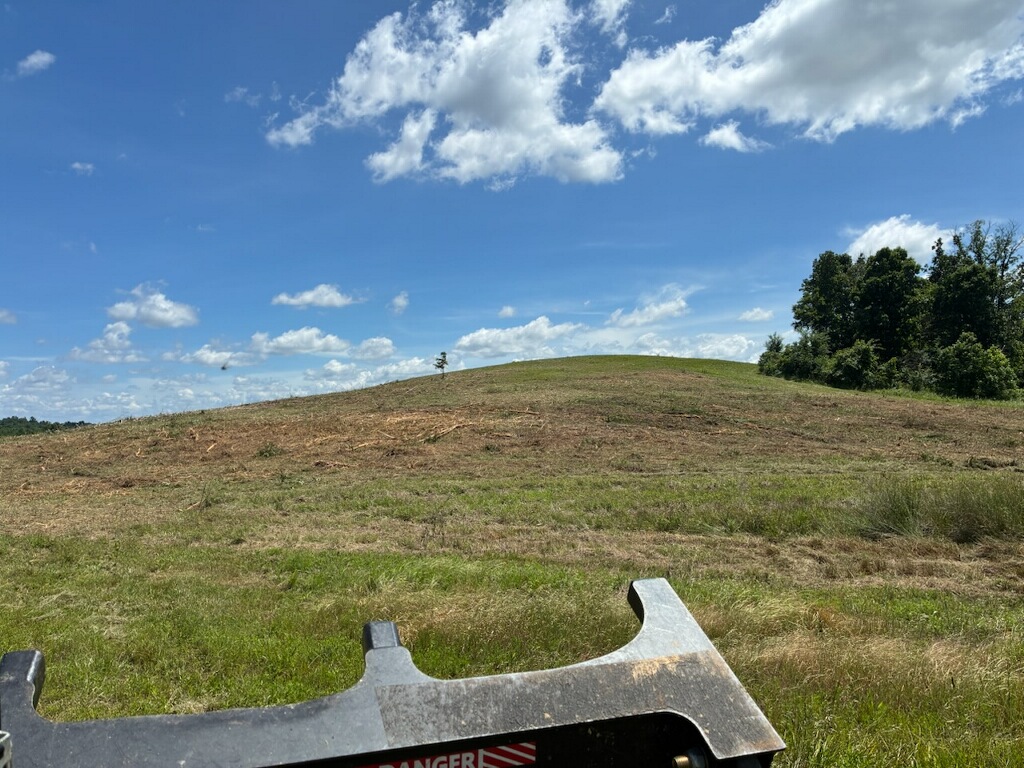
Sometimes improving wild turkey habitat calls for prescribed fire. Sometimes it takes a mower, herbicide or a little extra horsepower. At Gabbard Branch Wildlife Management Area in Kentucky, it took a Bobcat equipped with a 60-inch mulching head.
The Kentucky State Chapter of the National Wild Turkey Federation contributed funding to help the Kentucky Department of Fish and Wildlife Resources rent the heavy equipment needed to restore grassland habitat on the 809-acre WMA in Butler County.
Invasive Bradford pear trees and other callery pears had become established throughout portions of the grasslands, with some growing beyond what conventional mowing equipment could easily handle. Their large thorns also made working around the trees difficult for equipment and crews.
With the larger equipment in place, KDFWR staff spent several long days in late May and early June cutting, mowing and mulching woody vegetation to give grasses and other beneficial plants more room to grow.
“We spent a week out there, long days setting succession back, and it looks great now,” said Wayne Tamminga, a KDFWR public lands biologist.
Crews used a John Deere CX-15 mower to handle smaller vegetation while the compact track loader and mulching head tackled larger trees. Desirable oak trees were left standing, while a few trees too large for the mulcher were treated individually.
The work helps maintain the open grassland conditions that provide important nesting and brood-rearing habitat for wild turkeys.
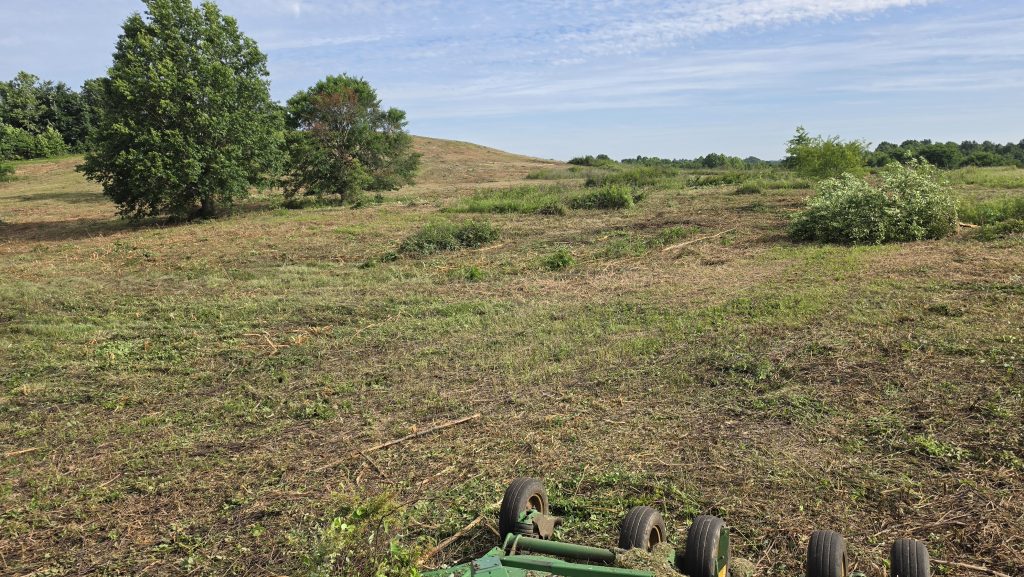
Without continued management, woody vegetation can gradually move into grasslands and change the habitat. Removing some of that vegetation allows native grasses and flowering plants to continue developing, benefiting wild turkeys and other wildlife that use the property.
The need for heavier equipment had become clear during previous maintenance at the WMA. While crews were mowing in the area, thorns from the invasive pear trees damaged a tractor tire badly enough that it had to be replaced.
The mulcher gave staff another way to work through larger vegetation that had become difficult to address with a traditional mower alone.
About three weeks after the mechanical work was completed, KDFWR staff followed up with herbicide treatment across approximately 40 acres to control tree resprouting and sericea lespedeza while helping native grasses and forbs continue to develop.
The work builds on habitat management already underway at Gabbard Branch WMA.
In March, KDFWR staff conducted a prescribed burn on a portion of the property. The burn set back woody vegetation and encouraged native warm-season grasses and annual forbs, creating conditions beneficial for turkey nesting and brood rearing. Additional sections of the WMA are planned for prescribed fire in future years.
Crews also used the rented equipment to strengthen fire lanes dividing the property into management units, helping prepare the WMA for future prescribed burns.
Taken together, mowing, mulching, herbicide treatment and prescribed fire are helping maintain a diverse mix of habitat across Gabbard Branch WMA.
For NWTF, the financial contribution helped put another useful tool in the hands of its conservation partners — and gave native grasses, wildflowers and better turkey habitat more room to grow.