NWTF-Funded Research to Examine Hunting Pressure and Turkey Populations in Western Oklahoma
Through its 2025 Research Grants Program, the National Wild Turkey Federation is supporting a research project designed to address the question in wild turkey management: how does hunting pressure influence turkey populations on public lands?
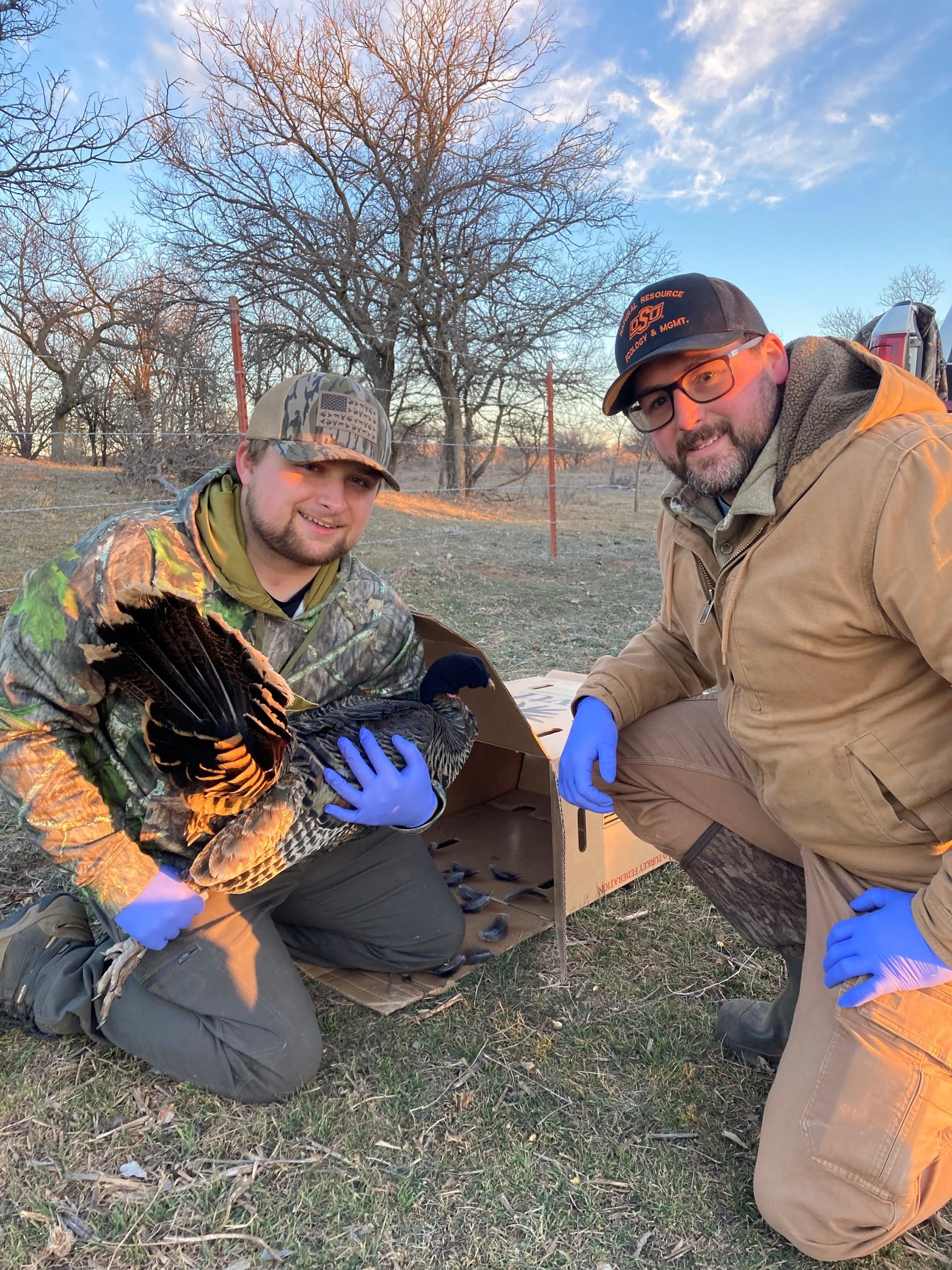
This study, led by Oklahoma State University researchers Mark Turner, Ph.D. and Colter Chitwood, Ph.D., in collaboration with the Oklahoma Department of Wildlife Conservation (ODWC), is focusing on evaluating hunting pressure on public land, assessing wild turkey movement and survival and developing abundance estimates on the Black Kettle National Grasslands. This region not only provides prime habitat for Rio Grande wild turkeys but also nationally known destinations for hunters.
“There’s been a lot of interest nationally, especially in areas with declining turkey populations, about how harvest on public land affects those populations,” Turner said. “Western Oklahoma is a destination for turkey hunters, so we want to understand how hunter use of these areas ties back to turkey survival and overall population size.”
This new work is a complementary piece of a four-year, $1 million research project already underway, funded by ODWC. That project, led by Dr. Colter Chitwood and his team at OSU, uses GPS transmitters, banding and camera and acoustic surveys to study turkey survival, movement and winter roosting behavior. Funding from the NWTF Research Grants Program in 2025 helps add a third critical piece — measuring hunting pressure and how it relates to turkey populations.
“We like to think that it was a match made in heaven,” Chitwood said. “ODWC is investing heavily in monitoring turkey populations with advanced tools, and NWTF’s support allows us to layer in the hunting pressure objective. Together, this creates a full picture of how turkeys are doing and how harvest may be influencing them.”
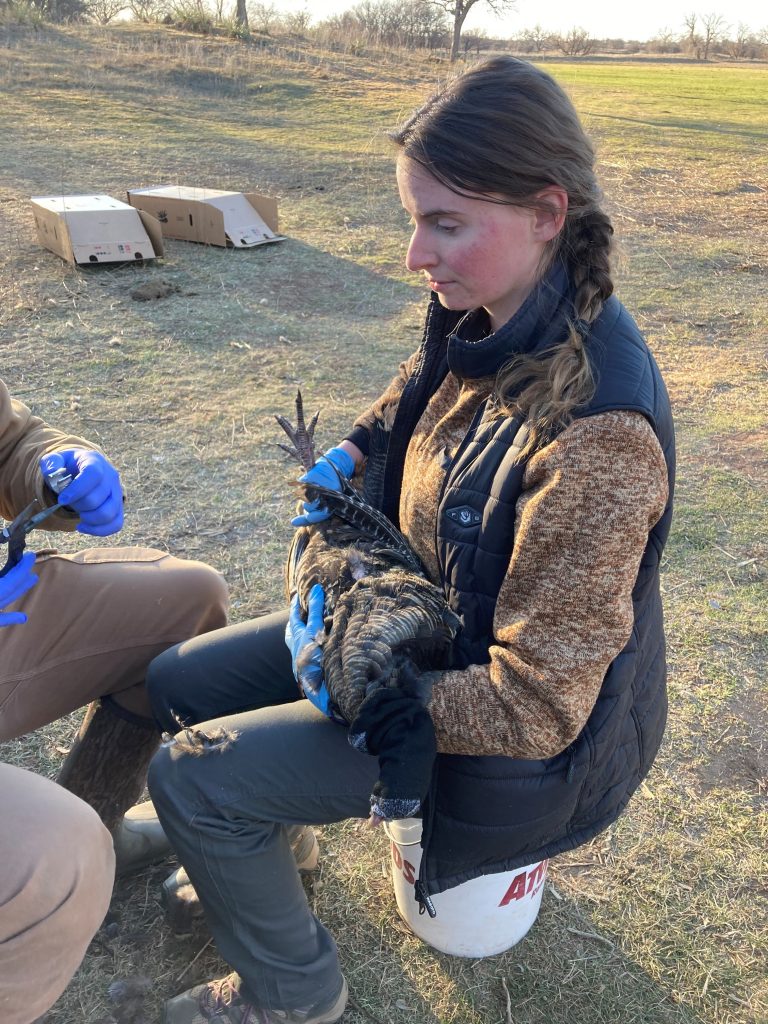
The NWTF-funded portion of the project is supporting a graduate student at OSU, dedicated entirely to this research. Researchers began winter trapping turkeys in December 2025, catching 104 females and 67 males, fitting 90 with GPS backpacks and banding all captured birds. During spring hunting seasons, hunters who harvest a marked bird over the span of the project are encouraged to call in the band or transmitter number, providing critical harvest data.
Rather than interviewing hunters or tracking individuals, researchers are rely on vehicle counts as a non-invasive way to gauge hunting activity. Survey routes will be driven throughout turkey season to record the number and location of parked vehicles at access points. This will allow the team to estimate hunter effort, compare use across different parcels and see how factors like parcel size, habitat type or even weather influence hunter choice.
“Black Kettle is unique because it’s made up of many disjointed parcels, not one big block of land,” Chitwood explained. “We’re interested in how hunter pressure is distributed across that patchwork and how that connects to the turkeys there.”
When hunters report a band or transmitter, researchers can directly link hunting pressure, harvest and turkey population dynamics.
Harvest management is one of the few tools agencies can adjust to sustain turkey populations, especially on public lands where access and effort can vary widely. Yet without good data on hunter activity, it’s difficult to know if regulations like bag limits or season dates are hitting the mark.
“Harvest management is one of the levers agencies can pull,” Turner said. “Our goal is to help ODWC and others sustain turkey populations while allowing as much hunting opportunity as possible. If adjustments are needed, this project will help identify what those should look like.”
For NWTF, this research fits squarely within its mission of ensuring healthy wild turkey populations while preserving hunting traditions. By funding this work, NWTF is supporting a project that will guide how agencies manage and maintain these areas for the benefit of turkeys.
The researchers emphasized that hunters themselves play an important role.
“If you harvest a banded or GPS-marked bird, please call it in,” Chitwood said. “It’s not about taking anyone’s hunting spot — it’s about getting better information, so we can all benefit from healthier turkey populations in the long run.”
The findings from this multi-year study won’t just impact Oklahoma. Results will be shared with ODWC, NWTF and the broader conservation community, with findings informing management decisions not only in Oklahoma but across the range of Rio Grande turkeys and beyond.
“This is really about filling a big gap in knowledge,” Turner said. “As hunters ourselves, we want to ensure that future generations have the same opportunities we do today.”
The NWTF invested funds into the above project along with eight other wild turkey research projects across the United States, totaling $503,618 for the organization's 2025 Research Grants Program investment
Since 2022, with partner funds leveraged at more than a 10-to-1 ratio, the NWTF, its chapters, members and partners have combined to put more than $22 million toward wild turkey research. This number will increase as the NWTF's is slated to fund more wild turkey research projects later this year.
Thanks to support from dedicated partners — such as the Bass Pro Shops and Cabela’s Outdoor Fund, NWTF state chapters and numerous other donor contributors — the Research Grants Program is an aggressive, annual effort to fund critical wild turkey research projects nationwide.