NWTF Applauds Senate Committee for Advancing Wildfire Emissions Prevention Act
EDGEFIELD, S.C. — The National Wild Turkey Federation thanks the U.S. Senate Environment and Public Works Committee for advancing the Wildfire Emissions Prevention Act of 2026, bipartisan legislation that would help states and communities use prescribed fire as a tool to reduce wildfire risk and improve forest and habitat health.
The committee approved S. 5045 on Sept. 16 by a unanimous 19-0 vote. The legislation was introduced by Sens. John Curtis, R-Utah; Jeff Merkley, D-Ore.; Shelley Moore Capito, R-W.Va.; Alex Padilla, D-Calif.; John Boozman, R-Ark.; and Mark Kelly, D-Ariz.
The NWTF is part of a broad coalition supporting the Wildfire Emissions Prevention Act, including conservation, forestry, hunting, fishing and outdoor recreation organizations.
“This legislation recognizes that prescribed fire is an important tool for managing healthy forests and wildlife habitat while reducing the risk of catastrophic wildfire,” said Matt Lindler, NWTF director of government affairs. “We appreciate the bipartisan leadership of the Senate Environment and Public Works Committee and thank the committee members for moving this important legislation forward.”
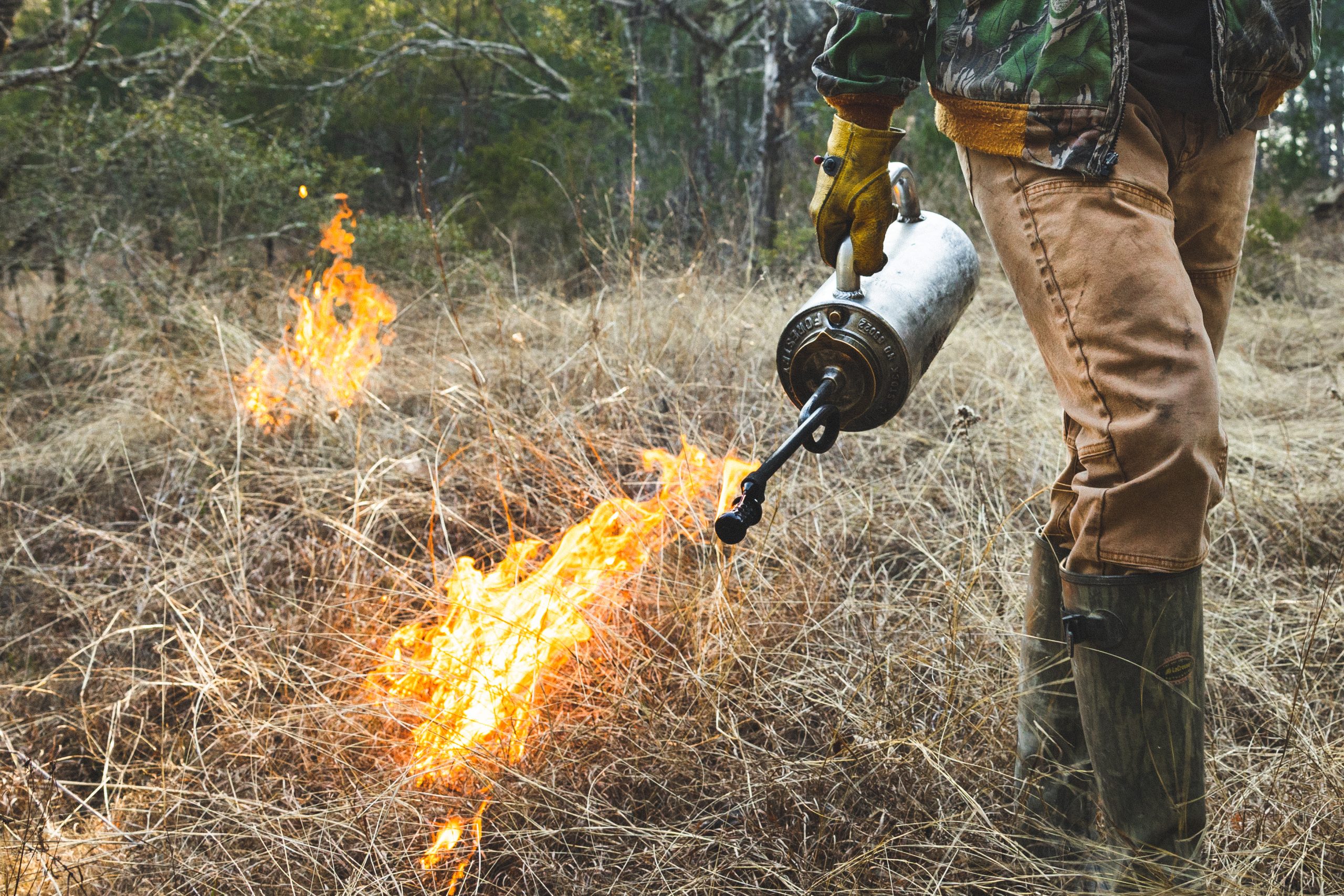
Prescribed fire, also known as controlled burns, is the intentional use of fire under carefully planned conditions to reduce vegetation and other fuels on the landscape. For generations, fire has played an important role in many of America's ecosystems. In healthy forests and other fire-adapted ecosystems, fire is a natural process. But when vegetation accumulates over time, wildfires can burn hotter, spread more rapidly and become more difficult to control.
Today, land managers use prescribed fire alongside other forest management practices to help restore healthy forest conditions and reduce the amount of fuel available to uncontrolled wildfires. For wildlife, that work can also improve habitat. Many species depend on a mix of vegetation types and forest conditions, and appropriately applied fire can help maintain or restore those conditions.
The challenge addressed by the Wildfire Emissions Prevention Act is how smoke from prescribed fire is treated under federal air-quality law. While prescribed fire can produce smoke in the short term, strategically applying fire can help reduce the potential for larger and more destructive wildfires and the substantial smoke those fires can produce.
The Clean Air Act includes an “exceptional event” process that can allow certain air-quality monitoring data influenced by unusual events to be excluded from regulatory determinations. Under current rules, however, prescribed fire does not fit neatly into a process originally designed around events that are generally outside human control. That can create uncertainty for states and land managers seeking to conduct prescribed burns.
The Wildfire Emissions Prevention Act would provide greater certainty for states and communities using prescribed fire to prevent and mitigate wildfires. The legislation would update provisions of the Clean Air Act to better account for prescribed fire conducted for wildfire-risk reduction and establish a clearer process for addressing prescribed-fire smoke in air-quality decisions.
In other words, land managers may intentionally create a relatively small, controlled amount of smoke today in an effort to reduce the risk of a much larger wildfire and its associated smoke in the future.
For conservationists, the legislation is important because healthy forests and wildlife habitat often depend on active management. In many landscapes, decades of fire suppression and changing forest conditions have contributed to dense vegetation and accumulated fuels. Prescribed fire can help restore a more natural mix of forest and vegetation conditions that benefits wild turkeys and other wildlife.
Planned prescribed fire facilitates healthy, resilient forests that help protect watersheds and provide places for hunting, fishing, hiking, camping and other outdoor recreation.
Severe wildfires, however, can negatively affect wildlife habitat, water quality, roads, recreation areas and public access, while smoke from large wildfires can affect communities and outdoor recreation well beyond the immediate burn area.
“Hunters and outdoor recreationists have a direct stake in the health of America's forests and public lands,” Lindler said. “Prescribed fire is one of the tools land managers can use to improve habitat and reduce wildfire risk. Giving states greater certainty to use that tool is an important part of a broader, proactive approach to conservation.”
The committee's action advances the bill for further consideration by the full Senate. The NWTF thanks the members of the Senate Environment and Public Works Committee for advancing legislation that recognizes the importance of proactive, science-based forest management and prescribed fire in protecting America's forests, wildlife and communities.
About the National Wild Turkey Federation
Since 1973, the National Wild Turkey Federation has invested over half a billion dollars into wildlife conservation and has positively impacted over 25 million acres of critical wildlife habitat. Since 2022, the NWTF has also invested over $2.3 million in critical wild turkey research that, when leveraged with partner contributions, has resulted in more than $22 million to guide the management of the wild turkey and to ensure sustainable populations. The organization continues to deliver its mission by working across boundaries on a landscape scale to create healthy forests and wildlife habitats, clean and abundant water, resilient communities and robust recreational opportunities. With the help of its dedicated members, partners and staff, the NWTF is committed to creating a nation united by the life-changing power of the outdoors.