Nest Parasitism
Dr. Tom examines why some hens may lay in another hen’s nest.
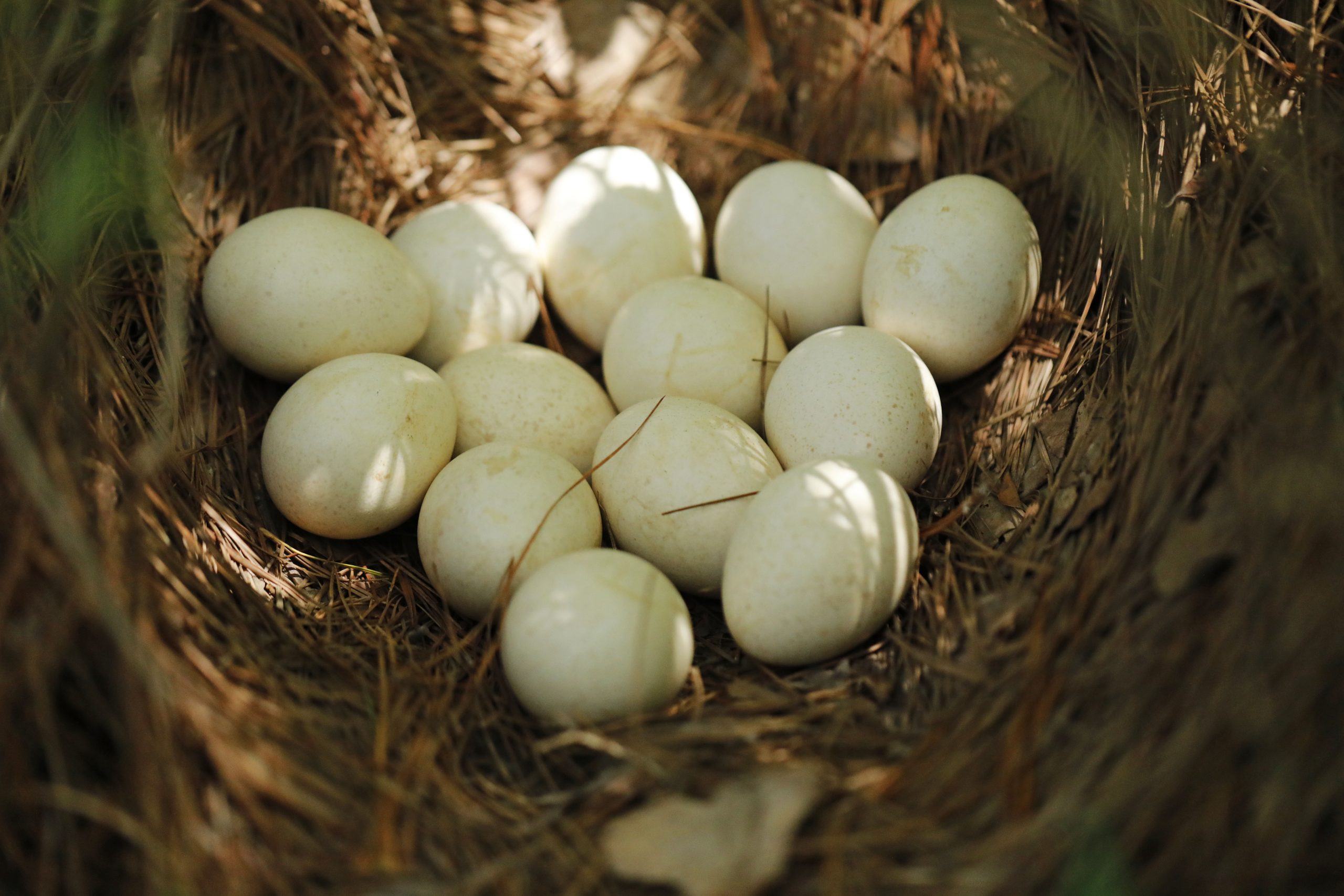
"I was mushroom hunting a few springs back and stumbled on a turkey hen sitting on this nest. After she flew off, I snapped a picture of the nest. I know that ducks will often have a few hens lay eggs in the same nest, but had never heard of it with turkeys. The sheer number of eggs is what amazed me. Have you any experiences with something similar in your work?" – Mark Wiss, via email
The average clutch size (number of eggs in a nest) for wild turkeys is about 11. Hens have been known to successfully hatch as many as 15 poults from the average sized, or slightly over-average, nests. Many researchers monitoring hen survival and nesting success have reported occasionally observing these extremely large clutches. The assumption before the advent of more advanced technology was that once in a while an inexperienced juvenile hen would happen across the nest of another hen and be stimulated to lay a few eggs there.
Waterfowl biologists studying wood ducks first documented unmarked hens laying in the nests of banded hens. They coined the term “dump nesting” to describe the behavior. That term is now known to be inadequate. Instead, biologists describe the behavior of one female bird laying in another’s nest as nest parasitism. This behavior has been seen in other species of waterfowl, too.
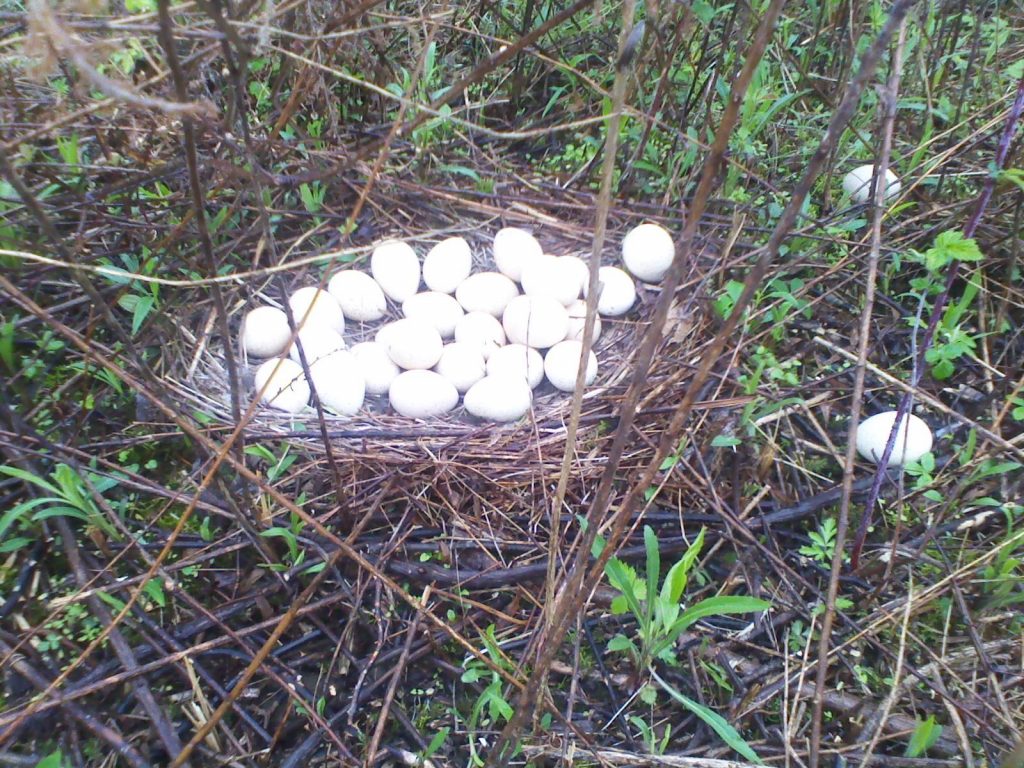
There are two distinct types of nest parasitism, intraspecific and interspecific. Intraspecific nest parasitism occurs when one female of a given species lays in the nest of a female of the same species. Interspecific parasitism describes when a female bird of one species usurps the nest of another species. The classic examples of interspecific nest parasitism are the cowbird in North America, which lays in the nests of many other species, and the European cuckoo, which does the same thing.
When it comes to interspecific nest parasitism affecting wild turkeys, researchers in Colorado documented an instance of ring-necked pheasant eggs laid in a wild turkey nest. Pheasants have also been documented laying eggs in bobwhite quail and prairie chicken nests. Biologists in Pennsylvania, New York, Virginia and West Virginia have occasionally observed eggs of ruffed grouse and Eastern wild turkey in the same nest. In those observations it was unknown which gamebird established the nest and which parasitized the nest.
In a Texas study using genetic markers (DNA) from eggshell fragments, researchers estimated that as many as 22% of Rio Grande nests were parasitized by hens other than the one that incubated the nest. More recently researchers studying Eastern and Rio Grande wild turkeys in Texas, Louisiana, South Carolina and Georgia documented instances of wild turkey hens laying in the nests of other hens (intraspecific nest parasitism). The researchers used GPS transmitters to monitor movements and nesting activities of hen turkeys. It was observed that hens that were siblings or close associates of nesting hens spent time near the nests of other hens, making it likely that they might locate and parasitize others’ nests.
In Texas, researchers focused trail cameras on nests to document the comings and goings of GPSmarked hens while laying and incubating. Photos of unmarked hens visiting nests of marked hens were used to estimate the incidence of parasitism. The development of advanced technology has enabled biologists to closely monitor wildlife activities and document behaviors with data that was not available even a couple of decades ago. The results of these studies indicated that 6% or more wild turkey nests are parasitized.
There are a number of possibilities to explain this behavior. The tendency of certain hens to lay in the nests of others while they establish, lay and incubate their own nests may enhance the chances of survival of offspring with their genetic traits. Suffice it to say that modern technology is giving biologists greater insight into the behaviors of wildlife and allowing researchers to get closer to explaining those behaviors. Somewhere between 6 and 20% of wild turkey nests appear to contain eggs of more than one hen. Habitat attributes and limitations may also play a role in determining how often nest parasitism occurs.