Merriam’s Subspecies Hunt Guide
As part of our 2026 Turkey Kickoff Week, we are breaking out our national Spring Hunt Guide by subspecies, allowing hunters to learn about specific subspecies and where to hunt them.
Identification
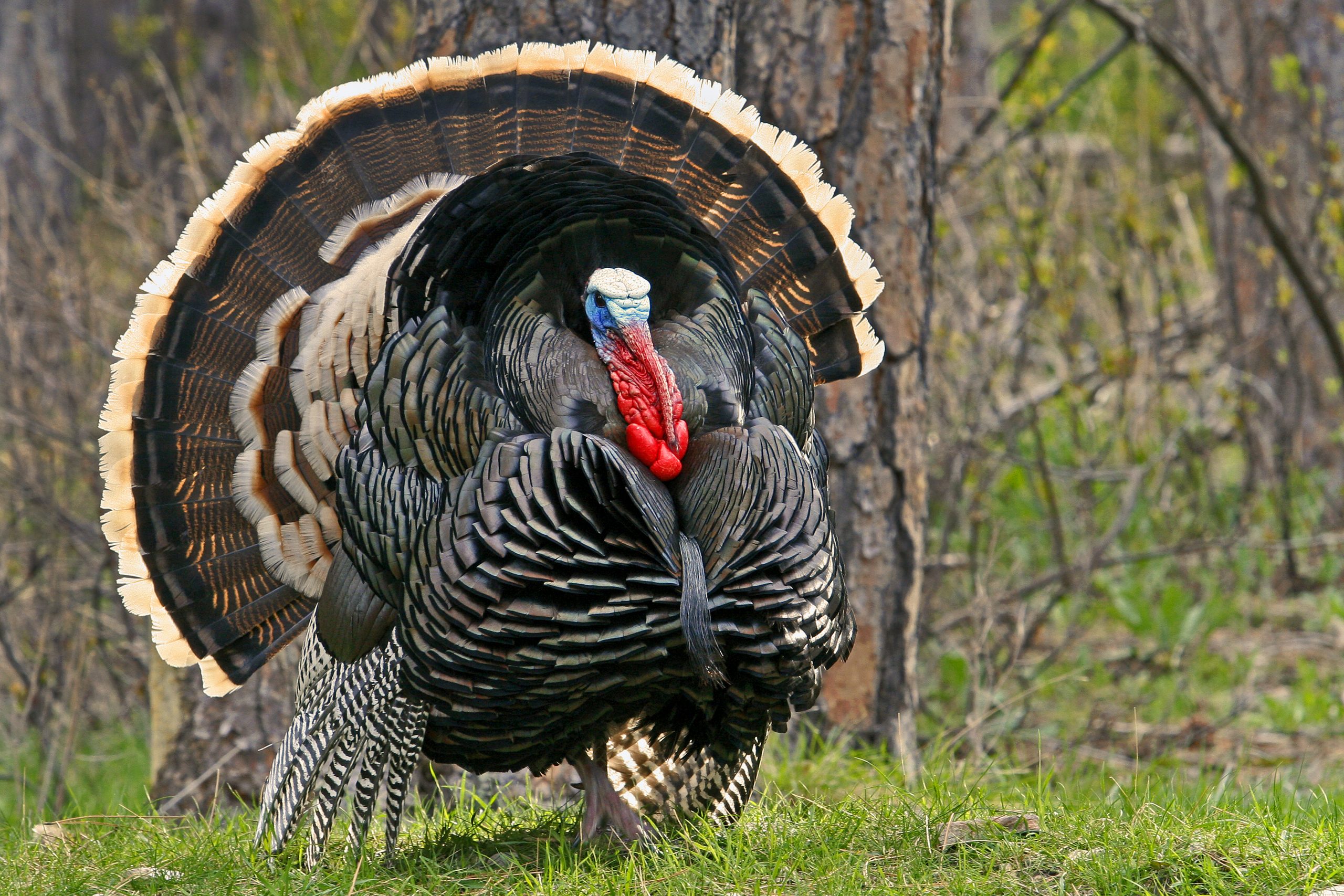
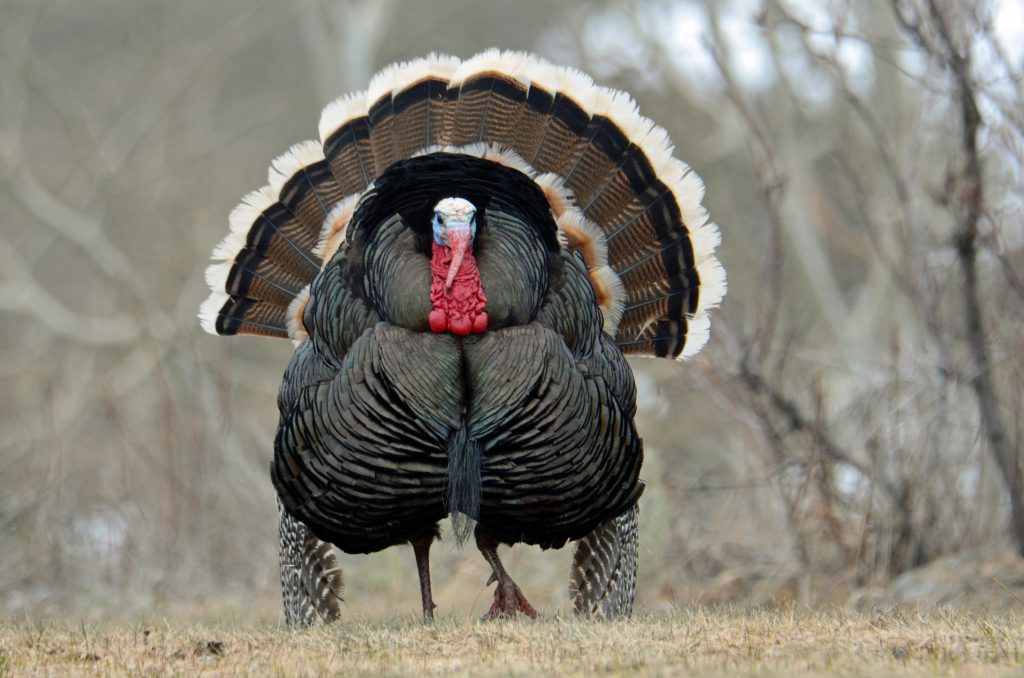
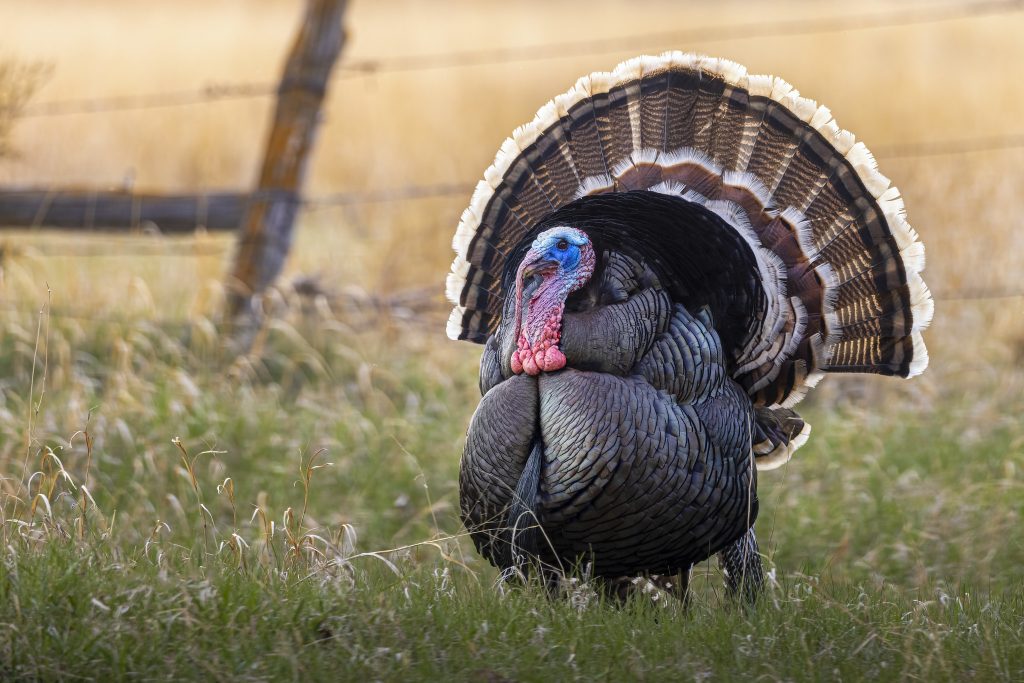
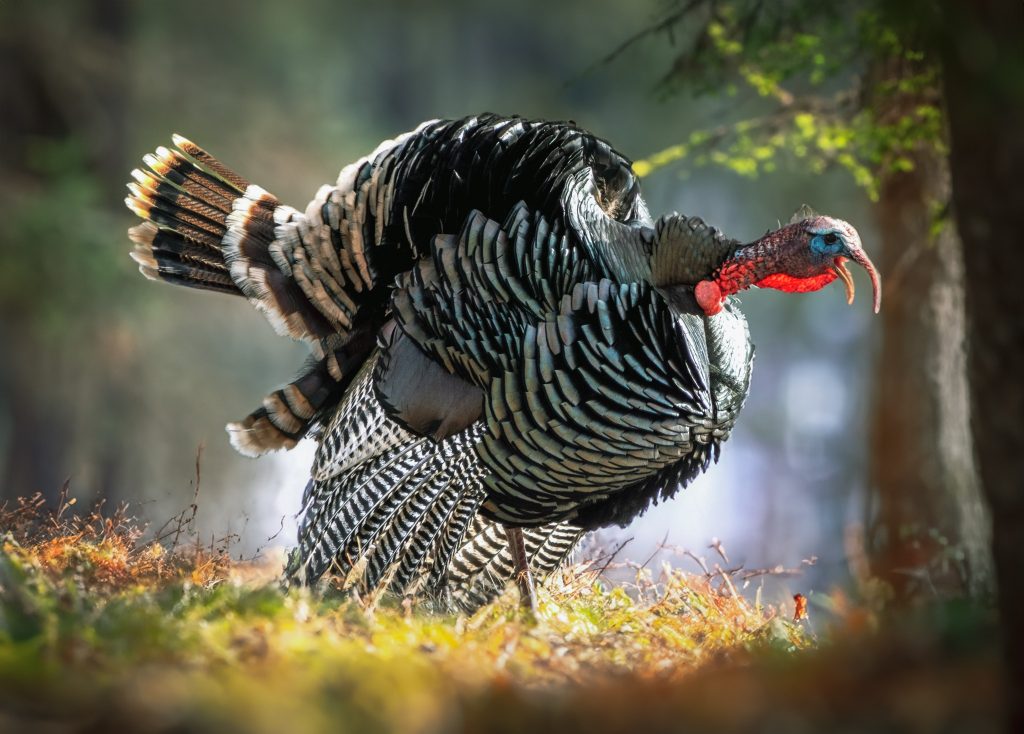
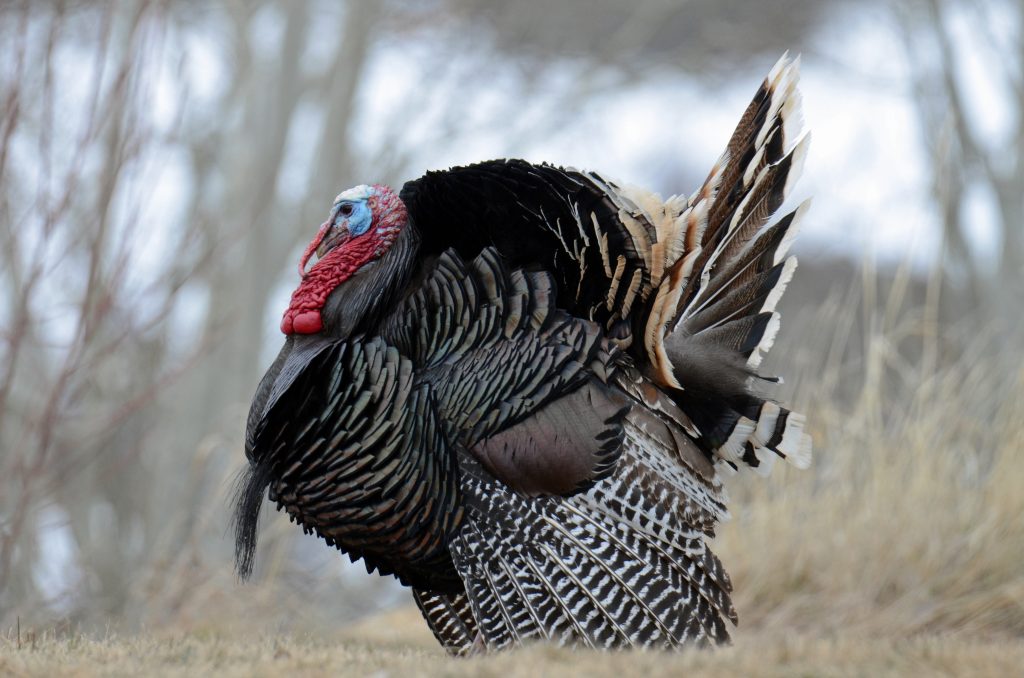
Merriam’s wild turkeys have snow-white tips on their tail fans, and they have more white than black on their wings. Merriam’s and Gould’s wild turkeys look similar, both with white-tipped fans; however, the tail margins on a Merriam’s wild turkey are not as white or as wide. Merriam’s are comparable in size to the Eastern wild turkey, and Gould’s are even larger.
Adult males weigh 18 to 30 pounds and adult females weigh eight to 12 pounds. They generally have the softest gobble, shortest beards and shortest spurs of all subspecies.
Location/Distribution
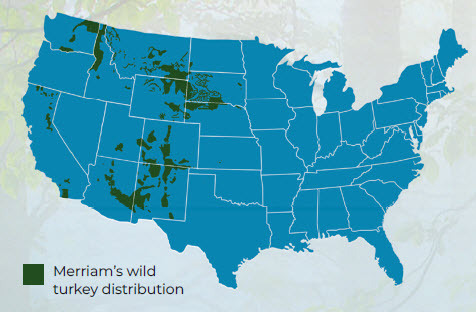
The Merriam’s subspecies is named after C. Hart Merriam, the first chief of the U.S. Biological Survey. Merriam’s are native to ponderosa pine forests of Arizona, New Mexico and Colorado, and did not inhabit many states in the species’ current expanded range —& a total of 14 states — prior to the mid-20th century. They’re a success story due to trap-and-transfer programs.
Conservation
Merriam’s wild turkeys, like many wildlife species in the West, are susceptible to long-term drought and catastrophic wildfire, both of which have become increasingly prevalent in the region. Drought stresses forests and riparian areas, making them more vulnerable to severe fire conditions.
Wild turkeys can benefit from moderate, natural fire, which often creates healthy habitat for them by stimulating early successional plants and insects that emerge after a burn. However, warmer and drier summers have lengthened wildfire seasons, exacerbating already overly dense forests that are prone to catastrophic wildfire events capable of destroying thousands of acres of critical wildlife habitat.
The NWTF’s work across the West helps increase the resilience of America’s forests and the wildlife that depend on them.
Arizona
STATE AGENCY: https://www.azgfd.com/; (602) 942-3000
WILD TURKEY POPULATION: n/a
2025 HARVEST DATA: Merriam’s: 1,160
SEASON DATES:
- Merriam’s: April 24-May 21, 2026 (2 stratified hunts)
- Gould’s: May 1-May 28, 2026 (2 stratified hunts)
- Youth Merriam’s hunt: April 17-23 and May 8-21, 2026 (OTC in 9 units)
BAG LIMIT: One turkey per calendar year
HUNTING HOURS: Daylight hours
STATE STATUS: The Arizona turkey population is stable following several mild winters. Current drought conditions are going to affect poult recruitment, resulting in fewer birds being recruited into the population. There are no proposed changes to season dates or season structures. The Department has been placing GPS transmitters on turkeys to track nest initiation, migration/movement and mortality, and is also still implementing some translocations into areas with low-density populations.
California
STATE AGENCY: https://wildlife.ca.gov/; (916) 557-3444
WILD TURKEY POPULATION: ~250,000
2024 HARVEST DATA: ~19,965
SEASON DATES: General Season: March 28 – May 3, 2026; Archery Season: May 4 – May 17, 2026; Additional Junior: March 21-22, 2026, May 4-17, 2026.
BAG LIMIT: One bearded bird per day, three per season combined.
HUNTING HOURS: Half-hour before sunrise to 5 p.m.
STATE STATUS: Regionally, current wild turkey abundance indices are highest in the Sierra Nevada foothills and Central Valley (as well as around the San Francisco Bay); in the North they can be found on Forest Service lands in the Cascade Range, and to the west in Mendocino and Central Coast Mountains. The CDFW holds drawings and hosts many spring opportunities for hunting wild turkey. Please visit: https://wildlife.ca.gov/Hunting/Special-Hunts.
Colorado
STATE AGENCY: https://cpw.state.co.us/; (303) 297-7227
WILD TURKEY POPULATION: 30,000
2024 HARVEST DATA: 5,903
SEASON DATES: April 11 – May 31, 2026 for most, see regulations for specific units.
BAG LIMIT: Two bearded turkeys in spring; one must be taken with a limited license, the other with an over-the-counter license.
HUNTING HOURS: Half-hour before sunrise to sunset.
Idaho
STATE AGENCY: https://idfg.idaho.gov/; (208) 334-3700
WILD TURKEY POPULATION: ~53,000
2024 HARVEST DATA: 7,000
SEASON DATES: Varies by unit, check regulations
BAG LIMIT: Two
HUNTING HOURS: Half-hour prior to sunrise to sunset
NOTE: Turkey hunters looking to apply for 2026 spring controlled turkey hunts can apply from Feb. 1 to March 1. Any leftover tags for spring turkey controlled hunts go on sale March 25 at 10 a.m.
Montana
STATE AGENCY: https://fwp.mt.gov/; (406) 444-2535,
WILD TURKEY POPULATION: 130,000
2024 SPRING HARVEST DATA: 6,555
SEASON DATES: April 15 – May 31, April 25-May 31 for nonresidents
BAG LIMIT: Five in spring
STATE STATUS: Turkey populations are doing well, even becoming a nuisance in some municipalities. Legislative changes last year resulted in most upland game bird seasons, including turkeys, beginning 10 days later for nonresidents than for residents.
Nebraska
STATE AGENCY: https://outdoornebraska.gov/; csaline@nwtf.net, 402-480-4927
WILD TURKEY POPULATION: n/a
2025 SPRING HARVEST DATA: 9,864 harvests reported to Telecheck; 26,691 permits sold; overall per-permit success 37%. Actual success is estimated to be higher due to noncompliance.
SEASON DATES: Adult and youth archery begins March 25, 2026. Youth shotgun begins April 11. Adult shotgun begins April 18. The season closes May 31st.
BAG LIMIT: One bearded bird per permit, no more than two permits per person; nonresident permits capped at 10,000 (sold out).
HUNTING HOURS: Half-hour before sunrise to sunset
STATE STATUS: Spring permit sales, harvests, and success are increasing after regulation changes in 2023. Reporting harvest via Telecheck is required; participation in the hunter email survey is optional. NGPC surveys yielded a poult-per-hen ratio of 2.1, and increased sightings along historical routes in four out of six regions contributed to an increased statewide average of sightings. NGPC, the University of Nebraska-Lincoln, and the University of Georgia concluded three years of field work last summer and are analyzing a wealth of data, the findings of which will inform management decisions. NWTF assisted in funding the project.
Nevada
STATE AGENCY: www.ndow.org; 775-688-1523
WILD TURKEY POPULATION: n/a
2025 SPRING HARVEST DATA: Of the 139 tags that were issued during the spring 2025 season, 124 (89%) returned their mandatory questionnaire. Twelve of those hunters reported that they did not hunt and of the 112 that did, 83 reported that they were successful in harvesting either a tom or a jake. The 74% success rate represented a 28% increase over the previous spring’s success rate.
SEASON DATES: March 21 to May 3, 2026
BAG LIMIT: One bearded wild turkey by tag only
HUNTING HOURS: Half-hour before sunrise to sunset
New Mexico
STATE AGENCY: http://www.wildlife.state.nm.us/; (505) 476-8000
WILD TURKEY POPULATION: 23,000
2025 SPRING HARVEST DATA: n/a; 2024: 2,232 reported harvest (24% success rate), 3,037 estimated harvest
SEASON DATES: April 15 – May 15, 2026
BAG LIMIT: Two bearded turkeys only
HUNTING HOURS: Half-hour before sunrise to halfhour after sunset
STATE STATUS: The turkey rule is opening in January 2026 for potential changes to the 2027-2030 seasons. There is research in progress on Merriam’s hen habitat use, survival, and reproductive success.
North Dakota
STATE AGENCY: https://gf.nd.gov/; (701) 328-6300
WILD TURKEY POPULATION: n/a
2025 SPRING HARVEST DATA: 3,543
SEASON DATES: See regulations
HUNTING HOURS: Half-hour before sunrise to sunset
BAG LIMIT: One bearded turkey
STATE STATUS: Stable
Oregon
STATE AGENCY: www.myodfw.com; 1-866-947-ODFW (6339)
WILD TURKEY POPULATION: 45,000
2025 SPRING HARVEST DATA: 5,948 (in 2024)
SEASON DATES: April 15 – May 31, 2026
BAG LIMIT: One male turkey or turkey with a visible beard per day. Up to three wild turkeys may be taken during the season (one per tag).
HUNTING HOURS: half hour before sunrise to sunset
STATE STATUS: Populations steady to increasing. Review electronic tagging requirements in the Oregon Game Bird Hunting regulations.
South Dakota
STATE AGENCY: https://gfp.sd.gov; (605) 223-7660
WILD TURKEY POPULATION: n/a
2025 HARVEST DATA: Overall, in prairie units there were 7,572 licenses available and overall tag sales totaled 8,382 (some units had double tags). The reported overall harvest success rate was 54% and the projected harvest was 4,556 turkeys. In the Black Hills unit there were 5,079 licenses issued (2,883 residents, 2,196 nonresidents). All licenses consisted of single tags for male turkeys only. The reported overall harvest success rate was 42% and the projected harvest was 2,155 turkeys.
SEASON DATES: It is important to note that start dates of hunting seasons vary according to unit. In prairie units the season dates occur from April 11- May 31, 2026 in most units. In the Black Hills, units open later and occur from April 25-May 31, 2026. Archery and mentored seasons open at the same time as general shotgun season dates. For example, an archer or mentored hunter would need to wait until April 25, 2026 to start hunting in the Black Hills unit.
BAG LIMIT: Check regulations, typically one bird per license (some units do have double tags on the prairie)
HUNTING HOURS: Half-hour before sunrise to sunset
STATE STATUS: A big change that spring turkey hunters need to be aware of is the Black Hills unit will no longer be unlimited for nonresidents in 2026. The SDGFP Commission created a cap of 2,225 one-tag male turkey licenses for nonresidents in the Black Hills Turkey unit. Nonresidents must apply ahead of the season to draw a license to hunt the Black Hills unit. There was a research study occurring in Gregory County South Dakota from 2023-24 where radiomarked hens were being studied for survival and reproduction. Vital rate data will inform population models that will be used for management, and publications continue to be produced from this research study.
Utah
STATE AGENCY: www.wildlife.utah.gov; (801) 538-4700
WILD TURKEY POPULATION: 35,000-38,000
2025 SPRING HARVEST DATA: Limited entry harvest: 956; OTC harvest: 2,920; Youth LE: 54; Youth OTC: 378
SEASON DATES: Limited Entry – April 11-30, 2026; Over the Counter May 4-31, 2026; Youth hunt May 1-3, 2026
BAG LIMIT: One
HUNTING HOURS: Half-hour before official sunrise to half-hour after official sunset
STATE STATUS: After the harsh winter in 2022-23, we have seen an increase in turkey populations in most of the state as desirable brood-rearing conditions have resulted in higher recruitment rates compared to the last few years; however, dry conditions last year resulted in lower production in 2023-24, and this winter has also been dry. We are hoping for more moisture to produce brood-rearing habitat.
Washington
STATE AGENCY: https://wdfw.wa.gov/; (360) 902-2515
WILD TURKEY POPULATION: Abundant
2025 SPRING HARVEST DATA: Unavailable; spring 2024 data: 12,503 hunters; 6,515 turkeys
SEASON DATES: Youth: April 1-7; General: April 15 – May 31
BAG LIMIT: Three turkeys statewide with some area restrictions
HUNTING HOURS: Half-hour before sunrise to sunset
STATE STATUS: Turkeys continue to do well in Washington, especially the eastern part of the state. Hunter success rates are above 50% in both the spring and fall seasons. More than half of statewide harvests come from the northeast (Ferry, Stevens, Pend Oreille, Spokane, and Lincoln counties).
Wyoming
STATE AGENCY: https://wgfd.wyo.gov/; (307) 777-4600
WILD TURKEY POPULATION: n/a
2025 SPRING HARVEST DATA: Record spring harvest in 2025 (4,762) with a 62% statewide success rate
SEASON DATES: General season April 20 – May 31; Limited Quota: April 1 – May 31, 2026
BAG LIMIT: One male or bearded wild turkey per license. Hunters may possess one General License (unlimited over the counter), and two Type 3 licenses (drawing only, or available as leftover if not sold out in the drawing).
HUNTING HOURS: Half-hour before sunrise to sunset
STATE STATUS: Merriam’s dominate, Rio Grande wild turkeys in lower numbers, and hybrid subspecies are location dependent. Above average poult production and survival the past five years. Populations are very respectable and expanding in most locations. Check regulations for Type 3 license restrictions (county specific). Hunter numbers have been increasing annually for the past four hunting seasons.