Lessons in Landscape Restoration at Máyala Wáta
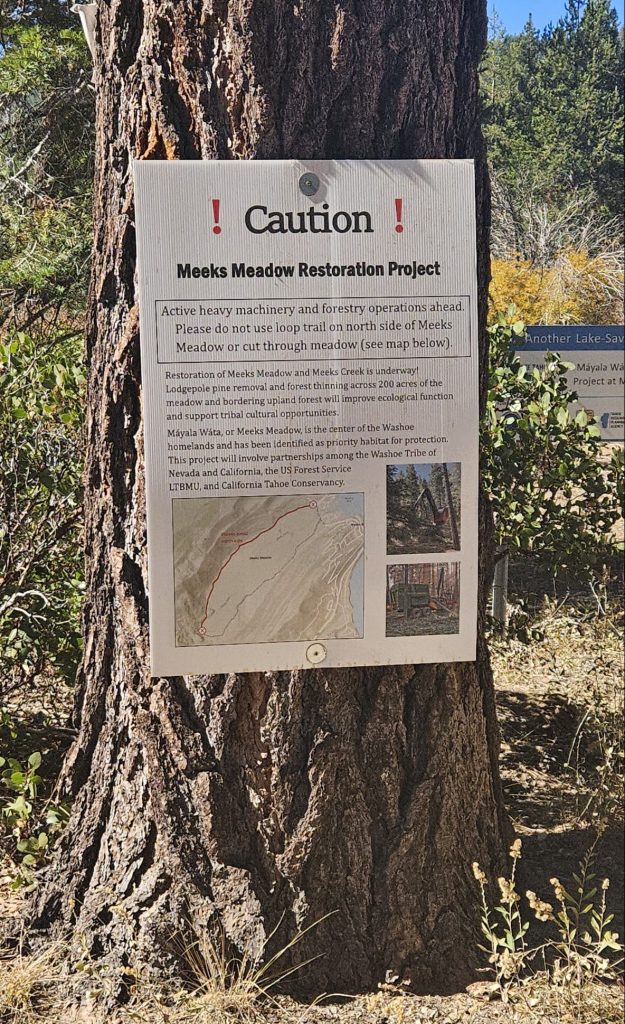
Recently, National Wild Turkey Federation staff joined representatives from agencies and conservation organizations for a field tour of Máyala Wáta, or Meeks Meadow, hosted by the Washoe Tribe’s Environmental Protection Department. The tour offered more than a look at a restoration project, providing an opportunity to see how Tribal leadership, traditional ecological knowledge and modern land-management practices can come together to restore an entire landscape.
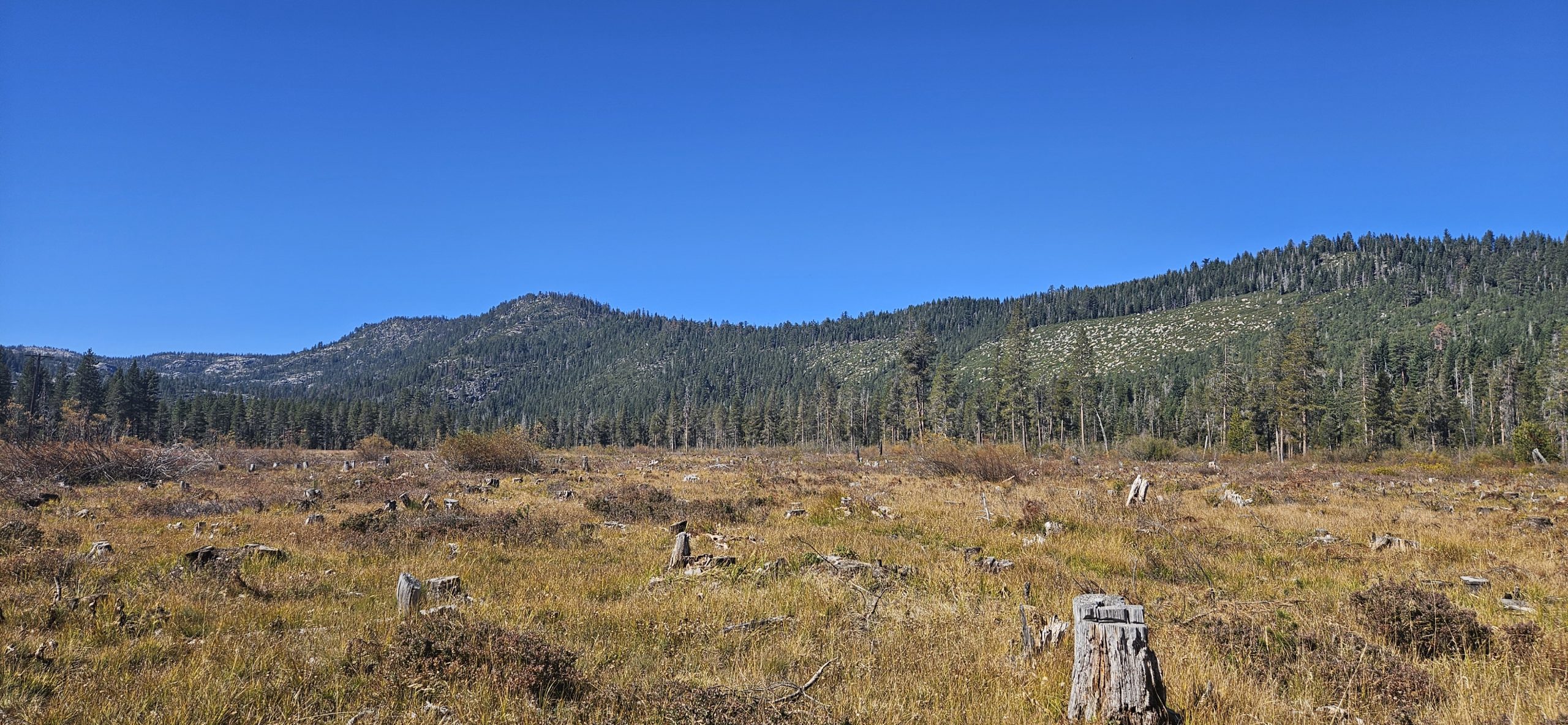
The Washoe Tribe is leading efforts to restore approximately 283 acres of meadow habitat through conifer removal, vegetation management and culturally guided prescribed fire. But for the Washoe people, Máyala Wáta is far more than 283 acres on a project map.
Meeks Meadow and the surrounding Meeks Creek area have been part of the Washoe Tribe’s homeland for thousands of years. The meadow provided food, medicine and materials, while its waters and vegetation supported fish and wildlife. It was also an important summer gathering place for the Washoe people.
Historically, frequent fire helped maintain the meadow’s open character. But the forced removal of Indigenous people from their homelands, coupled with decades of fire suppression and other changes to the landscape, altered that natural cycle. Conifers gradually moved into the meadow, competing with meadow vegetation for water and changing the habitat and ecological function of the landscape. The restoration underway at Máyala Wáta is working to reverse that trend.
And for one NWTF staff member, the work carries an especially personal connection.
Coralee Morgan, NWTF’s Forest Management manager for Region 5, returned to Máyala Wáta years after first working on the landscape herself. Before joining NWTF, Morgan worked for the Washoe Tribe and was involved in the restoration efforts of the meadow.
Returning as part of the field tour gave her the opportunity to see a landscape she had once worked to restore through a different lens, while also seeing how that work has continued to evolve.
“I appreciated the opportunity to return and see how much the meadow has changed, as well as all the hard work the Tribe has accomplished since I worked with them,” Morgan said. “The last time I worked in the meadow, it was filled with lodgepole pine. Since then, the Tribe has implemented a thinning treatment that removed nearly 90% of the trees, helping restore the meadow’s open character.”
For Morgan and NWTF district biologist Krista Moldin, the experience also reinforced why conservation partnerships matter, particularly when the goal is to restore landscapes at a scale large enough to create lasting ecological change. The work at Máyala Wáta shares an important principle with conservation projects throughout the West: healthy landscapes rarely happen through a single treatment or a single organization. They require people to work across boundaries, bring different forms of knowledge to the table and think beyond individual projects.
The Washoe Tribe invited agencies and organizations to Máyala Wáta not simply to showcase what has already been accomplished, but to share what it has learned along the way. Large-scale restoration takes time. It requires funding, planning, monitoring and partnerships, often over many years. By bringing other organizations onto the landscape, the Tribe is creating an opportunity for those lessons to extend beyond the Tahoe Basin and inform restoration efforts elsewhere.
“Every landscape is different, but there are lessons here that can translate to other places,” Morgan said. “Being able to see the work firsthand and learn from the people who are doing it is an important part of building that capacity across the West.”
The work at Máyala Wáta reflects a broader conservation principle: healthy landscapes rarely result from a single treatment or a single organization working alone. Through its conservation initiatives, the NWTF works with partners across property and jurisdictional boundaries to address interconnected challenges such as wildfire risk, habitat fragmentation, watershed health and forest resilience. Rather than viewing individual projects in isolation, this approach recognizes that meaningful, lasting conservation requires looking at the bigger picture, bringing different forms of knowledge and expertise together and understanding how improvements in one area can benefit the surrounding landscape. The Washoe Tribe’s work at Máyala Wáta offers a valuable example of that philosophy in action, demonstrating how collaboration, long-term stewardship and shared knowledge can create benefits that extend well beyond a project's boundaries.
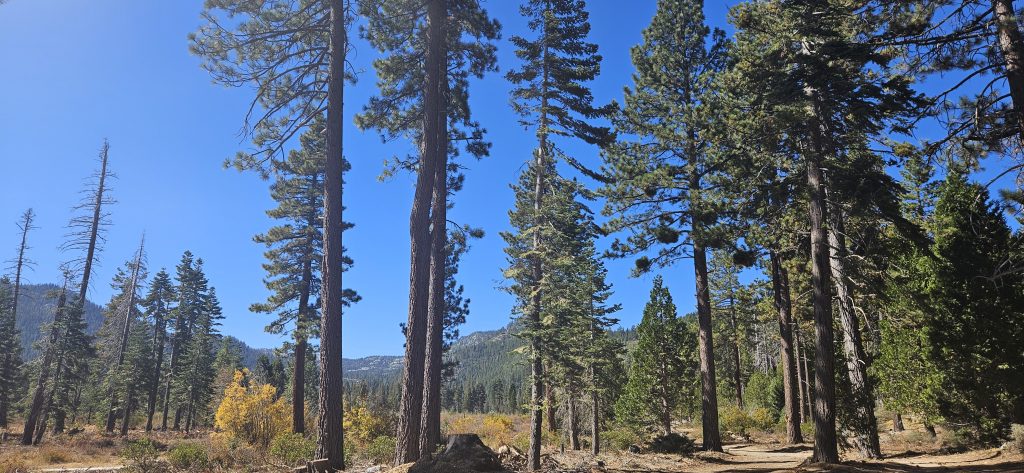
A meadow may be 283 acres, but its influence does not stop at its boundaries. Water moves through watersheds, wildlife moves between habitats, fire moves across landscapes and knowledge gained from one restoration project can help shape the next.
That may be one of the most important lessons from Máyala Wáta. The goal is not simply to restore one meadow, rather to show what is possible when people come together to restore the landscapes that sustain wildlife, communities and cultures, and then share those lessons so the work can continue somewhere else.
At Máyala Wáta, the meadow is opening up and the landscape is beginning to breathe again. And now, the Washoe Tribe is making sure the lessons learned here do not stay within its boundaries.