Building on a Legacy of Wild Turkey Research
When it comes to the wild turkey, the Northeast has always been defined by successful restoration of the iconic Eastern wild turkey. But it is also a region rich with natural and human history, with ephemeral forests that were completely cleared for agriculture and development in many areas across the Northeast.
In 1930, wild turkey populations were extirpated from many states in the region due to habitat loss and overexploitation. When agricultural fields were abandoned, forests began to recover enough to support recolonization and translocation of wild turkeys. This natural history is what shaped some of the first research in the region.
Early biologists believed that the fractured landscape of the Northeast, coupled with severe winters, was the reason wild turkey populations remained limited. Thanks to a handful of trailblazing biologists, we now know that nesting success and recruitment are more often the limiting factor to population growth. That realization is what pushed modern wild turkey management toward a full, annual-cycle perspective, which would eventually set the stage for the National Wild Turkey Federation’s Forests and Flocks Initiative.
The Pioneers of the Northeast
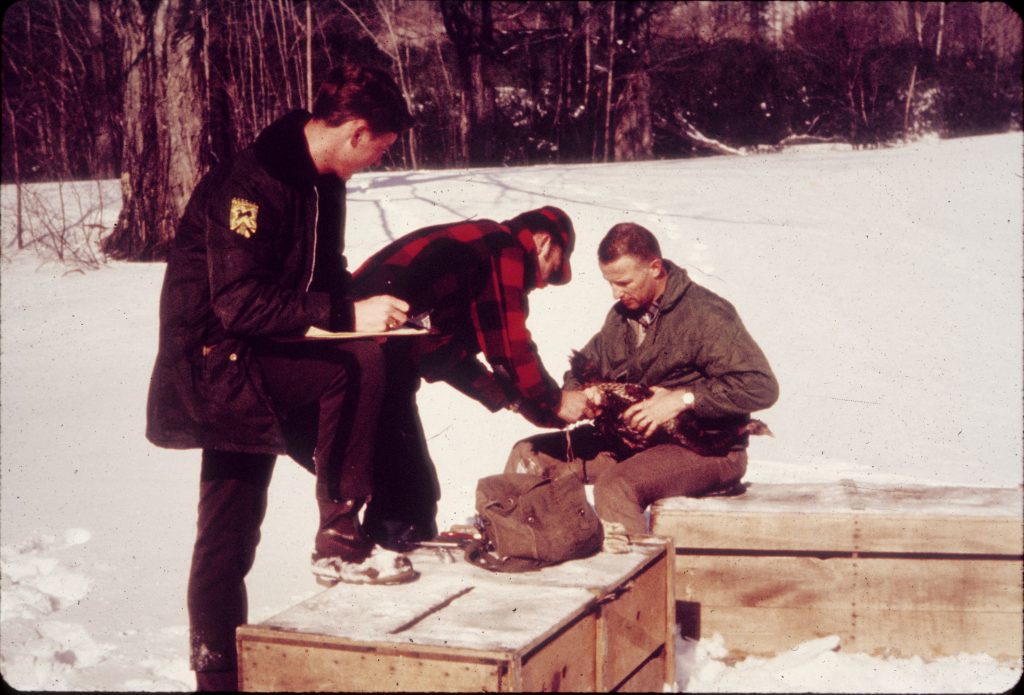
Several early wild turkey pioneers in the Northeast helped revive populations from the brink, including Gerald Wunz, who started wild turkey trap-and-transfer programs across Pennsylvania. Inspired by the foundational work in the Southeast, where Duff Holbrook first pioneered the use of the cannon-fired net in South Carolina in 1951, Wunz recognized that utilizing truly wild birds, rather than vulnerable game-farm turkeys, was the key to success. To sustain these newly relocated flocks, Wunz built a long-term brood-monitoring and experimental-habitat program in Pennsylvania. This is arguably the region's single most significant piece of applied science.
The Northeast also reveres the work of Dr. William Porter. While a lot of his foundational wild turkey research was based in Minnesota, Porter spent decades researching wild turkey populations as a professor in New York State. When his research proved that wild turkeys could be trapped, relocated and could survive on farmland instead of large plots of forested land, it paved the way for the dramatic repopulation of the bird in New York and in the rest of the Northeast.
William Healy, Ph.D., a USDA Forest Service researcher who was first based in Morgantown, West Virginia, and then in Amherst, Massachusetts, is credited with ground-breaking wild turkey research that looked at wild turkey broods and winter habitat use as well as poult food availability. Healy also edited the 6th Wild Turkey Symposium Proceedings in 1990, and alongside Shawn Powell co-authored the 1999 harvest-management synthesis and more.
In the southern portion of the Northeast range, Gary Norman, former forest game bird project leader for the Virginia Department of Wildlife Resources, remains one of the region's most consistently active researchers. Over the course of his 40-year career, he has authored or co-authored over 40 peer-reviewed publications regarding the wild turkey. Norman’s work looked at anything from wild turkey reproduction to recruitment, oak-mast interactions and fall-hunting survival across Virginia and West Virginia.
These four researchers are just a small fraction of dedicated biologists who have spent the last half century studying a variety of different research priorities that have shifted in the Northeast over the years.
Northeast Research Priorities
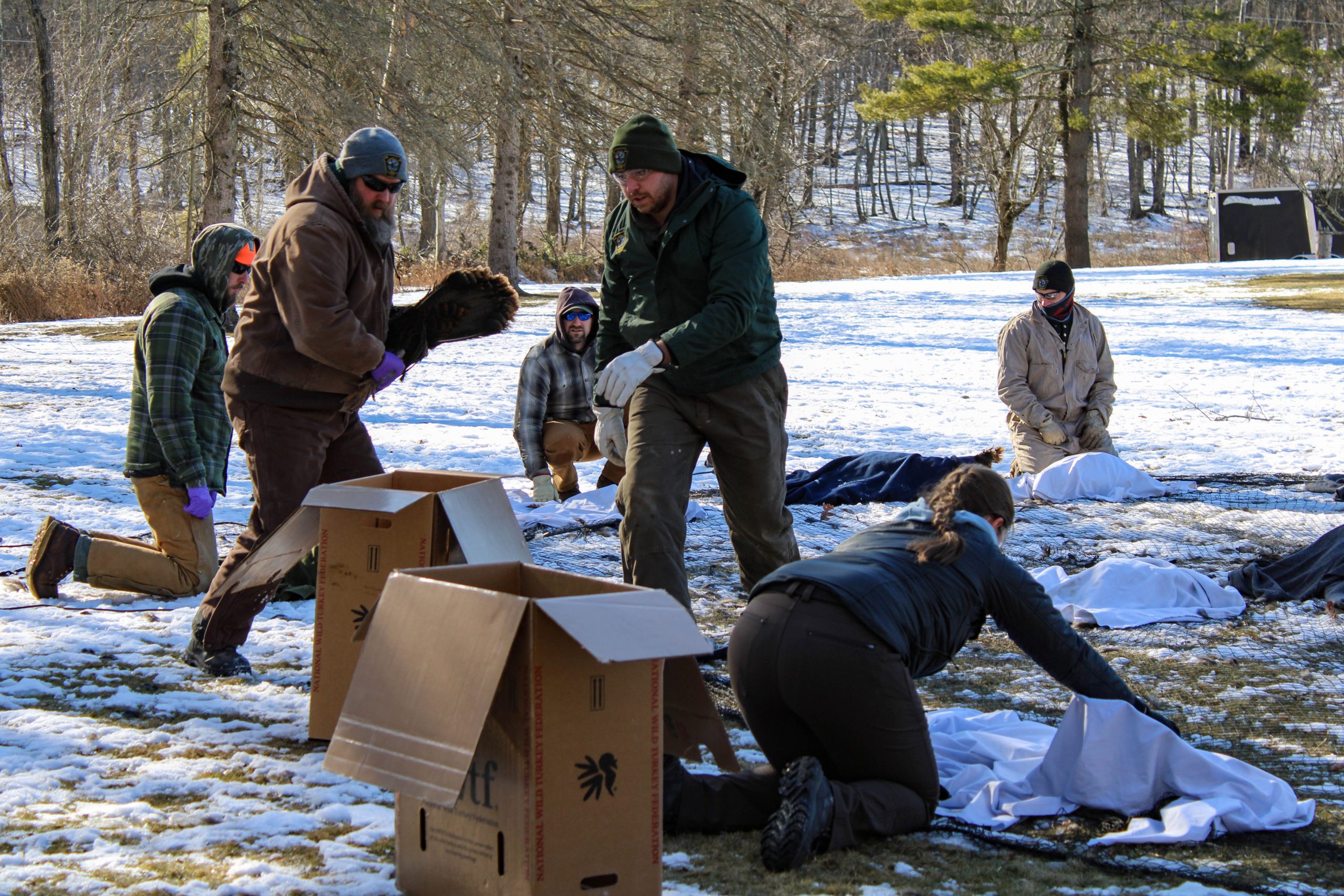
From the beginning, wild turkey restoration took center stage. During the 1950s, states in the Northeast were conducting some of the first live wild turkey trap-and-transfer programs in the nation. In Pennsylvania, more than 200,000 game-farm birds were transferred into the wild but failed to establish self-sustaining populations. As wild trap-and-transfers succeeded, research began to shift into looking at establishing early successional forest openings for effective brood habitat.
Through the ‘90s and the early 2000s, researchers were focusing on using new technology to model wild turkey population dynamics, harvest rates and survival. The 2000s and 2010s saw a large focus on wild turkey disease surveillance, as well as more questions emerging about how wild turkeys survive in suburban and edge-of-range regions.
For the last two decades, research priorities have shifted toward focusing on explaining wild turkey population declines against the backdrop of a changing forest structure. A specific project that launched this new trend, titled “Understanding the New Normal: Wild Turkeys in a Changing Northeastern Landscape,” was published in 2015 by a team spearheaded by Pennsylvania’s MaryJo Casalena, former Pennsylvania Game Commission turkey biologist and NWTF National Wild Turkey Technical Committee member.
Casalena and her team cited multiple factors, including a natural population contraction, changes in habitat conditions across the landscape, changes in predator populations and changes in harvest management as potential reasons for population declines. Their research set out to summarize how wild turkey populations and these factors interact, as well as describe how these factors have changed and are projected to continue to change in the Northeast. Researchers are hoping to understand the new ecological challenges wildlife managers are facing, such as invasive species, so they can effectively continue to conserve wild turkey populations in the Northeast.
This kind of research is particularly important right now because the Northeast is no longer managing an expanding population.
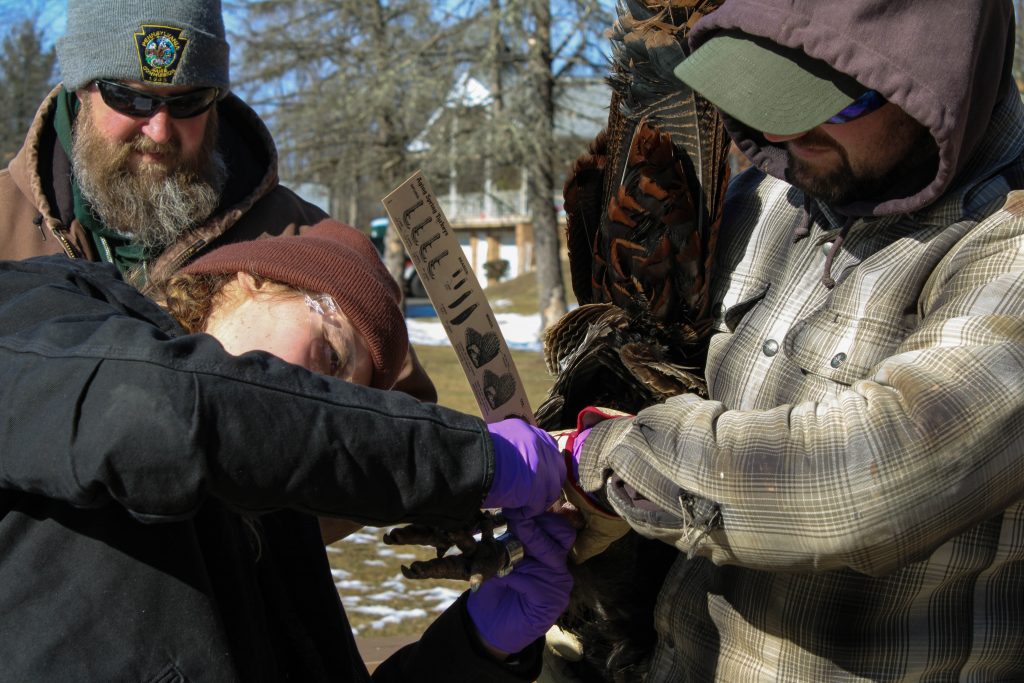
Before retiring last year, Casalena was a part of launching essential research that can start answering some of these questions. The Pennsylvania Game Commission just wrapped up a collaborative Mid-Atlantic wild turkey regional study in partnership with Penn State University, the University of Pennsylvania’s Wildlife Futures program, Maryland, Ohio, New Jersey and West Virginia state wildlife agencies, Ohio State University and West Virginia University. All participating states were looking at vital rates, such as hen survival, nesting success and poult survival. Some participating partners also incorporated more complex questions such as the impact of weather, landscape attributes, predation and disease on hen survival and productivity.
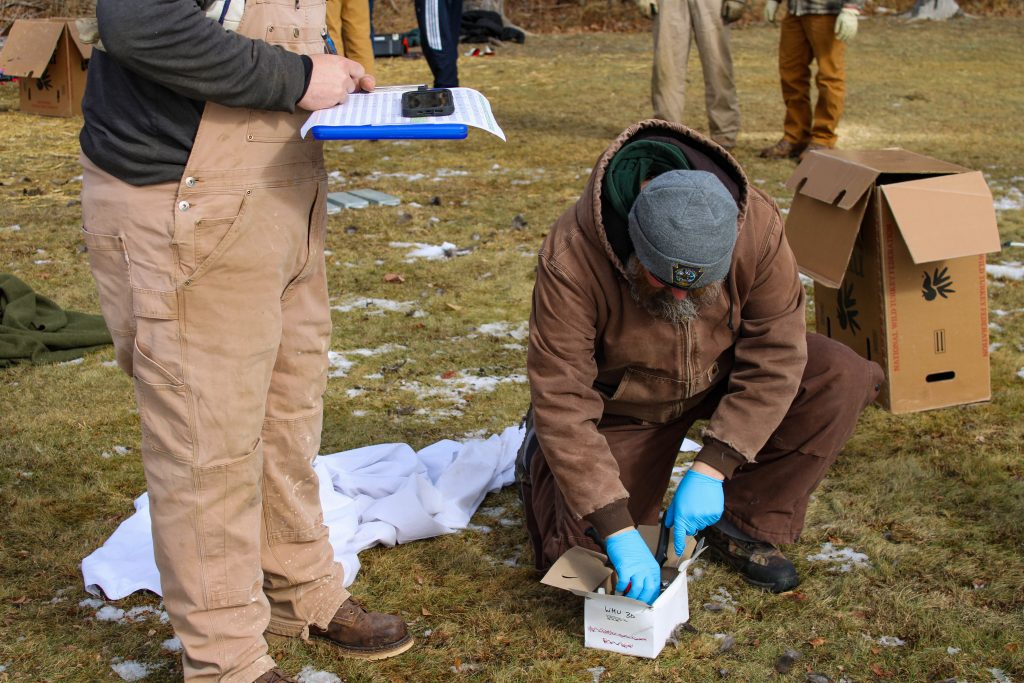
Other examples of current research include Virginia's annual Spring Gobbler Hunter Survey, and West Virginia's remarkable 49-year Mast Survey, one of the longest continuous evidence lines directly tracking the oak-mast-decline. Since 1971, biologists with the WVDNR Wildlife Resources Section, the West Virginia Division of Forestry and volunteers across the state have conducted surveys to determine the abundance of mast produced by 18 species of trees and shrubs across 249 sites.
Similarly, thanks in part to funding provided by the NWTF through its 2025 investment in wild turkey research, the New Hampshire Fish and Game Department has started an innovative wild turkey research project that will investigate wild turkey survival and harvest rates in New Hampshire to produce a more accurate population estimate.
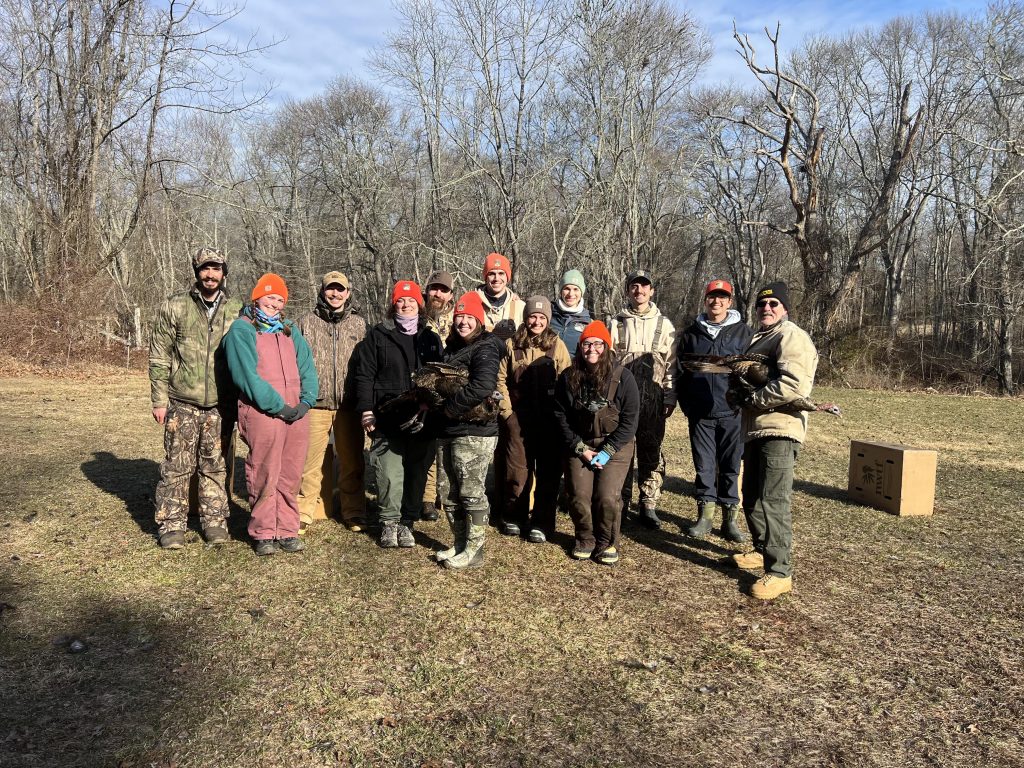
Likewise, the NWTF helped launch a new wild turkey research project in Rhode Island to better understand if and how diseases impact wild turkey reproduction and habitat use. The effort builds upon earlier work supported by the Rhode Island Department of Environmental Management (RIDEM) and will inform the work the NWTF implements through its Forests and Flocks Initiative.
As the Northeast Looks Ahead
While researchers are monitoring the everchanging landscapes of the Northeast, the National Brood Survey still reports the Northeast as supporting the highest populations of wild turkeys in the country. From 2019 to 2024, there were roughly four poults hatched per hen, though local variation is substantial.
The Northeast is also entering an era of being able to compare old and new methods of research directly. The PCG’s Mid-Atlantic study has logged just over 400 transmitter-marked hens, 2.8 million GPS locations, and 58 million accelerometer records as of August 2024. West Virginia's hen study that took place from 2024 to 2026 is comparing data against research that took place between 1989 and 1994.
All of this goes to show that conservation work is a relay, not a sprint, and biologists in the Northeast continue to pass the torch to the next generation of researchers who continue to uncover more information about the wild turkey.