Hunting with the Wild Turkey Doc
A few days in the Bluegrass State with one of the country’s leading wild turkey biologists provided nuggets of information and a few great hunts.
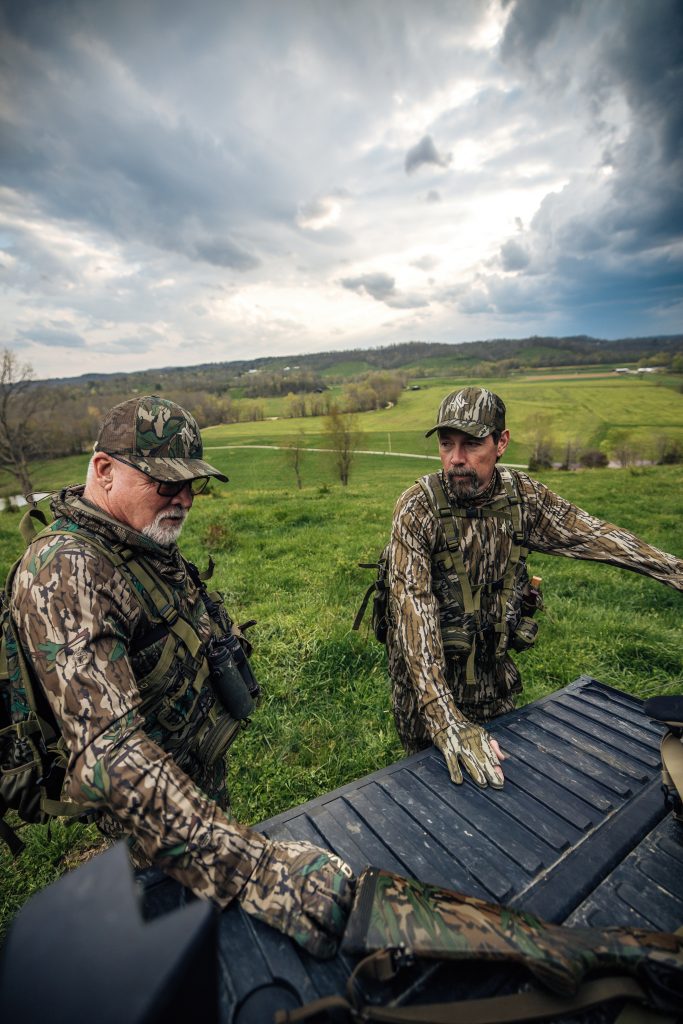
Kentucky is pristine in spring, with no additives needed. But throw in turkey season, and an opening weekend hunt set up by Nomad with Spring Legion’s Hunter Farrior and the Wild Turkey Doc himself, Dr. Mike Chamberlain, and you have the equivalent of meeting St. Peter at the pearly gates and receiving the keys for entry.
With that kind of company and a great hunting setup, we didn’t need to die and go to heaven, but we sent some gobblers that way. Less than 30 minutes into daylight opening morning, you could almost see the tom’s breath off the roost as a chorus of hammering gobbles helped raise the sun. Another half-hour and that bird crested a hill, blown up in full strut, preparing to circle our decoy. The gobbler’s white crown against a chestnut backdrop of feathers was made for the shotgun’s bead to settle on and fire. I had a bird down in less than an hour and was headed back to camp.
Chamberlain and Farrior (check out Spring Legion at https://springlegion.com) weren’t so fortunate that morning, but their luck quickly changed during the next 24 hours. Chamberlain connected on a bird on top of a ridge that afternoon, and then Farrior went back to that spot the next morning and shot a gobbler a few paces away.
Spending time in camp with Chamberlain, one of the leading wild turkey researchers in the nation, is akin to hunting with some of the great historical turkey biologists: Lovett Williams, Wayne Bailey, James Earl Kennamer, Bill Healy, John Lewis and many others. In a few brief days, the amount of wild turkey knowledge shared was incredible.
Roost Locations
Chamberlain and guide Mike Tussey, with Nomad, located a gobbler on the first morning roosted on a northeastern Kentucky saddle, mid-slope. The bird escaped in the rugged terrain, but Chamberlain noted the importance of the roost location.
“One pattern we’re seeing clearly with GPS data is that three things matter with roost locations,” he said. “One, turkeys are roosting in mid-slope. Two, they’re often roosting in areas that are rugged, and, three, there needs to be vegetation.”
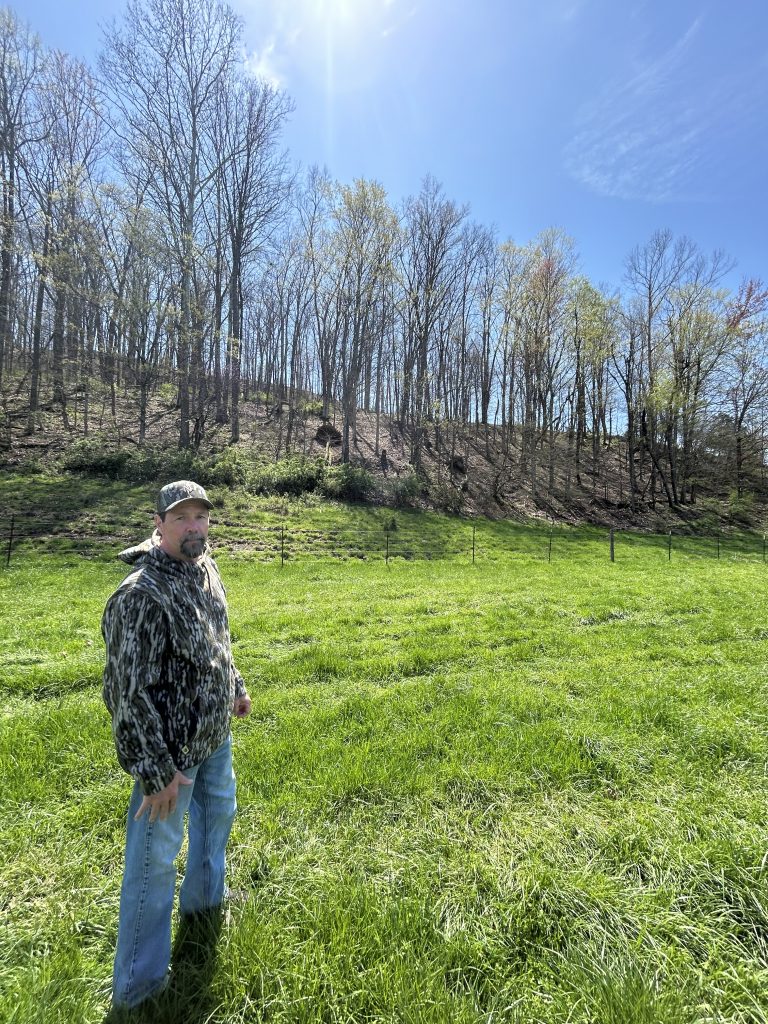
Chamberlain said roosting at mid-slope lets a turkey fly up to the top of the ridge or down to the bottom, with open vegetation that allows it to see danger coming and provides a clear flight path.
Grasses
A nearby field of fescue also caught the Wild Turkey Doc’s attention. He noted common issues in parts of the wild turkey range involving open areas dominated by sod-forming grasses such as fescue.
While these areas look pretty, they are difficult to navigate, particularly for young poults,” Chamberlain said. “A much better option would be to remove sod-forming grasses and replace with something more diverse, such as warm-season grasses, native forbs and legumes that are going to attract insects.”
Preening
After harvesting his gobbler, Chamberlain spotted the well-maintained condition of the bird’s feathers, pointing out the uropygial gland as the reason. Every turkey has this gland at the base of the tail fan (you can see it in the QR code video).
“When you talk about wild turkeys preening, they take their beak, and they grab secretions that are coming out of that gland, and they wipe those secretions all over their body and feathers,” Chamberlain said. “What that does is it allows for weather proofing, and it allows for the feathers to maintain their condition and lay like shingles, essentially functioning as weather proofing throughout the year. That’s why turkeys spend so much time preening during the day.”
These were just a few snippets of information overload from Chamberlain in two days. You can find more of his work at the Wild Turkey Lab, of which NWTF is a proud partner: https://wildturkeylab.com.