How Mentorship Helped One Family Find Their Place in the Outdoors
The morning started quietly in the woods of central Washington, with the first gobbles echoing in the distance and birds stirring in the trees. Inside the blind, two young girls watched it all unfold for the first time. For Edna and Ada, it was the beginning of a tradition their parents had only just discovered themselves not long ago.
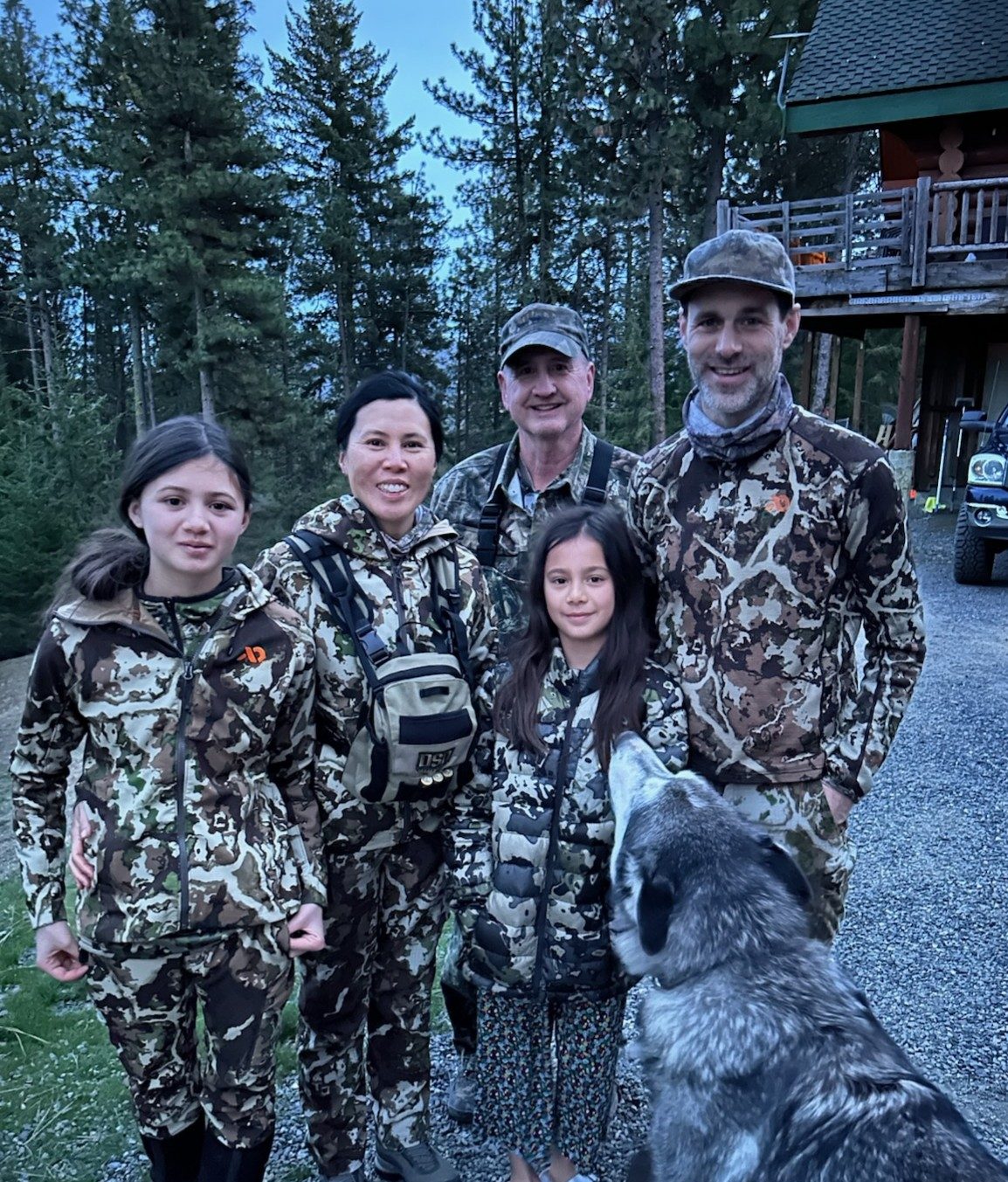
Just a year earlier, their parents Matilda and Ian Luttrell were beginners, stepping into the world of hunting through a National Wild Turkey Federation and First Hunt Foundation (FHF) mentor camp.
Like many adult-onset hunters, they didn’t grow up in the outdoors and didn’t have a clear path to follow. What they had was curiosity and a willingness to learn. The camp gave them that starting point, pairing them with experienced mentors and walking them through the fundamentals, from firearm safety to calling and understanding turkey behavior. But more importantly, it gave them confidence and a support system that extended far beyond a single weekend.
“To me, mentoring is not just a one-and-done,” said Richard Mann, NWTF Washington State Chapter president and FHF mentor. “If you can stay in touch and keep helping them along, that’s where it really matters.”
That continued support is what makes these programs work. Through the NWTF’s Education and Outreach programs and its commitment to R3 — recruitment, retention and reactivation — new hunters aren’t simply introduced to the sport; they are given the tools, relationships and encouragement needed to stay engaged and grow. For Matilda and Ian, it meant returning to the field, gaining experience and building confidence with each hunt. Before long, hunting wasn’t something new anymore; it was something meaningful and something they wanted to share.
That’s how they found themselves in the blind that spring morning, whispering to their daughters as the woods came alive around them. Though the property was small, just five acres, it held plenty of birds. Nearly 100 had been seen on the roost, and as the sky brightened, shapes began to materialize in the trees. Turkeys shifted on their limbs before pitching down one by one, gliding into the field below. For Edna and Ada, it was a front-row seat to one of spring turkey hunting’s most memorable moments.
“We are so thankful Richard agreed to mentor Ada and Edna this year,” said Matilda Luttrell. “This hunt was special to our family because it was Ada’s first ever hunt of any kind, and it was our first ever family hunt. My husband Ian and Edna have been out hunting together, but this year, Ada joined the family. Ada had just completed hunter safety in February and had been looking forward to having Richard mentor them. The mentored hunt with who Ada calls ‘the turkey dude’ felt like a reward for all the hard work Ada put into studying and passing hunter safety.”
The hunt also offered a moment few hunters ever get to experience. The landowner had mentioned a unique bird — a nearly all-white hen he’d named “Sarah.” As the group sat in the blind, she was the first to appear, her pale feathers standing out against the landscape, accented with dark markings that set her apart from the rest of the flock. It was a rare and memorable sight that added something special to the morning.
When the opportunity came, Ada stayed steady. With guidance and quiet encouragement, she made her shot count, taking a jake on her very first hunt. Beside her, Edna waited patiently, taking in every detail of the morning. The shot didn’t come for her, and by evening the birds had changed their routine, slipping away just out of reach, but the experience itself never lost its impact.
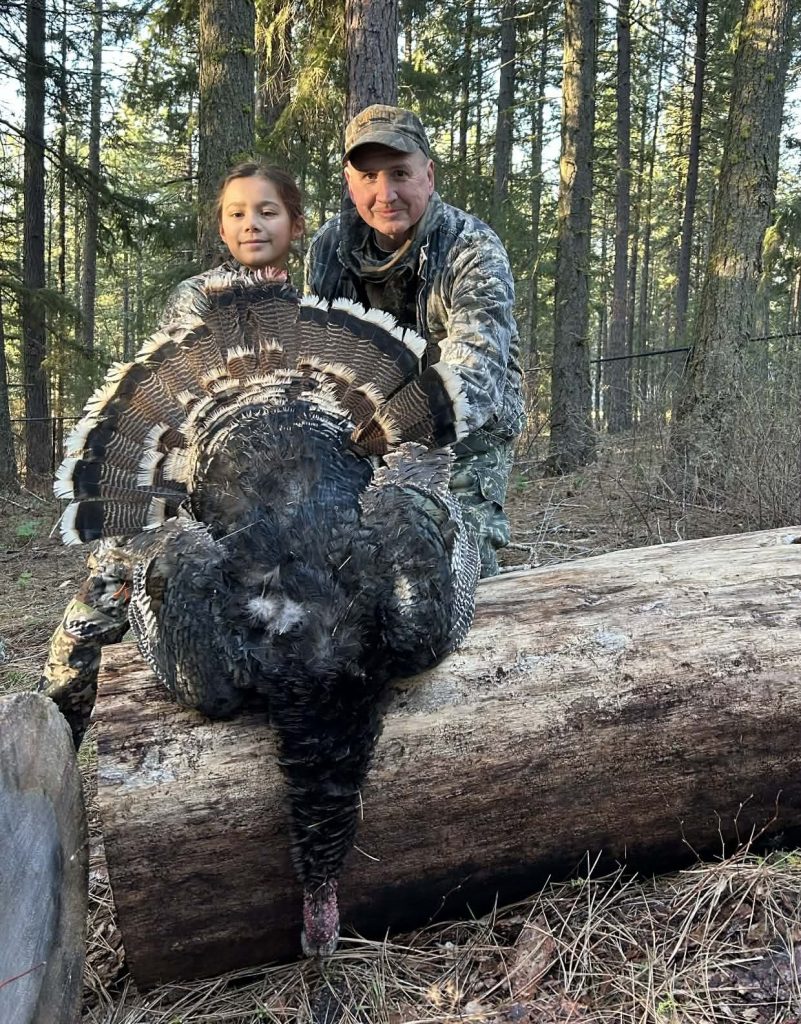
Moments like these are what keep people coming back. They are the foundation of a connection to the outdoors that goes beyond the harvest, rooted in experience, curiosity and time spent together. For the mentor sitting behind them, it was also a powerful reminder of why that initial investment matters. A retired game warden who has spent years mentoring new hunters, Mann has seen firsthand what happens when someone is given the opportunity to step into the outdoors in a supportive, welcoming way.
“You don’t have to be an expert,” Mann said. “If you’re willing to spend time with people and help them experience something new, it’s well worth it.”
Mentors are an integral part of the system that sustains hunting and conservation. They help bridge the gap for those without a background in the outdoors, offering not only knowledge, but encouragement and access. Through programs like the NWTF and FHF mentor camps, they play a direct role in shaping the future of hunting.
“One of the most important parts of all our hunts has been the connections we’ve made with our mentors like Richard, the landowners we’ve met and the friends we’ve made along the way,” Luttrell said. “I appreciated Richard for centering the kids during the hunt. Richard made it fun and memorable by sharing his knowledge and lovely stories. I hope that someday, I will be able to give back, and perhaps be a turkey mentor myself.”
For Matilda and Ian, that impact is already clear. What began as a first introduction in 2024 has quickly grown into a shared pursuit that now includes their daughters. They are no longer just participants; they are becoming stewards of a tradition, carrying it forward in a way that ensures its future.
“That’s what makes it special,” Mann said. “Seeing it come full circle like that.”
That full-circle moment is what NWTF strives to create. By investing in people, providing opportunities and supporting mentorship, the organization is helping build not just hunters, but hunting families who will continue to engage with the outdoors, support conservation and pass those values on to the next generation.
“Ian and I are so happy to share our hunting passion with our daughters,” Luttrell said. “Ian and I only became turkey hunters three seasons ago, but it’s all I can think about come spring season. We just hope that some of the passion carries on into their adulthood.”
As the woods settled back into stillness and the hunt came to a close, there was a sense that this story was far from over. For Ada and Edna, it was only the beginning. And for those who continue to invest their time as mentors, it was another reminder that the future of hunting is built not in a single season, but in the connections and experiences that carry on long after the hunt is over.