Hawk-Like Reflexes
Dr. Tom discusses the ability of hawks to prey on wild turkeys.
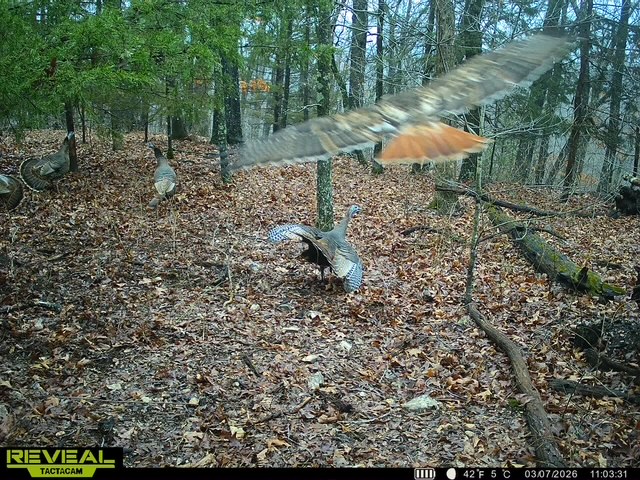
I captured a unique photo from my game camera in the Missouri hardwoods in early March 2026. A red-tailed hawk is swooping down on adult turkeys that are obviously alarmed and scrambling. I know hawks prey on quail, pheasants and turkey poults, but will they prey on adult turkeys? — John Ragland, via email
Redtails are large hawks, but an adult wild turkey is quite a handful for them. An adult red-tailed hawk weighs 3 to 3½ pounds. Even a hen turkey weighs almost three times that much. Given the size and strength of healthy wild turkeys, redtails are not well equipped to prey upon them regularly. Redtails are certainly capable of taking poults until the young turkeys reach full size in September or early October.
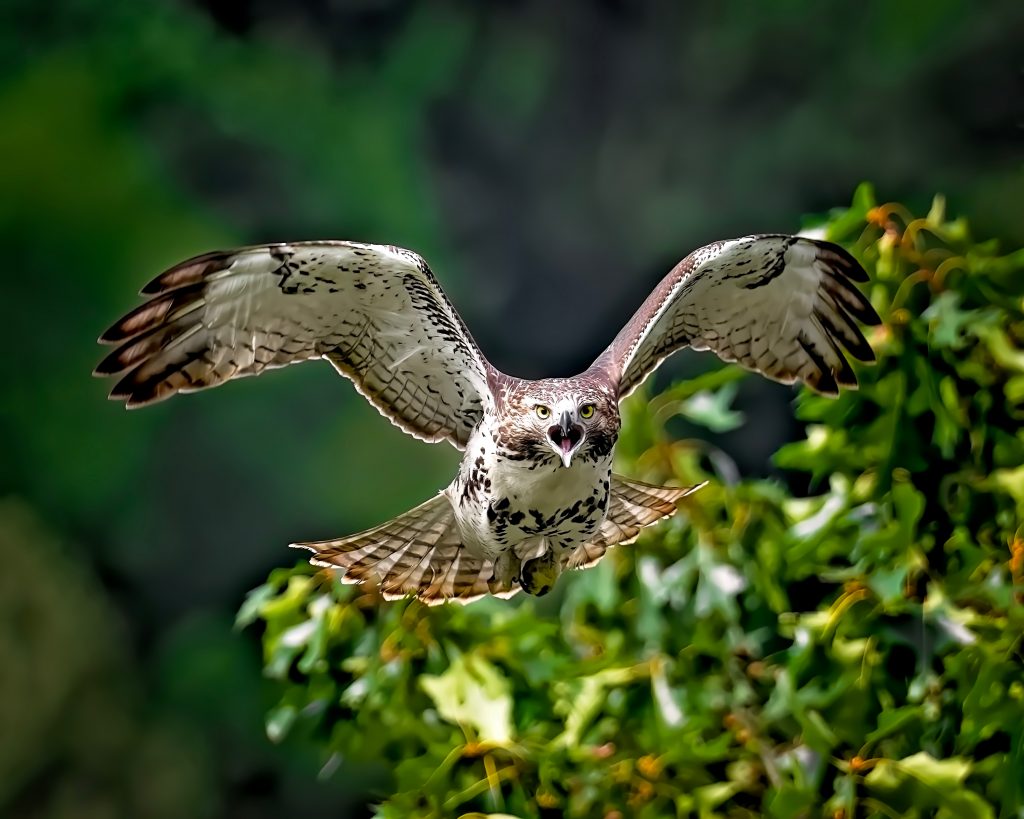
Red-tailed hawks are on the list of a wild turkey’s potential predators. On rare occasion, they are successful. I was monitoring a winter flock of turkeys years ago and noticed one bird, a jake, with a broken leg. He kept up with the flock by hopping along and using his wingtips to help balance. He was capable of flight, but even so, I figured his odds of surviving the winter were slim. Later, I observed a redtail eating him. I did not see the redtail kill the jake, but under the circumstances, the hawk could have killed him.
Several raptors (birds of prey) are predators of wild turkeys, with great horned owls being one of the most capable. They have the advantage of night hunting, so roosting turkeys can be a target, especially in winter when there are no leaves on hardwoods. Like redtails, great horned owls only weigh 3 to 3¾ pounds, so wild turkeys are a challenge.
I happened across a gobbler killed by an owl one winter. The evening before, I saw a lone gobbler roosting in an oak tree. The ground was covered in 8-10 inches of snow, so I thought about checking the gobbler’s travels the next morning. We were trapping turkeys for banding. I hoped there might be more turkeys roosting nearby that could also be lured to a trap site.
Early the next morning, I made my way up the hill to where I had seen the gobbler. As I walked, I saw a turkey carcass in the snow, a hundred yards from where I saw the gobbler on the roost the previous night. This was one of those times when I should have had a camera, and it was before cell phones. The scenario was played out vividly in the snow. A trail of gobbler feathers, owl feathers, wing marks and places where the two had tangled told the tale. The owl hit the gobbler on the roost and the two fell to the ground. From there it was a wrestling match and the owl won. It never let go of the gobbler. He had eaten the caruncles, neck muscles and part of the gobbler’s crop. The last part of the trail was a set of wing marks where the owl had flown off. That owl was successful at obtaining some calories, but it cost him a bunch of feathers and potential for major injury.
Other than golden eagles, bald eagles and great horned owls, most raptors are not much of a threat to grown turkeys. Are they occasionally successful? Yes, but rarely. Even the large raptors have more misses than hits when it comes to stooping (swooping down) on adult wild turkeys. The only golden eagle attempt I witnessed was unsuccessful. Poults are in greater danger from raptors and ground predators than adult turkeys.
Ultimately, wild turkeys are a prey species. They are adapted for survival, given their visual acuity, excellent hearing and legendary reaction times. In the case of this photo, you can see that the turkeys are reacting. Odds are that redtail did not come close to turkey dinner.
Send your wild turkey questions, photos and videos to turkeycall@nwtf.net for Dr. Tom to answer.