Gem State Chapter Volunteers Continue Restoring Boise River Wildlife Management Area
There is something rewarding about finishing a hard day of conservation work and being able to look back at exactly what you accomplished. For volunteers with the National Wild Turkey Federation’s Gem State Chapter, that meant looking across the slopes of the Boise River Wildlife Management Area and seeing nearly 90 newly planted ponderosa pine saplings where there had been none that morning.
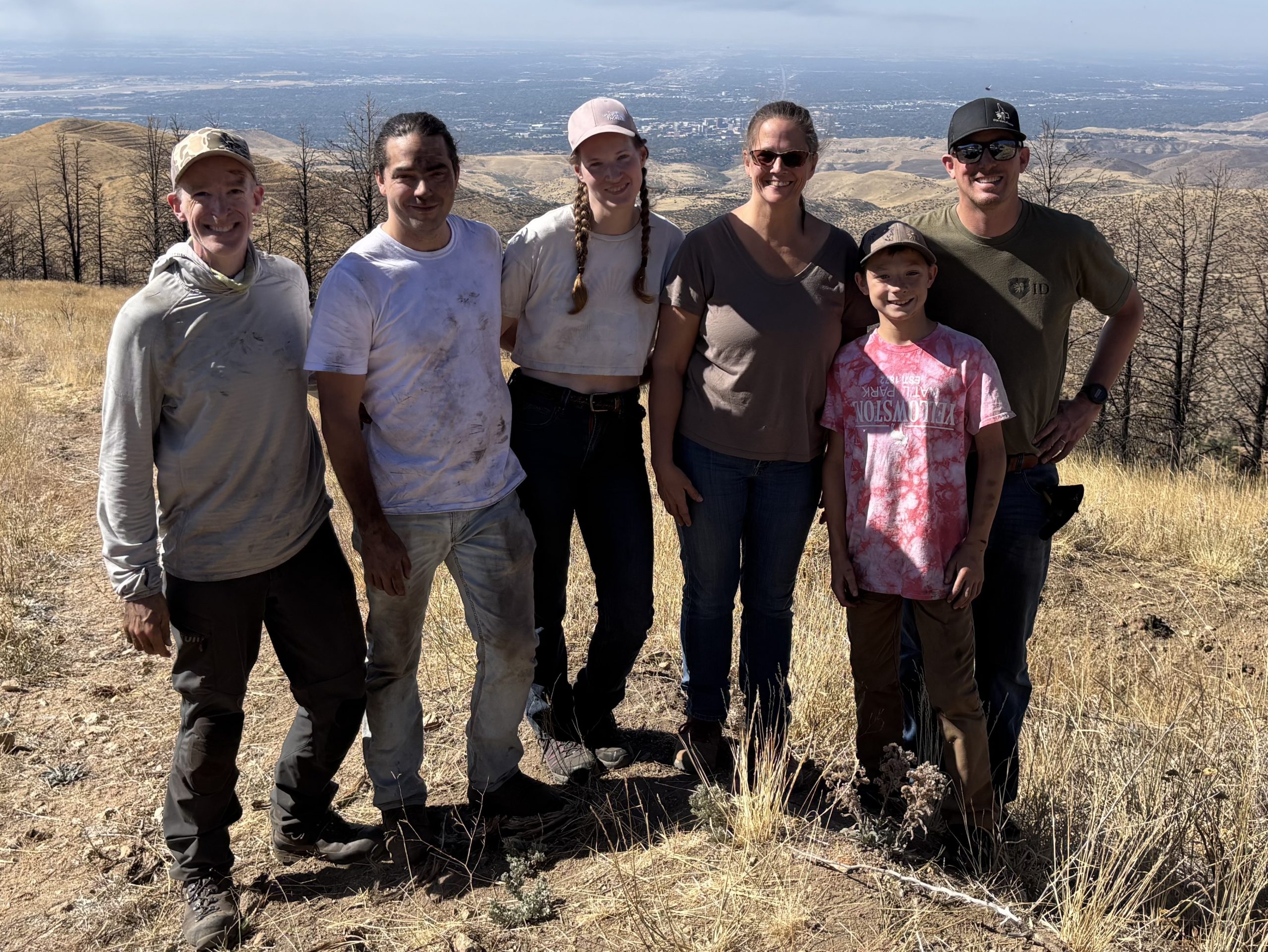
The chapter recently returned to the Boise River Wildlife Management Area in Idaho for its fourth volunteer tree planting day at the site, continuing a restoration effort that began following the 2024 Valley Fire. The fire burned approximately 10,000 acres of critical deer and elk winter range on the WMA in the foothills immediately above Boise.
Working in partnership with the Idaho Department of Fish and Game, NWTF volunteers are helping accelerate the return of native trees to portions of the landscape affected by the fire. The effort is part of a long-term recovery process, one that will take years to fully realize but is already benefiting from people willing to spend their time and energy helping the landscape heal.
This latest planting day was not a large-scale volunteer event. Three Gem State Chapter members, one JAKES member and two non-members came together to do the work. For the volunteers, however, the size of the group did not determine the value of the day.
“It was hard work to plant those trees in tough soil over steep slopes and carrying water tanks on our backs,” said Mike Williamson, NWTF Gem State Chapter president. “But it was satisfying work with great views, and in the end, everybody enjoyed it.”
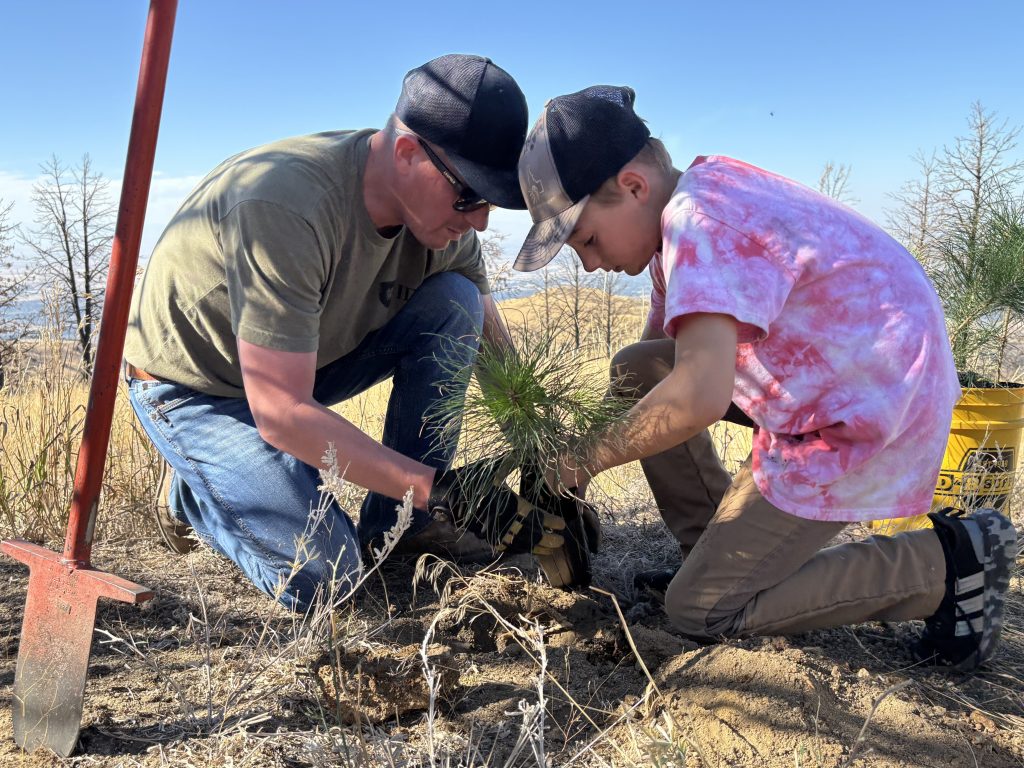
The work required exactly the kind of hands-on effort that often defines local conservation projects. Volunteers navigated steep terrain, worked through difficult soil and carried water to the newly planted trees, giving each sapling an opportunity to establish itself in a landscape still recovering from wildfire.
The views from the WMA may have provided a scenic backdrop, but the volunteers were focused on the task in front of them. Each tree represented another small step toward restoring habitat that wildlife depend on, including the deer and elk that use the area as winter range.
For the Gem State Chapter, returning to the WMA has also demonstrated what can happen when volunteers remain committed to a project, proving that consistency is an important part of conservation. Wildlife habitat does not recover overnight, particularly following a wildfire that affects thousands of acres. Restoring a landscape requires patience, partnerships and people who are willing to keep showing up. The Gem State Chapter’s continued involvement is helping turn that long-term commitment into tangible work on the ground.
It also illustrates the broader role NWTF volunteers play in conservation across the country. Volunteers are often the people who take the organization’s mission from the page and put it into action in their own communities. They give their weekends, recruit others to participate and take on the physical work required to improve habitat for wildlife and people.
That spirit was evident in the makeup of this planting crew. Alongside chapter members and a JAKES participant were two people who were not NWTF members but wanted to contribute to the effort simply because they cared about the project. Conservation has room for everyone willing to lend a hand.
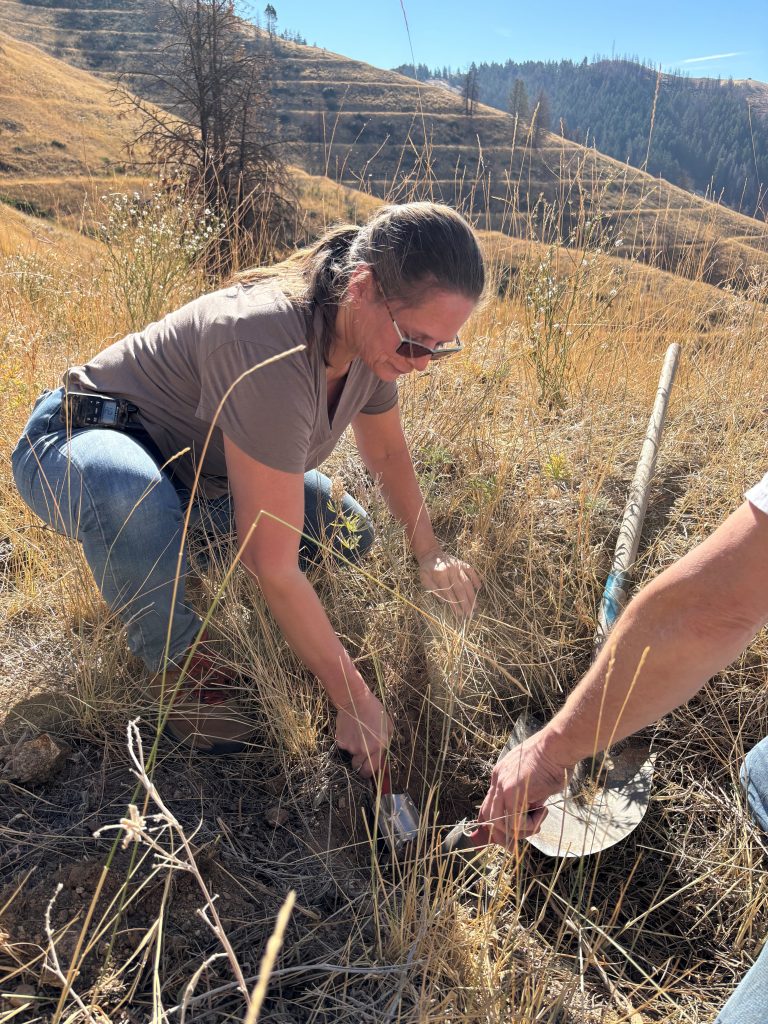
While 86 trees represent only a small portion of the landscape affected by the Valley Fire, they are 86 more trees given a chance to grow. Over time, those individual trees can become part of a larger recovering habitat and contribute to the wildlife values and recreational opportunities that make the Boise River Wildlife Management Area important to the community.
The volunteers who planted them may never see the full result of their work. Ponderosa pines take years to mature, and the landscape’s recovery will continue long after this planting day is over. But that is part of what makes volunteer conservation meaningful. The goal is not always to see the finished product. Sometimes, it is simply to leave the landscape better than you found it and give the next generation something to build on.
For the Gem State Chapter, that means coming back, putting in the work and continuing to move the landscape forward, one tree at a time.