Where Forestry Meets Wild Turkey Conservation
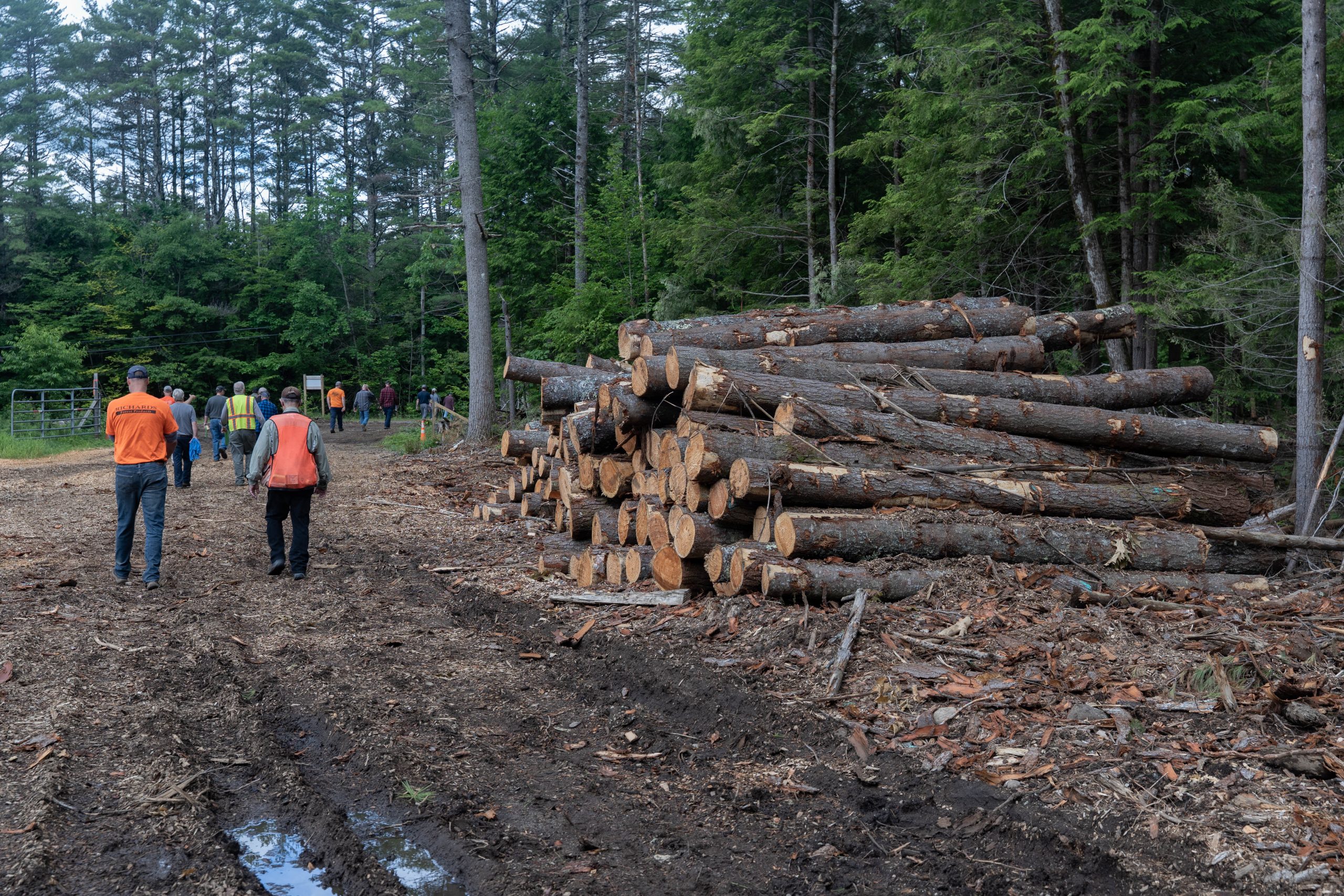
In the heart of Warrensburg, New York, the third most forested county in the state, lives SUNY College of Environmental Science and Forestry’s Pack Demonstration Forest, a 2,500-acre working forest used for research and sustainable forestry efforts. In June, foresters welcomed close to 100 forestry professionals to tour the property including foresters, land managers, landowners, loggers, government agency representatives, students and conservation organizations, like the National Wild Turkey Federation.
At check in, everyone received a folder with site information and a packet of forest management terms that were the first language to most, but foreign to me.
Foresters used code words to talk about their daily practices, measuring forests in units like “cord” or “cruise,” while I thought about how the poults and hens I saw on the way to this site indicated a healthy forest.
The tour started at the Spruce Mountain Demonstration Area, a climate adaptation project that received funding from the New York NWTF State Chapter earlier this year. This area recently underwent a thinning to open the understory and prepare it for prescribed burns, which is a unique opportunity for Upstate New York.
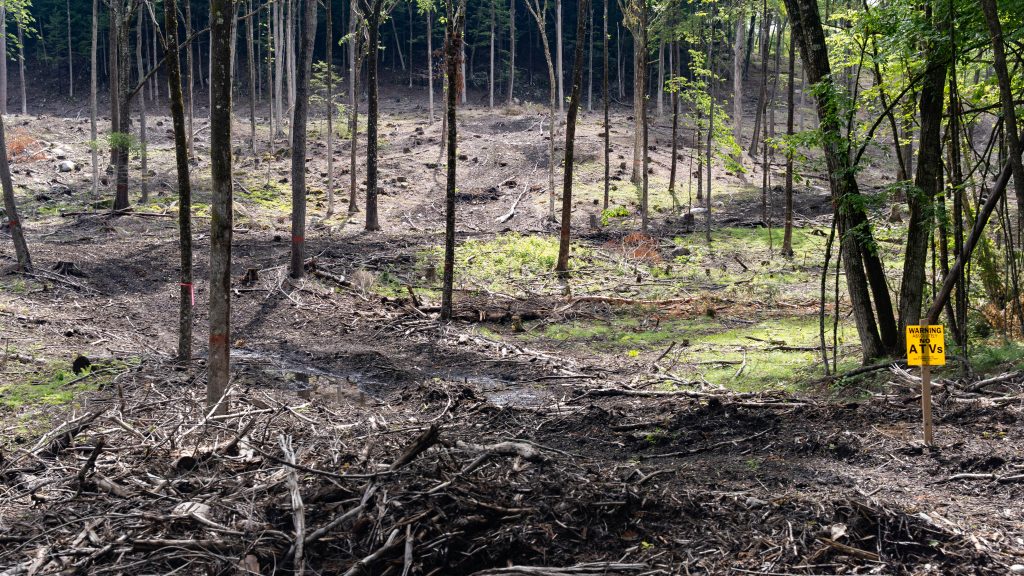
“The mosaic of ecosystems across New York and New England makes prescribed fire challenging,” said Allison Brusa, one of ESF’s three Adirondack field foresters. “Areas dominated by pine barrens, oak forests or grasslands are more obviously fire-dependent and have more robust fire programs, but we are much less certain of the effects of burning in spruce forests and northern hardwood forests.”
Brusa also pointed out that the weather windows for conducting burns in the northeast are narrow. On top of that, permitting and regional policies are different compared to other areas of the country. Out West, there are massive tracts of land with only one federal agency making management decisions, but in the Northeast, there isn’t a streamlined coordination among state agencies when it comes to conducting prescribed burns, and there are several requirements and regulations to consider.
One of those considerations lies in New York’s land ownership patterns. The Pack Demonstration Forest is private land held in a trust by ESF’s partner institution, Syracuse University, but since it is still within the Adirondack State Park, it is surrounded by land protected by the Forever Wild Clause, established in 1894 to keep state-owned land in the Adirondack and Catskill State Parks “forever wild.” This clause makes it difficult for foresters to perform certain management applications because of how extensive the wildland-urban interface is.
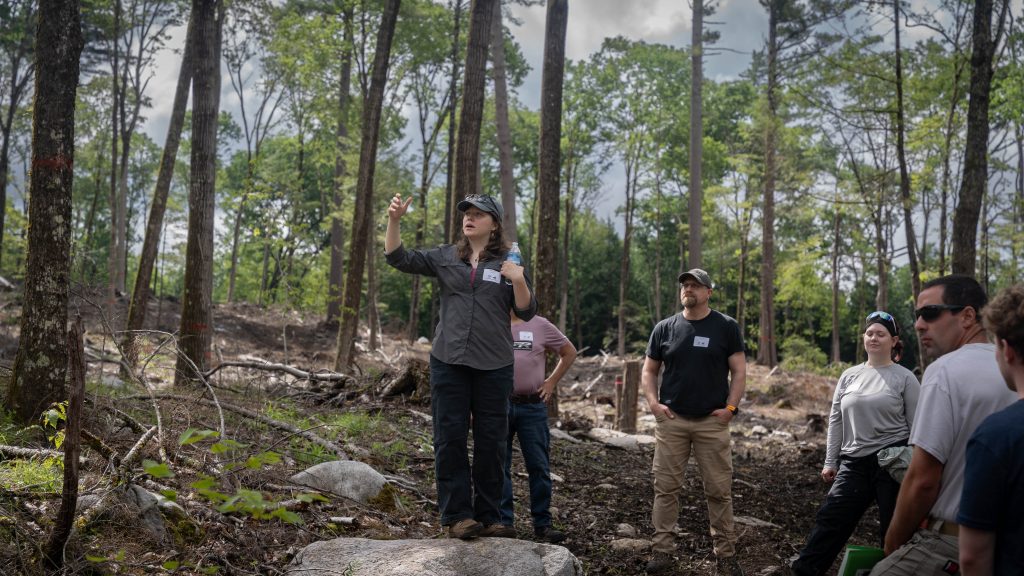
Therefore, prescribed burns within the Spruce Mountain Demonstration Area are an incredible opportunity for ESF managers to conduct a variety of different treatments that test the potential effects of local climate change. Brusa and her team can then host tours like this one, to show students, landowners and other professionals how each treatment could impact or alter northern forests, and what potential management solutions are.
The site is rich with biodiversity, and foresters plan to retain that, making it a refugia for wildlife. The site doesn’t currently have a lot of oak species, so Brusa is hoping future prescribed burns will make the site more favorable for oak, which will be even more beneficial for wildlife like the wild turkey.
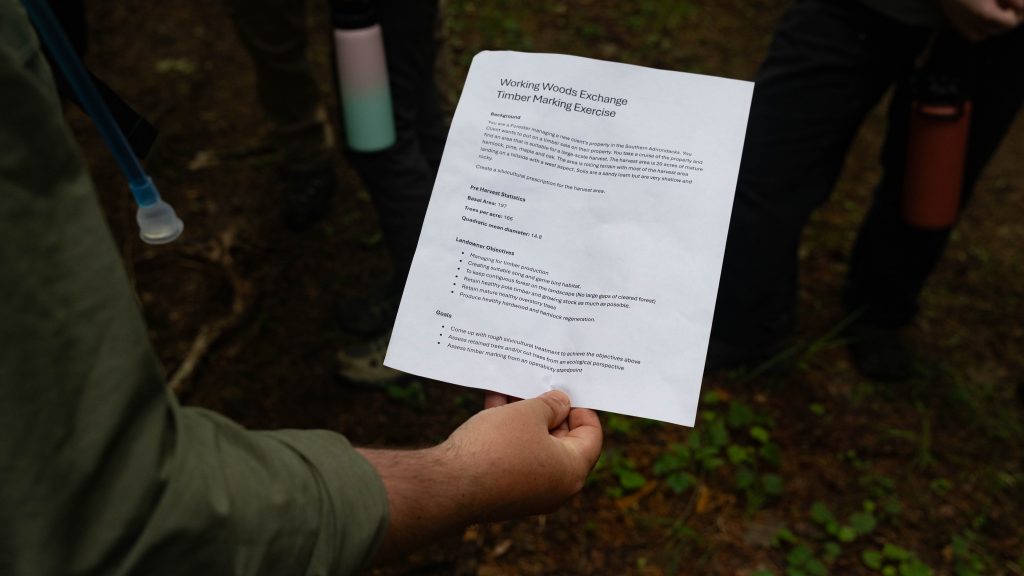
To allow attendees to be a part of the management process, the tour included a tree-marking exercise, which was something I had never done before. Luckily, an alumnus from ESF’s forestry program and current forester for the state of New Jersey was in my group. He held up a hypothetical landowner request sheet, explaining what we should be managing this patch of the forest for. One of the requests was managing for wildlife, so he asked me what habitat the wild turkey needs.
“Early successional, edge habitat,” I said.
Before I could say anymore, he was explaining how certain cuts would open the canopy, and leaving other trees standing would be good for wildlife. We also had to keep in mind the space between trees and how much value each tree had.
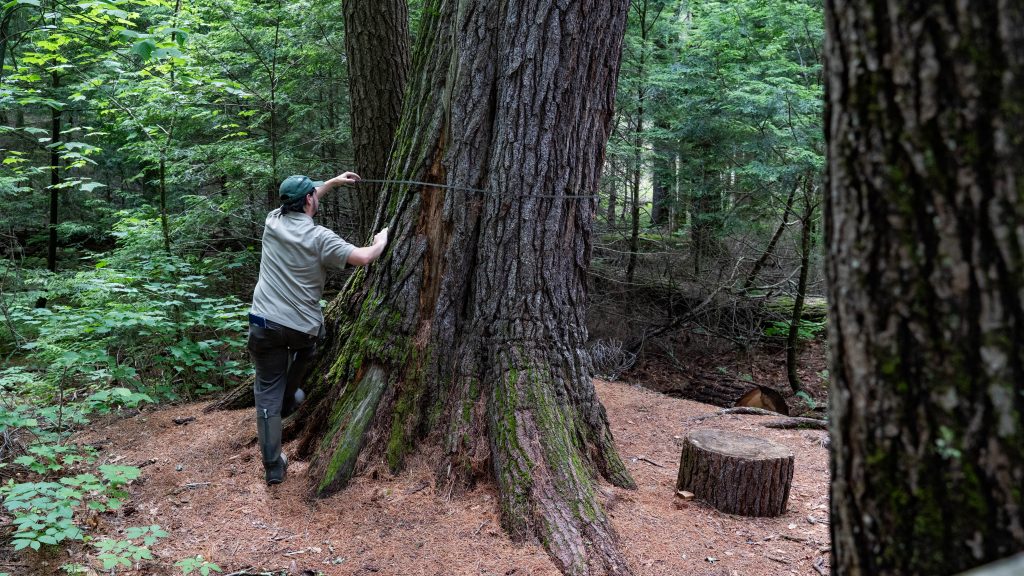
There was running joke foresters made during the tour: If three foresters enter a project site together, they’ll walk out with four different management plans.
I was quickly mesmerized by the minds of these knowledgeable foresters and how they were able to visualize each strategic cut and how it would affect the forest. In only a few minutes, my group of foresters were estimating basal areas and diameter at breast height, visualizing the scale and timeline of an entire forest regenerating, all while I stared at the canopy trying to identify one tree at time.
Then someone said a word that captured my attention: ecosystem. Finally, a word we all use in our daily practice. This one word represents how each sector plays a vital role in sustainable forest management.
“We’re all vital parts of the equation when it comes to managing our lands here in New York,” said Mike Federice, ESF Adirondack Forest properties manager. “And it’s not too often in New York that we have everyone from these different groups get together to talk about where everyone is coming from. This is something we really need to do because the actions that one group does are going to affect everything on the landscape and everyone else who’s managing it. We might have folks here who are primarily managing for timber, or wildlife, or water or forest health, but these are all interrelated.”
Although the wild turkey felt out of place when foresters and loggers started having conversations about the pulp market, the NWTF’s perspective showcases how its efforts for the wild turkey intersect with other forestry aspects. Several attending foresters have worked with or are currently working with the NWTF or similar organizations, such as the Ruffed Grouse Society or Ducks Unlimited.
The tour continued to the Hemlock Management Area, which monitors the forest’s response to treatments for Hemlock Woolly Adelgid, an invasive insect that attacks North American hemlocks, a vital tree for the health of Northeastern ecosystems. Hemlocks are critical to the survival of a variety of wildlife species that rely on them for food and protection, such as moose, black bears, salamanders and migrating birds, as well as unique lichen and native plant communities. Since Hemlocks are often found along streams, their shade helps maintain a suitable environment for aquatic species such as trout.
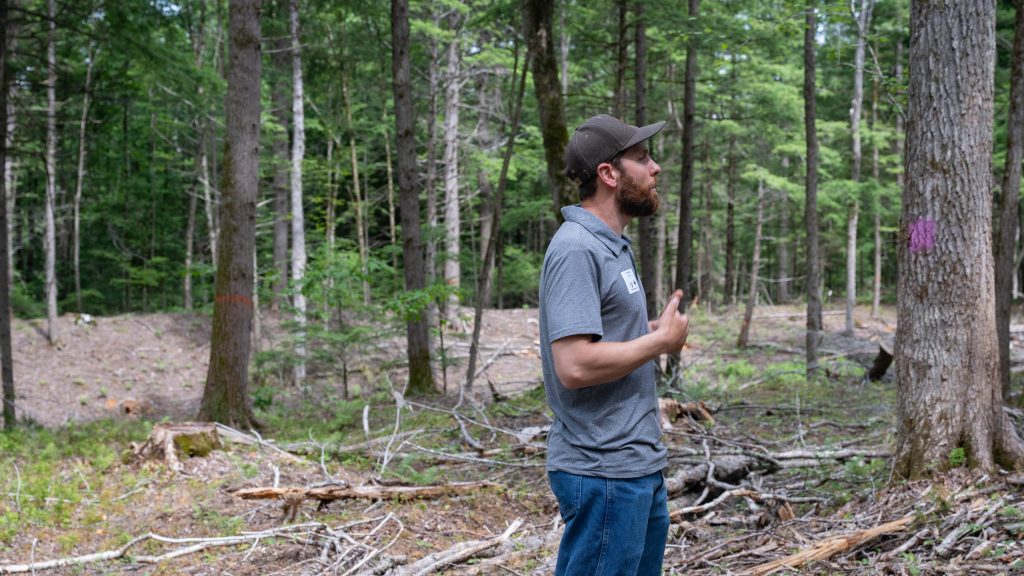
The most recent treatment conducted in this area of the Pack Demonstration Forest was a crown release, where about seven trees were removed per acre to open the canopy and expose the forest to more sunlight. These thinnings have seemingly created a less viable environment for the invasive insect, and the felled trees were left to create wildlife habitat.
An older ESF property manager told me that when he started working in these forests in the 80s, the wild turkey was nowhere to be found. But now, they flock in these forests. That wouldn’t have happened if this habitat was left untouched.
I heard someone say that forestry is like tending to a garden, just on a grander scale. I liked the analogy because in that case, the wild turkey is one of the many blooms that tells us the management is working. A reminder that healthy forests don't happen by accident; they're the result of stewardship and strong partnerships.