Bringing Wild Turkey Education to the Classroom
The Michigan State Chapter of the National Wild Turkey Federation helped introduce third-grade students to wild turkey biology, adaptations and conservation through hands-on classroom lessons this spring.
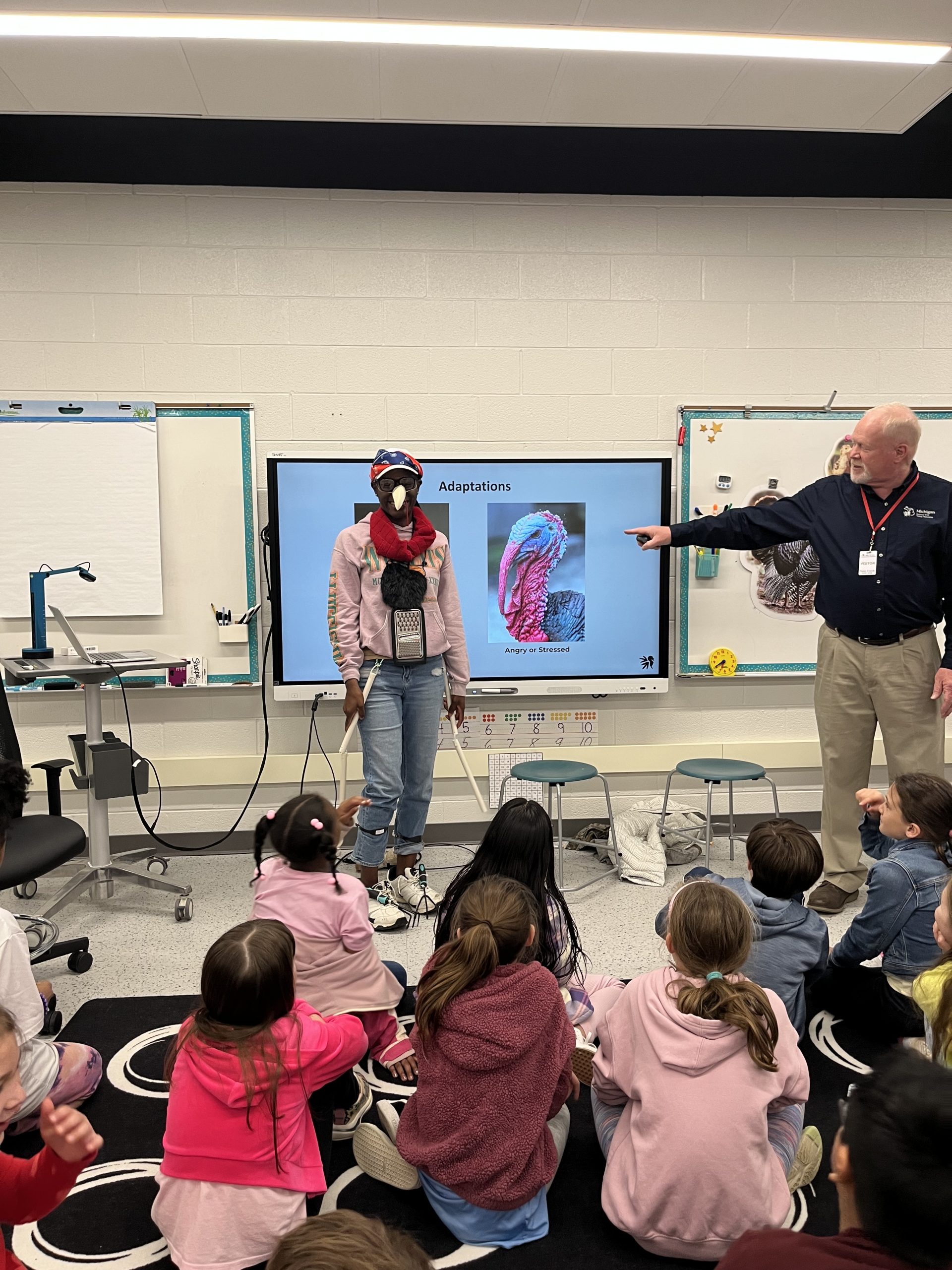
One teacher wore garden forks on her feet. Another sported a balloon snood dangling from her face. A cheese grater became a gizzard.
It may have looked like a costume party, but for nearly 400 Michigan third graders, it was a science lesson they won't forget.
This spring, Jon Gray, president of the Michigan NWTF State Chapter, visited four elementary schools in the Lake Orion Community Schools district, delivering 14 presentations that introduced students to the fascinating world of wild turkeys through hands-on learning, laughter and conservation education.
A retired eighth-grade science teacher, Gray spent his career helping students understand the natural world. When his granddaughter's teacher invited him to speak to her class about turkeys last year, the presentation was such a hit that he expanded the opportunity to every elementary school in the district.
From March 24 through May 7, Gray reached nearly 400 third-grade students through presentations that aligned with the Next Generation Science Standards used by schools across Michigan and beyond.
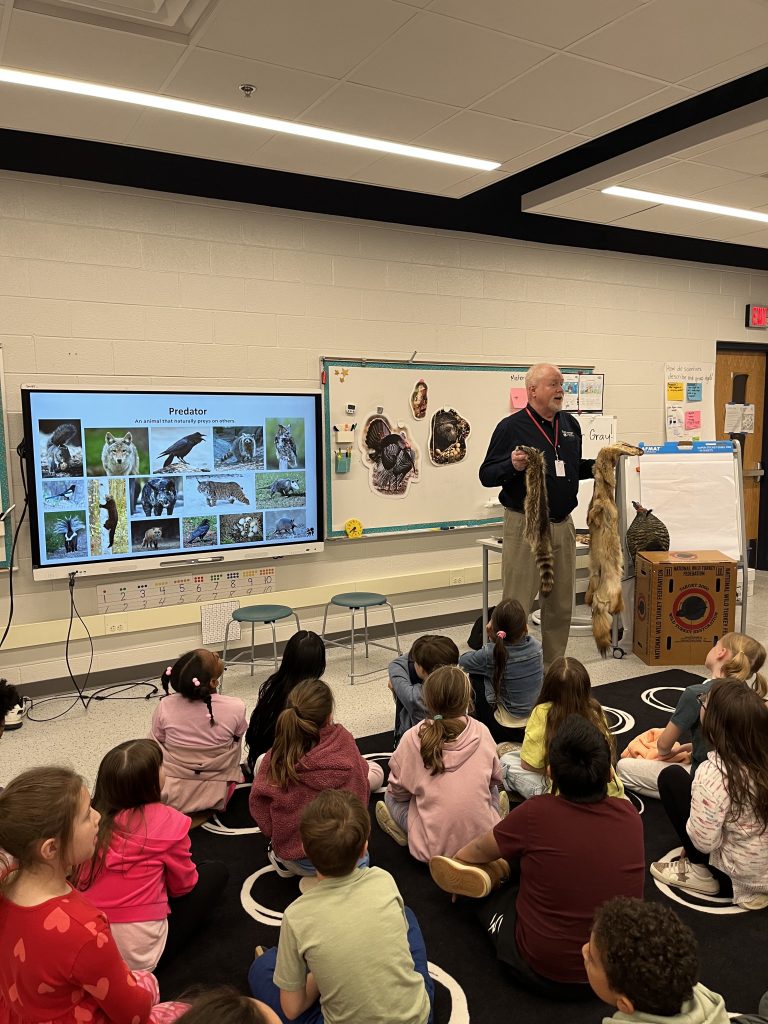
"The talks lasted an hour, and we covered things such as the history of the wild turkey in North America, subspecies, predators and then mainly focused on adaptations of the wild turkey," Gray said.
To help students understand those adaptations, Gray brought the lesson to life using activities from the NWTF Education and Outreach Department's "Stayin' Alive: Turkey Adaptations" curriculum, available through the JAKES Program. The activity helps students identify and understand wild turkey adaptations through hands-on learning and familiar objects.
Teachers volunteered to become living turkey models while everyday household items represented different turkey adaptations. Garden forks became turkey feet, a cheese grater stood in for a gizzard and a balloon transformed into a snood.
Students also had the opportunity to examine turkey feathers, dried feet and legs and a beard up close. They even practiced turkey sounds using coffee stirrers as makeshift turkey calls.
"The students seemed to enjoy the talks and getting to know turkeys through hands-on learning," Gray said.
The approach resonated with teachers as much as it did with students.
"Jon Gray brought turkey talk to life for our third graders, complete with laughter, learning and unforgettable teacher turkey costumes," said Heidi Boyer, a third-grade teacher at Paint Creek Elementary.
While the lessons focused on wild turkey biology and adaptations, they also gave students a glimpse into the broader world of wildlife conservation.
Programs like these help introduce young people to the science behind wildlife management and the role conservation plays in sustaining healthy habitats and wildlife populations. Whether students grow up to become hunters, biologists or simply outdoor enthusiasts, experiences like Gray's classroom visits help foster an appreciation for the natural world and the wildlife that call it home.
Those lessons clearly made an impact.
"I learned that feathers are not a color, it is just how the sun shines on it," wrote Zoey, a third-grade student at Stadium Elementary. "I also loved it because I love to learn about animals."
Other students shared newfound knowledge about turkey beards, keen eyesight and the 28-day incubation period of turkey eggs.
For Gray, the classroom visits were an opportunity to share his passion for wildlife while helping students better understand one of North America's most recognizable birds.
Judging by the laughter, questions and thank-you notes that followed, the lessons made a lasting impression.
And if a few teachers had to dress up like wild turkeys along the way, that only made the learning more memorable.