A Hunt Built on Partnership: Disabled Veterans Find Success on the Shawnee
Partnerships are at the core of meaningful conservation work, but every now and then, one goes beyond habitat work and truly changes lives. That is exactly what is happening on the Shawnee National Forest.
For years, the USDA Forest Service and the NWTF have worked side by side to improve wildlife habitat across the country. On the Shawnee National Forest in southern Illinois, that partnership has proven especially impactful. Through stewardship agreements alone, NWTF and Forest Service efforts have influenced more than 5,100 acres, with over 4,000 acres of on-the-ground habitat work completed. And that work is only part of the story.
The Shawnee spans roughly 289,000 acres, making it the largest body of public land in Illinois.
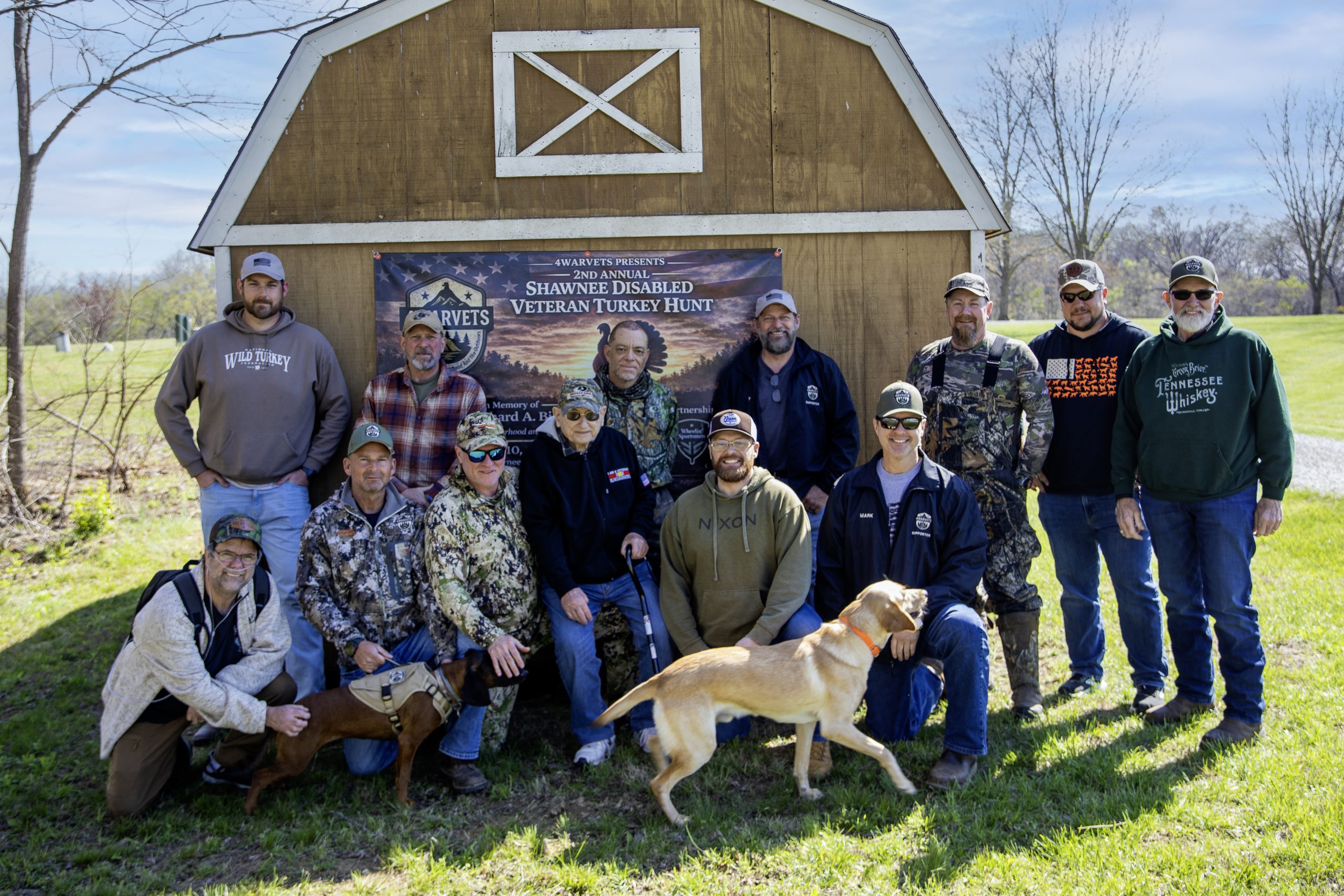
In 2022 and 2023, Shawnee District Ranger Dennis Wilson, NWTF Forester Chase Seals, and Wheelin’ Sportsmen Coordinator Micheal Howie began laying the groundwork for something new: a turkey hunt on the improved land designed specifically for disabled veterans.
By 2025, that vision became reality. The first hunt welcomed four disabled veterans, and three of them were successful in harvesting birds on the Shawnee. It was a strong start, but it was only the beginning.
Building on that success, organizers expanded the effort for the 2026 Illinois turkey season. This time, they brought in a new partner, 4WarVets, a nonprofit organization dedicated to supporting veterans. The collaboration made sense from the start. While the NWTF and Forest Service had the land, completed habitat work and a conservation framework in place, 4WarVets had direct access to veteran networks and the ability to identify and evaluate applicants for the hunt.
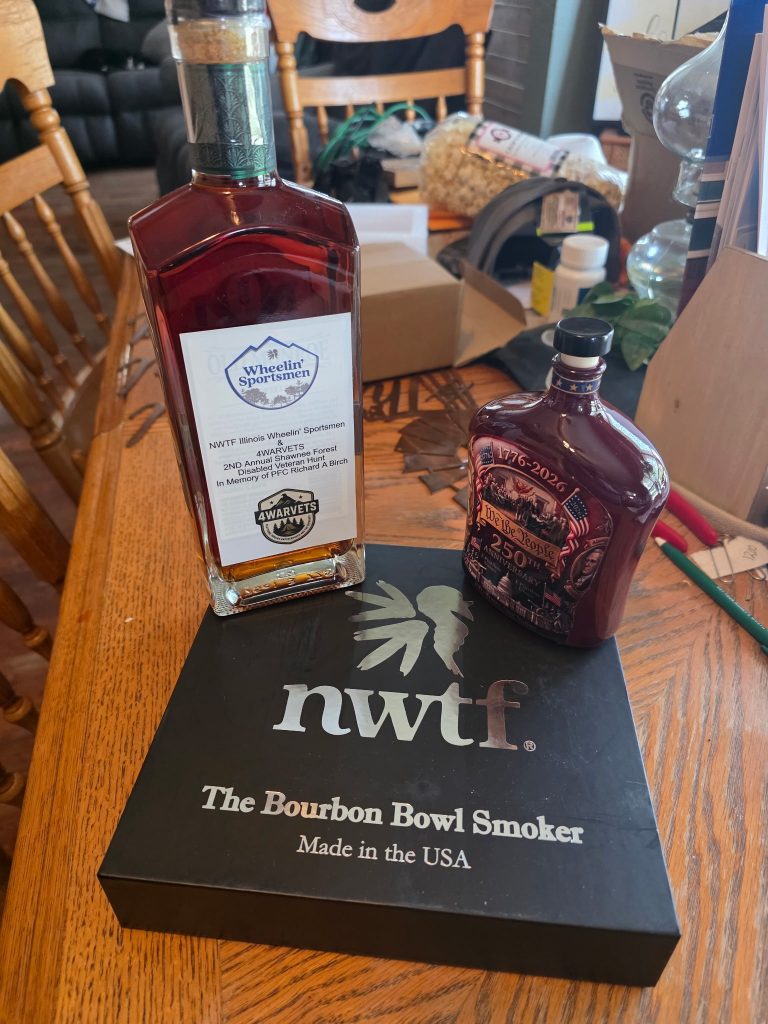
The group also collaborated on the name of the event — The 2nd Annual Shawnee Disabled Veterans Hunt in memory of PFC Richard A. Birch. As the event transpires each year, it will be named after a different veteran to honor their memory. This year’s honoree, Richard A. Birch, was a glider pilot in World War II, Bronze Star and Purple Heart recipient and the grandfather of Dr. Mark Korte, who donated half a barrel of bourbon to help fundraise the hunt. The keepsake bottles made from the barrel have the NWTF Wheelin’ Sportsmen logo, as well as the 4WarVets logo, with the name of this year’s hunt on a custom-made label.
Together, these partnerships grew the hunt into something truly special.
4WarVets and the NWTF helped select four of the five hunters, with the final participant coming from within the Shawnee National Forest staff, many of whom are veterans themselves. The group represented multiple generations of service, from recent conflicts to one of the most historic battles in U.S. military history.
Among them was 93-year-old Howard Reed, a Korean War veteran and survivor of the Battle of Chosin Reservoir with the 101st Airborne Division. Other hunters included Matt Roehm, an Army veteran who served in Operation Iraqi Freedom and Operation Enduring Freedom; Brian Thietje, a Marine Corps veteran of Desert Storm, Operation Restore Hope (Somalia), and Operation Iraqi Freedom and current USFS staff member; Elijah Hasemeyer, an Air Force veteran of the Global War on Terror; and Jake Yordy, an Army veteran who served in Operation Iraqi Freedom.
The hunt was headquartered in Jackson County, Illinois, on property owned by 4WarVets founder and president Ken Robinson. His land borders the Shawnee National Forest and provided more than just access. It served as a base camp, complete with cabins where hunters and guides could stay. Each morning, guides made up of NWTF staff, volunteers and 4WarVets members gathered before daylight, paired up with their hunters and headed into the field.
Conditions were not easy. The Shawnee is known for its rugged terrain, with steep ridges, thick timber, and challenging footing. While all participants were at least 70 percent disabled, they still needed to be able to navigate that landscape.
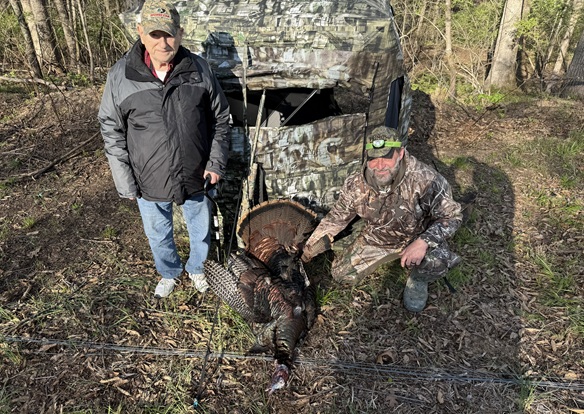
For 93-year-old Reed, the experience stayed close to camp. Positioned in a blind on Robinson’s property, just yards from the Shawnee boundary, he harvested his first wild turkey within sight of land improved through NWTF stewardship projects. It was a powerful example of how conservation work comes full circle.
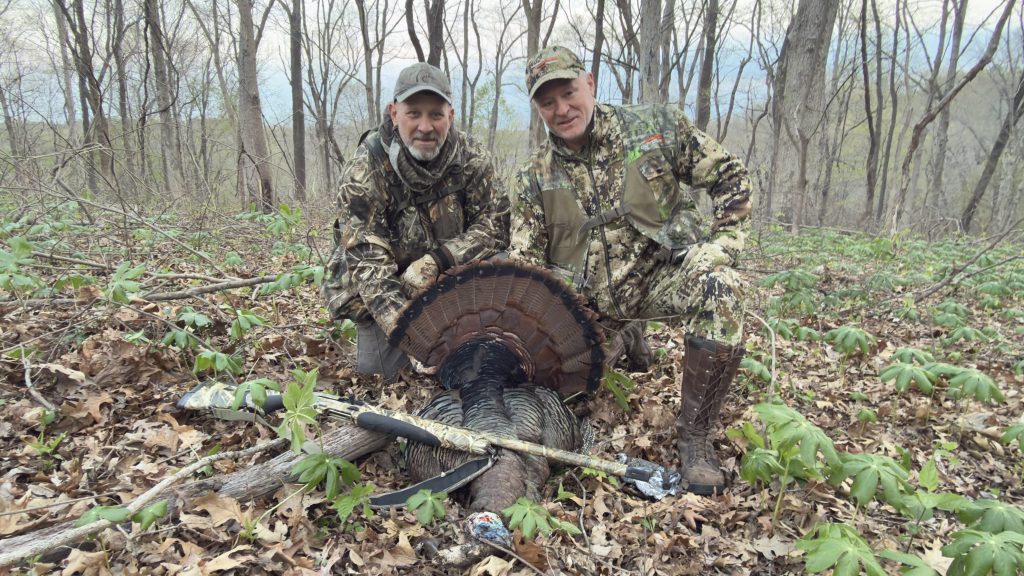
Deeper in the forest, Thietje found success near additional NWTF project sites and active Forest Service timber work, areas specifically managed to create better habitat for wild turkeys and other wildlife.
By the end of the hunt, four out of five veterans had successfully harvested birds.
But success is not only measured in filled tags.
“To be able to do something for them, give back to them, share stories, help them laugh, relax and have a good time is extremely rewarding,” said Seals. “To be able to personally thank each one of them for their service and the sacrifices they made is an honor.”
This hunt represents something bigger. It showed what is possible when community and purpose come together. Habitat work improved the land. Partnerships opened doors. And for a group of veterans, many of whom face daily challenges, were able to experience the life-changing power of the outdoors while building connections and community with others along the way.